
 Join
JoinPLI #4
National Conference in Indianapolis • November 4, 2026
Full-Day Workshop
Meaningful AI Integration in Problem-Based Storylined STEM Units
Wednesday, November 4 • 8:00 AM - 3:00 PM
All participants will receive breakfast and lunch.
About the Session
Artificial Intelligence is rapidly reshaping science, engineering, and society. Science classrooms need approaches that help students understand the science behind AI, how it is used in STEM, and how it can support their learning. In this full-day professional learning institute (PLI), participants will explore emerging AI standards and how the problem-based storyline curricular units can anchor AI learning in meaningful ways that support equitable participation.
During the session, participants will engage with a set of three units: Sensor Immersion, Self-Driving Cars, and Animal Prosthetics. In this three-unit progression, students use Micro:bit sensors to investigate real world problems. They explore meaningful AI concepts including the shift from decision trees to probabilistic neural networks, the important role of training data, how AI makes predictions, and the ethical implications of AI. Participants will get hands-on experience with how it feels to participate in a unit from the student perspective, allowing participants to understand how the units leverage students' own questions to support coherence and sensemaking.
Key Takeaways
- A deeper understanding of problem-based, storyline units as an instructional model that supports coherence from the student perspective.
- Firsthand experience with three curricular units focused on AI mechanics and societal impact.
- Strategies for both helping students figure out how AI works and teaching with AI tools.
- Practical approaches to leveraging AI responsibly to support sensemaking and student engagement.
Participants will leave with the materials needed to implement these units in their own schools and classrooms. Micro:bits and other hardware not included.
Audience
Middle and high school science educators, instructional coaches, and curriculum leaders interested in integrating AI into science learning while maintaining coherence and equity.
Presenters
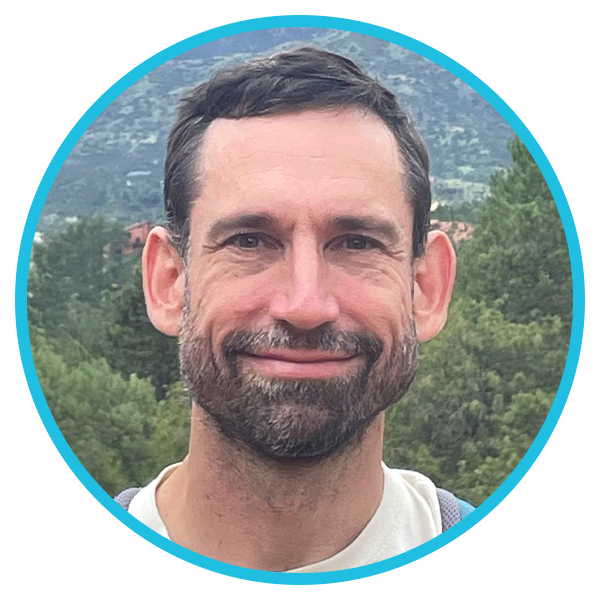
Greg Benedis-Grab
Greg Benedis-Grab is the Director of K–12 Computing and AI Initiatives at the University of Colorado Boulder, where he leads the K-12 Nexus for the NSF Institute for Student-AI Teaming. He oversees the scale-up of research-based curriculum materials and professional learning in STEM, computing, and AI in districts across the U.S. His work focuses on helping teachers integrate AI into science classrooms through coherent and equitable learning experiences. Previously, Greg worked in schools as a teacher and administrator for over 25 years. He has led professional learning globally in science, STEM, and computer science. In 2010, he received the Presidential Award for Excellence in Science & Mathematics Teaching from President Barack Obama.

Kate Henson
Kate Henson is the Director of K-12 STEM Teaching and Learning at inquiryHub, housed in the Institute of Cognitive Science at the University of Colorado Boulder. In this role, she supports teachers, schools, and districts in designing and implementing high-quality science instructional materials and assessments. Dr. Henson holds a doctorate in Science Education from the University of Colorado Boulder. Her doctoral research focused on supporting professional learning communities in using student work to support student learning through formative assessment and feedback. Before earning her doctorate, she taught high school science for over a decade. Dr. Henson served as the co-director for the OpenSciEd High School Developer’s Consortium, where she oversaw the development, professional learning, and revisions of the biology, chemistry, and physics courses.