What are you doing with your wiki?

By Debra Shapiro

Posted on 2010-02-05


Wikis have been called “the quintessential collaborative tool.” In this article from the February 2010 issue of NSTA Reports, you’ll find out how teachers around the country are using wikis to collaborate with colleagues around the world, as well as to communicate with students and parents.
Do you have a wiki? Tell us about yours, and how you use it to enhance your teaching.


The Frugal Science Teacher, PreK–5

By Claire Reinburg

Posted on 2010-02-05

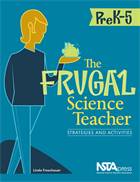
When the going gets tough, the tough get creative. Challenging times mean lean budgets in many schools, but science teachers have a knack for stretching resources to keep students engaged in lively educational activities even in a pinch. Editor Linda Froschauer presents a timely compendium of resources from NSTA Press books and NSTA journals in a new book titled The Frugal Science Teacher, PreK–5: Strategies and Activities. If you’re in need of budget-conscious classroom activities or just new ideas and strategies, you’ll find lots to choose from on topics from student-created constructions to instructional strategies that maximize the science budget. Froschauer says in her introduction, “You may not save hundreds of dollars a year by following the recommendations found in this book. You will, however, find creative ways to keep expenses down and stretch your funds while building student understanding.” We’ve posted a free sample chapter the Science Store:   See “Materials Repurposed: Find a Wealth of Free Resources at Your Local Recycling Center.”

When the going gets tough, the tough get creative. Challenging times mean lean budgets in many schools, but science teachers have a knack for stretching resources to keep students engaged in lively educational activities even in a pinch.


Exploring form and function with hats: books about firefighters

By Peggy Ashbrook

Posted on 2010-02-04
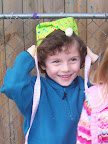
In the February 2010 Early Years column (Science and Children) I wrote about exploring form and function using hats, and testing them for how water flows off of them. Children might think, “Of course a firefighter’s hat works well to keep dripping water off their face and head! It’s made to do that!” And what about how well a clown hat performs its function…” Of course it makes people laugh, that’s why clowns wear those silly hats.”

The hats work well to do the needed jobs, and because they succeed, people use them again and again. I hope that this line of thinking will help children understand that, of course a polar bear has white fur because it needs to hide almost in plain sight when it goes hunting, or that of course a duck’s foot is webbed because it needs to move easily through water. Animals that are colored to match their environment, like polar bears, are harder for other animals to see, so the bears can catch more animals to eat, and, avoid being caught by another animal. They catch more food, and live longer and have more babies survive, each generation. With feet that work well to move them through water, ducks can more easily get food and keep from being eaten. They also catch more food, and live longer and have more babies survive, each generation benefiting from the successful foot structure.
The Helper Hats: Will it protect me from water? activity will not teach children about evolution but after doing the activity they do see a connection between the form of a hat, which could represent an animal’s body, and how it functions for survival. Reading state and National Science Education Standards for the grades above preschool (the level I teach) helps me lay the ground work for the concepts that my students will encounter later on.
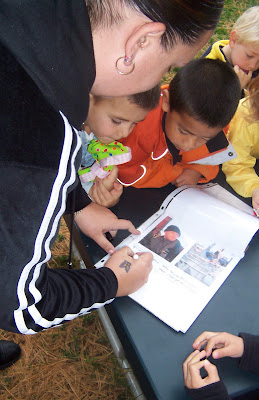
With every science activity, teachers incorporate literacy and language teaching—reading aloud, writing to describe an observation, discussing what we did, and learning new words such as “chrysalis”, “adaptation”, “magnetism”, “floating”, and “reflection”—and math skills such as counting, using a tally chart, and measuring.
Here a teacher records the children’s observations about a sailor “watch cap”–what they know and what it feels like when they tried it on.
Books to use with the February 2010 Early Years column activity, Helper Hats: Will it protect me from water? include the old favorite, Caps for Sale by Esphyr Slobodkina (1940), available in many formats, English and Spanish.
Your students may also enjoy:
Firefighters A to Z by Chris L. Demarest (McElderry Books, 2003). This book has been a favorite of one of my students for several years. The alphabet format includes firefighting vocabulary while informing readers about the work of firefighters.
Hats Hats Hats (Around the World Series) by Ann Morris, photographs by Ken Heyman (HarperCollins, 1993). Reading the book may open a discussion on what kinds of hats do people wear in other places and why do they wear those hats.
The Wind Blew by Pat Hutchins (Simon and Schuster, 1974). Ask your children, “Would the wind be able to blow your hat? Why or why not?”
Zoe’s Hats: A book of colors and patterns by Sharon Lane Holm (Boyds Mills Press, 2009). After seeing Zoe try on different hats (including some unexpected ones), readers can name their favorite at the end on a page showing all of the hats.
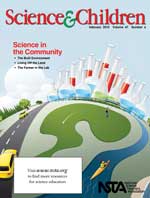
Get the lesson plan for the Helper Hats activity in the journal Science and Children by joining NSTA.  I’m lucky to teach some of my students for three years, from two years old to five years old, so I have seen them develop science process skills and learn information about the natural world over several years. Each time we do an activity again they investigate a little longer and gain new insights. I do too.
Peggy


In the February 2010 Early Years column (Science and Children) I wrote about exploring form and function using hats, and testing them for how water flows off of them. Children might think, “Of course a firefighter’s hat works well to keep dripping water off their face and head!

Science Education Leadership: Best Practices for the New Century

Achieving science literacy for every student is the common goal of all science educators. It requires leaders from a broad spectrum of the science education field to band together and clearly define how to achieve this goal and provide the tools for getting there. The authors of the essays in Science Education Leadership: Best Practices for the New Century make a compelling case for the importance of these leaders to forge a coalition and address issues of science education.

Achieving science literacy for every student is the common goal of all science educators. It requires leaders from a broad spectrum of the science education field to band together and clearly define how to achieve this goal and provide the tools for getting there. The authors of the essays in Science Education Leadership: Best Practices for the New Century make a compelling case for the importance of these leaders to forge a coalition and address issues of science education.


Formative assessments

By Mary Bigelow

Posted on 2010-02-02

I’m looking for suggestions for formative assessments.  Do you have some unique ideas to assess students quickly and adjust instruction accordingly?
—Karen, Arizona

question markFormative assessments are ongoing, classroom level assessments critical to discovering what students are learning during the instructional process so we can move on (if students have learned a topic) or revisit our instruction to correct any misconceptions or to fill in any gaps. These quick and focused check-ups can provide just-in-time information on what students know or can do prior to end-of-unit tests or yearly exams.
I’m not sure I have any “unique” ideas and you may already have many activities that could be part of a formative assessment process. These can be varied so they become an integral and enjoyable part of the learning process, not just special events. Formative assessments are usually not graded to provide a safe way for students to ask questions and reflect honestly on their learning—and not be penalized for a mistake, a misconception, a question, or an incomplete understanding during the learning process. Here are some formative assessments I like:

  • Frequent quick thumbs-up/down/sideways responses from students can give instant feedback during a discussion or activity. If you’re concerned this is a self-assessment, you can ask a thumbs-up student to explain briefly or use some probing questions with a thumbs-down student to find out the source of the confusion (which other students probably share, too).
  • Some teachers use small white boards or half sheets of paper on which students write and display short responses and hold them up. A brief scan of the room lets you see the responses and know all students are involved. This is a low-tech version of the “clicker” systems that allow students to respond electronically for an instant check of student understanding. The advantages of the electronic system are that students may be more forthcoming is they feel their answer isn’t being broadcast to the class and you have a record of the student responses to analyze.
  • In a variation of the think-pair-share strategy, students do a quick write in their notebook/journal, share their writing with a partner, and then summarize to the class. If the summaries start to sound the same after the first several ones, you can ask other teams if they have questions or anything new to add. As you listen to their summaries, you can get a feel for what students are learning, and the other students get to hear the information in different words or from a different perspective.
  • Students could work on a graphic organizer or summary as a warm-up or a ticket-out-the-door activity to give you a glimpse into their thinking.
  • When students are working in pairs or teams, you can walk around with a checklist of communications skills and lab behaviors or a notepad to record your observations to discuss with the class. Spend a little time with each group to observe their work, ask a few questions, or provide any clarification. This could also be a time to do a quick scan of some science notebooks.

Regardless of what activity you use for formative assessment, it’s important for students to get feedback beyond whether the response was correct or incorrect. Giving specific suggestions for improvement, asking probing or follow-up questions, encouraging the students to correct their mistakes, and helping students to self-assess their work authentically are part of the formative assessment process.
So what does a teacher do if the students didn’t get it? It may be tempting to assume they weren’t paying attention (which may be true) or to repeat the information in a louder or slower voice. But you need to have a few extra tricks up your sleeve to adjust your instruction: alternative explanations, extra practice activities (once any misunderstandings are cleared up), other visuals, additional examples and non-examples of a concept, graphic organizers, think-alouds, or alternative readings. Of course, if all the students get it, it’s okay to move on to the next part of the lesson. (Although I found sometimes their understanding was fragile and some additional assessment and review was necessary later.)
I would recommend the book Science Formative Assessment: 75 Practical Strategies for Linking Assessment, Instruction, and Learning from NSTA Press. I showed this to some of my colleagues in other subject areas, and they saw quite a few strategies that could be adapted to their subjects, too. Uncovering Student Ideas in Science, Volume 1: 25 Formative Assessment Probes (along with Volumes 2, 3, and 4), also from NSTA Press, focuses on determining what students already know about a science topic, including misconceptions.
The results of summative assessments (state tests, end-of-course exams, unit tests, or final projects) can help us make decisions about our courses and curriculum, but they don’t tell us much about which individual students are having problems or have developed misconceptions during our instruction. And by then it could be too late to go back and review or reteach.
Image from http://www.flickr.com/photos/demibrooke/2550349404/

I’m looking for suggestions for formative assessments.  Do you have some unique ideas to assess students quickly and adjust instruction accordingly?
—Karen, Arizona


Latest from NSTA's online outposts

By Howard Wahlberg

Posted on 2010-02-02

What’s New, 2/1/2010
Here’s a quick look (with lots of links!) at what’s going on at NSTA’s online outposts:
In the NSTA online professional learning communities, we have new groups created on a variety of topics…

  • Two new groups that should be of interest to conference-goers: the 2010 National Conference Group and the Shared Housing Conference Group. Presenters should start posting your handouts, attendees should start downloading session resources, and looking for roommates now!
  • Our Indiana chapter, Hoosiers Association of Science Teachers (HASTI) has their conference this week, listed on the calendar. And for NSTA members out there, there has been a terrific conversation on our listservs about Indiana geology!

At the NSTA Learning Center, check out this Wednesday’s Web Seminar: Engineer Your Life: Spark Girls? Interest in Engineering.
On our “core site” (www.nsta.org): everyone’s gearing up for our National Conference on Science Education this March 17–21 in Philadelphia. Write your own declaration of independence and join your fellow educators this March in Philadelphia!
On Facebook, the discussion about teachers and technology has been re-energized, and we’ve created an event for the National Conference.
On Linkedin, you can now find a jobs subgroup, that re-posts all of the listings on the NSTA Career Center.
And of course all our science educator Tweeps are tweeting and re-tweeting about our Philadelphia conference!
Renew Your Membership!
Now is the time to insure that you don’t miss a single journal issue or one minute of the time you use to network and build professional connections here in these online communiities. Click the link above to renew your membership and insure that NSTA stays in your corner for your science education career!

What’s New, 2/1/2010
Here’s a quick look (with lots of links!) at what’s going on at NSTA’s online outposts:
In the NSTA online professional learning communities, we have new groups created on a variety of topics…


Seeking inventive college students

By Debra Shapiro

Posted on 2010-02-01

A new series for a major cable network is searching for college students who are always inventing things and building things. If you know any smart, creative, and talented students who have a flair for science and engineering, please share this announcement with them. Ideal candidates should be freshmen or sophomores and have a couple of  friends who also share their passion for inventing. “However, as long as you are a student and an inventor, we want to hear from you! Think along the lines of the movies Weird Science and Real Genius,” says the casting director.
If you or someone you know is interested, please answer the following questions and e-mail them to mb2casting@yahoo.com by February 14:

  1. Name, age, and name of college/university you attend
  2. What year are you in, and what are you studying?
  3. What types of things have you invented or created or are currently working on?
  4. Do you invent alone, or do you work with a partner or group of people?

Please send a picture along with contact info (phone and e-mail).

A new series for a major cable network is searching for college students who are always inventing things and building things. If you know any smart, creative, and talented students who have a flair for science and engineering, please share this announcement with them. Ideal candidates should be freshmen or sophomores and have a couple of  friends who also share their passion for inventing. “However, as long as you are a student and an inventor, we want to hear from you!

The Frugal Science Teacher, PreK-5: Strategies and Activities

Teachers of all grades and disciplines often dip into their own wallets to outfit their classrooms with materials and supplies that school and district budgets can’t—or won’t—cover. Science teachers tend to find themselves supplementing their shrinking funds with even greater frequency.

This collection of essays, carefully selected by former NSTA President and current Science and Children editor Linda Froschauer, outlines creative and inexpensive ways for preK through fifth-grade science teachers to keep their expenses to a minimum in five categories:

Teachers of all grades and disciplines often dip into their own wallets to outfit their classrooms with materials and supplies that school and district budgets can’t—or won’t—cover. Science teachers tend to find themselves supplementing their shrinking funds with even greater frequency.

This collection of essays, carefully selected by former NSTA President and current Science and Children editor Linda Froschauer, outlines creative and inexpensive ways for preK through fifth-grade science teachers to keep their expenses to a minimum in five categories:


Unit Pages: Differentiation for 200 Students

Science Scope—February 2010

Based upon the models of differentiated instruction (Tomlinson and Edison 2003) and Layered Curriculum (Nunley 2004), the author the Unit Pages strategy. Just like Layered Curriculum, the pages can be handed directly to students, allowing them to take charge of their own learning rather than requiring the teacher to individually monitor and adapt the content and activities for each student. Unit Pages are based on state standards and offer students opportunities to choose how they learn the material and how they demonstrate that learning.
 

Science activities: quantity vs. quality

By Mary Bigelow

Posted on 2010-01-29

My ninth grade students enjoy labs, but my colleagues say I do too many and the students aren’t learning anything. How many labs should I do each week?
—Carolyn, Billings, Montana

I’m curious as to what you mean by “labs.” Some teachers use the word lab to describe a variety of activities from investigations and experiments to cookbook demonstrations, small-group discussions, simulations, group writing assignments, laptop activities—anything students do in groups in science class. While all of these activities can be useful learning strategies, let’s assume you are referring to inquiry-based investigations and experiments.
NSTA’s position statement on Scientific Inquiry states, “Scientific inquiry is a powerful way of understanding science content. Students learn how to ask questions and use evidence to answer them. In the process of learning the strategies of scientific inquiry, students learn to conduct an investigation and collect evidence from a variety of sources, develop an explanation from the data, and communicate and defend their conclusions.”

Although you do not have to justify your choice of learning activities (or their frequency) to your colleagues, you may want to reflect on what you’re doing for your own professional piece of mind. While considering your activities, it may be helpful to parse the above position statement. Do your labs help students to

  • understand science content—the processes and “big ideas” as well as facts and concepts;
  • ask questions (not just answer ones that someone else asks);
  • design and conduct various types of investigations, depending on the questions;
  • collect and organize their evidence (data);
  • analyze the evidence to develop an explanation; or
  • communicate and defend their conclusions?

This is a lot to expect of students; they need guidance and modeling tailored to their level of experience. I had the opportunity to work with a middle school teacher who scaffolded the inquiry process for her students. She kept the unit’s “big idea” posted in the classroom and made sure to refer to it during every activity (lab or otherwise) to keep the students focused on the content. When she asked students for questions to investigate, she added a few of her own as a model. She guided the students through a discussion of how the experiment was designed and how the design related to the question (after experiencing various types of investigations, they took over more of the design process). She monitored them as they did the procedure and collected data, and she assisted or intervened when necessary. She worked with the students as they reviewed their data and determined  if their evidence answered the questions, and discussed why it did or did not. During the process, the students recorded the data and their conclusions in their notebooks. The teacher recognized this was a time-consuming process, but she was confident they were learning (and the assessment results supported this conclusion).
I really don’t have a numeric answer to your question. Regarding the number of activities, for scientific inquiry the quality of the activities is more important than the quantity. Doing an activity for the sake of doing an activity without any follow-up or reflection may lead to the second concern about what the students are actually learning and whether they truly understand the concepts. I attended a workshop with a middle school teacher who remarked, “I keep my students so busy they don’t have time to think.” I still wonder what—if anything—they learned.
Image from http://www.flickr.com/photos/jimmiehomeschoolmom/3423116

My ninth grade students enjoy labs, but my colleagues say I do too many and the students aren’t learning anything. How many labs should I do each week?
—Carolyn, Billings, Montana

Subscribe to
Asset 2