


 Join
JoinAll Resources
Book Chapter
The Science Curriculum: Trends and Issues
Among the 21st century issues and trends in science education, one must acknowledge the fundamental importance of the science curriculum. It is the one component that brings together social aspirations, content standards, research on learning, approp...
Book Chapter
The Psychology of Scientific Thinking: Implications for Science Teaching and Learning
Science education has two primary aims: to teach children about our accumulated knowledge of the natural world and to help them employ the methods, procedures, and reasoning processes used to acquire that knowledge—in other words, to “think scien...
Book Chapter
Research in Science Education: An Interdisciplinary Perspective
The continuing goal of science education research is the generation of pedagogical knowledge that can be used to improve meaningful understanding of science concepts by students. Using present initiatives in science education as a foundation, the aut...
Book Chapter
Classroom Assessment in the Service of Student Learning
Science education reform literature acknowledges the close relationship between assessment and learning. This chapter takes a closer look at this tight link between assessment and learning, specifically at how classroom assessment can be organized to...
Book Chapter
Engaging Teachers in Research on Science Learning and Teaching
Professional Development Standard C of the National Science Education Standards recommends that professional development activities for teachers "provide opportunities to learn and use the skills of research to generate new knowledge about science" (...
Book Chapter
Celebrating Diverse Minds: Using Different Pedagogical Approaches
The idea of science for all has been echoed nationwide. In order to be successfully implemented, inclusive quality pedagogical approaches are essential. These approaches should be authentic not just to the nature and content of science but also to ch...
Book Chapter
Leading Professional Development for Curriculum Reform
The ultimate goal of curriculum reform is to improve student learning through better teaching practices. One way to improve these teaching practices is to develop stronger instructional systems and support systems. In particular, supporting teachers ...
Book Chapter
Advancing Student Achievement Through Professional Development
Kindergarten through twelfth grade teacher competence, in both subject matter and pedagogy, is critical for advancing student achievement in science. The National Science Foundation (NSF 1996), however, has found that only about two-thirds of first- ...
Book Chapter
Building Ongoing and Sustained Professional Development
The East Tennessee State University Science Partnership (ETSUSP) is bringing about a restructuring of the system as it pertains to building and maintaining ongoing and sustained professional development in science teaching and learning at the middle ...
Book Chapter
Best Practices for Professional Development for the 21st Century
In order to support teacher quality in mathematics and science—powerful, content-specific staff development should be designed that is data-driven and evaluated, and is based on using ideas that work and knowing how educators learn. These themes pr...
Book Chapter
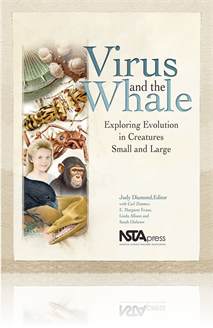
In this chapter, the author gives a general overview about evolution and its major themes—variation, inheritance, selection, and time. The author also takes a look at the basic principles by which evolution works, and considers how they have intera...
Book Chapter
This chapter gives specific background on the evolution of the seven organisms. The seven examples of evolution can be explored in the activities section of the book, as well as learning how scientists are discovering some of the evolutionary history...
Book Chapter
Teaching and Learning About Evolution
The National Association of Biology Teachers considers evolution to be the foundation for middle school life science. In the National Science Education Standards (NSES), evolution is an essential component of the science curriculum at all grade level...
Book Chapter
Viruses are tiny, but they pack a big punch. They spread and multiply fast, causing some of the most common and contagious diseases in the world. This chapter covers one of the deadliest viruses to emerge in recent years—Human Immunodeficiency (HIV...
Book Chapter
Diatoms (DIE-a-toms) are one of the most important things you never knew about. They are everywhere there is water. A drop of lake water is packed with them. You probably swallow millions every time you go swimming. These tiny, one-celled life forms ...
Book Chapter
Can a farm be the size of a walnut? It can if the farmer is an ant. Some of the world's smallest farmers are leaf-cutter ants. These six-legged farmers have amazed scientists by growing crops successfully for millions of years. What is the secret of ...
Book Chapter
Hawaiian Flies: Song & Dance Success
In this chapter, learn how over 800 kinds of flies have evolved from a single species of Drosophila that blew ashore on the remote islands of Hawaii. This is a group of flies found only on the Hawaiian Islands....
Book Chapter
Galàpagos Finches: Famous Beaks
The Galàpagos Islands are a cluster of extremely remote active volcanic islands in the Pacific Ocean. The Islands are home to 13 species of finches. In this chapter, learn how conducting fieldwork on Galàpagos finches has caused scientists to rethi...
Book Chapter
Humans & Chimps: All in the Family
No one would mistake you for a chimpanzee. As for humans, there is no one like us on Earth, right? Wrong, scientists were surprised to learn from DNA studies that humans are genetically very similar to chimps. This chapter compares the DNA of humans ...
Book Chapter
Whales with knees and toes? Incredible as it seems, whales once walked on legs and lived on land. Millions of years of biological change have erased the whale's legs from its body, but a faint trace remains. Hidden inside the streamlined body of many...
Book Chapter
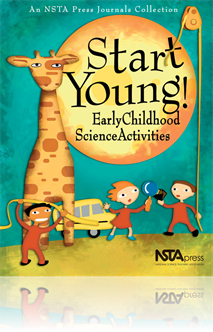
A person, place, or thing is what usually sparks those first memorable childhood impressions. Of course, we often do not study our newfound interests from the time of our personal enlightenment to adulthood, but early childhood interests are strong a...
Book Chapter
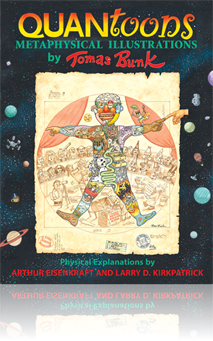
In this chapter, leaving light behind you enter the world of slow-moving mollusks. A snail must get from one corner of a room (dimensions 5 m × 10 m × 15 m) to the diagonally opposite corner in the least time. The snail can walk on any of the four...
Book Chapter
The September 1991 discovery of a frozen body in the Tirolean Alps revived interest in radiocarbon dating. This chapter is based on this discovery, assuming you have an isolated 1-g sample of carbon from a frozen animal and that the atmospheric ratio...
Book Chapter
The magnetic force is strange and does not exist for neutral particles—only for charged particles, if those particles are moving. The direction of the force isn’t toward the magnetic field or away from the field but “sideways.” This magneti...
Book Chapter
This chapter presents an example of a classic physics problem known as Atwood’s machine. In the lab it serves as a means of achieving a constant acceleration of any value less than g. Can you suggest a means of achieving a constant acceleration gr...
Book Chapter
At the XXIV International Physics Olympiad, held in Williamsburg, Virginia, students from 41 countries spent a day investigating the physics of amusement park rides. This article features a design challenge with a traditional physics problem descri...
Book Chapter
Stop on red, go on green . . .
When you're driving down a road and you see a yellow light, don’t you wonder when the light will turn red? As you drive down the road at a certain speed, the light may turn from green to yellow. A decision must be made to keep going or to come to a...
Book Chapter
This chapter is based on one of the theoretical problems given at the XXIV International Physics Olympiad. It is an actual application of physics to a real-world situation based on Gauss’s law—one of the most fundamental laws of electricity and...
Book Chapter
How can someone levitate an object? Magicians do it all the time. Can physicists do it as well? The easiest technique is to attach a string to the object and secure the string to the ceiling. The weight of the object is balanced by the tension in t...
Book Chapter
“It’s done with mirrors.” Whether we attend magic shows or ride the “Haunted Mansion,” we are often surprised and pleased by clever manipulations of images. This chapter looks at the image produced by a concave mirror filled with water. ...
Book Chapter
Supposedly young people are first introduced to waves while attending or watching sports events. These stadium waves can provide some useful insights into the most counterintuitive property of waves—the wave moves, but the medium does not. This cha...
Book Chapter
The motion of simple pendulums has played an interesting role in physics and technology. The simplest pendulum to study would probably be a compact mass attached to a long string. Physicists call this “the simple pendulum.” In this chapter, we st...
Book Chapter
For those of us who grew up with conventional electromagnets, it is very strange to see an electromagnet that is not connected to an external power source. But that is what happens with a superconducting magnet. After a current has been established i...
Book Chapter
It seems almost counterintuitive that wet air should be less dense than dry air and float in the sky. But the beauty of the cirrus and cumulus attest to this as we gaze at the myriad shapes and forms above us. Cloud formation reveals to us properties...
Book Chapter
Medical questions were very important during the Skylab mission from May 1973 until February 1974. At the most basic level the scientists wanted to know if the astronauts would lose weight during prolonged stays in space. This chapter begins by tak...
Book Chapter
In what now seems like physics folklore, the young patent clerk Albert Einstein proposed that light behaves like a particle—known as a photon—and that each photon has an energy that depends on its frequency. More precisely, Einstein attributed an...
Book Chapter
Although Isaac Newton probably never bowled a perfect 300 game, his physics can be used to analyze the sport of bowling. The collision of the ball with the bowling pins—and the collisions of the pins themselves—must obey the conservation laws. T...
Book Chapter
A converging lens bends all rays of light parallel to the principal axis (the axis of symmetry of the lens) in such a way that they converge at a single point referred to as the focus. The lens also takes the light emerging from one point and focuse...
Book Chapter
Edwin Hubble showed that most stars (and galaxies) are receding from Earth. Because of the expansion, the frequencies of the spectral lines from the stars are shifted to lower values—that is, the light is redshifted. However, this is not the only ...
Book Chapter
When we think of forces, we usually imagine a push or a pull. Such a push or pull is assumed to be in the direction of the line connecting the pusher and the object pushed. Not so with the Lorentz force. A magnetic field acting on a moving charge pu...