


 Join
Join2026 Winners
Urban Science Educator Development Award
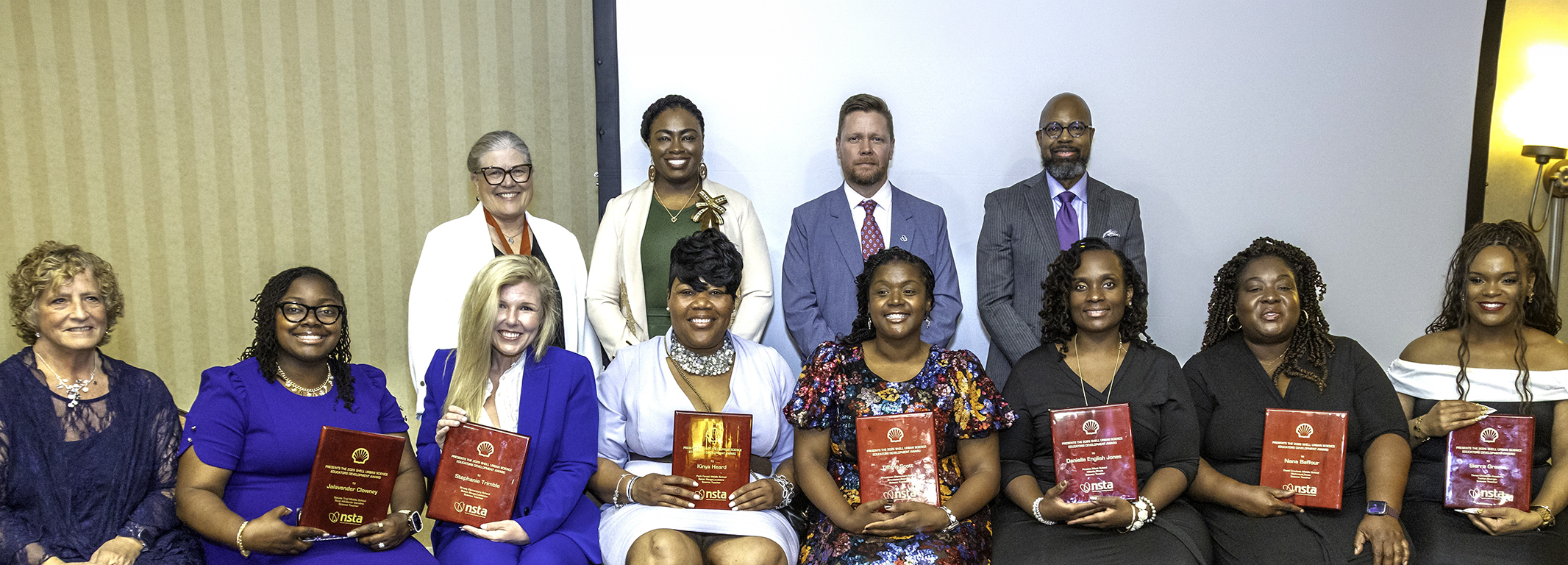

Nana Baffour
David Crockett Middle School
Richmond, TX
From the moment Nana Baffour stepped into a job fair and confidently declared that she could teach science simply because “I know how to read,” she began navigating an unconventional path into science education. That moment marked the beginning of a career shaped by curiosity, determination, and a commitment to learning alongside her students. Since she did not come from a traditional science background, she actively found opportunities to build her scientific knowledge and instructional skill. She immersed herself in professional learning, leaned on colleagues, and worked intentionally to understand scientific concepts and how to communicate them in meaningful ways. Her goal has always been to make science accessible, engaging, and relevant so her students could connect it to their everyday lives rather than view learning about science as distant or intimidating. The formula she discovered for effective teaching is simple but powerful: relationships first. Building strong relationships allowed students to believe in themselves and the science. Throughout her career, Baffour has continued to pursue professional growth, which has challenged her thinking, strengthened her practice, and shaped her students’ science experience while also giving her the confidence to mentor teachers, lead workshops at conferences, and serve as an instructional coach. She is attending the NSTA conference not only to strengthen her own classroom practice, but to gather tools, strategies, and insights that will allow her to better support other science teachers. At the conference, she plans to engage with innovative teaching methods, research-based practices, and sessions focused on student inquiry, engagement, and conceptual understanding. Ultimately, this will help her continue growing into a more effective, impactful educator.

Jalavender Clowney
Saluda Trail Middle School
Rock Hill, SC
Jalavender Clowney developed a strong passion for education while growing up in an underserved community in South Carolina. These experiences shaped her understanding of how opportunity gaps impact student outcomes and motivated her to pursue education as a pathway for equity, empowerment, and long-term change. Her science education journey is rooted in a deep commitment to student growth, equity, and authentic learning experiences. She designs instruction that is student-centered and grounded in real-world relevance. Effective science instruction requires cultivating curiosity, critical thinking, and confidence so students begin to see themselves as scientists, problem-solvers, and future leaders. Simulations and interactive platforms enhance student engagement, monitor progress, and provide timely, data-informed feedback. These tools also help her differentiate instruction and offer multiple pathways for students to demonstrate understanding. Beyond the classroom, Clowney serves as the science department chair, supporting curriculum alignment, facilitating collaborative planning, and leading data-driven discussions focused on improving student outcomes. She also serves as a district professional learning community leader for science, collaborating with educators across the district to share best practices and support the implementation of high-quality science instruction. Her passion for science education extends into the community through her participation in Atrium Health’s Pearl Ambassador Program, where she helps develop STEM-focused service projects and partnerships that connect classroom learning to real-world impact. She previously attended the NSTA National Conference in Philadelphia where she presented in a session titled “Bridging STEM Between Charlotte and Philly: A Teacher Talk on Collaborative Innovation.” This experience was deeply inspiring and reinforced the importance of collaboration, innovation, and shared leadership within the STEM education community.
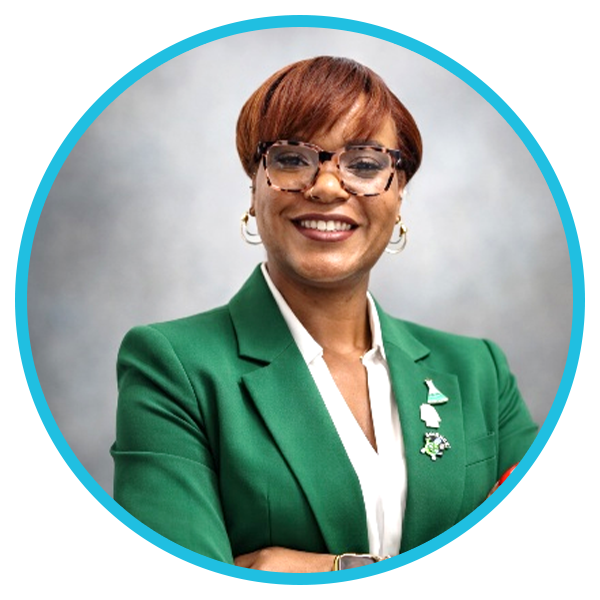
Sierra Graves
Thrive Christian Academy
Tucker, GA
Sierra Graves’s work as a science educator has been rooted in this truth: STEM should be a space where every child discovers their brilliance, their belonging, and their voice. Every lesson she designs, every student she mentors, every program she builds, and every barrier she helps dismantle is driven by reshaping what STEM looks like, who it includes, and who feels at home within it. As a middle school science teacher, she designs inquiry-rich, hands-on experiences that help students see science as something they could question, own, and create. She transitioned into the role of Director of STEM Integration and Innovation while continuing to teach middle school STEM. In this dual role, she leads the science department, oversees curriculum alignment, coaches teachers, and guides the science fair process across grade levels. As director and teacher, she designed a comprehensive STEM program integrating 3D printing, laser engraving, robotics, coding, and digital storytelling, and launched THRIVE’s inaugural multiweek Summer STEM Camp to extend learning beyond the school year. This year, she formed and coached THRIVE’s first all-Black boys robotics team that placed 5th out of 200 teams in a statewide competition. Former students who once doubted themselves hold degrees in biology, nursing, and engineering and are stepping confidently into laboratories, hospitals, and design firms. Advancing science and STEM education for students of color is not just meaningful—it is urgent, legacy-building, and life-changing. At the NSTA conference Graves will be presenting on her work in equity and advocacy in STEM education and taking the opportunity to learn, grow, and return to her school community with new insights that will enrich instruction and expand student opportunities.
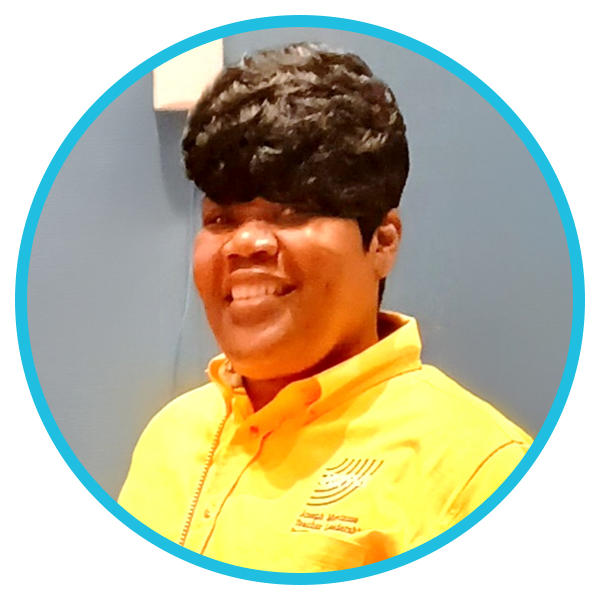
Kinya Heard
Park Forest Middle School
Baton Rouge, LA
Kinya Heard’s journey as a science educator has been shaped by a simple belief: all students deserve meaningful, engaging, high-quality science learning experiences. Working with limited resources has motivated her to make science come alive for students and to ensure they experience it as relevant, exciting, and attainable. She emphasizes science and engineering practices by encouraging students to ask questions, investigate problems, analyze data, and explain their thinking using evidence. She is creative and intentional when planning instruction by designing hands-on learning experiences using low-cost materials, group collaboration, and problem-based challenges that reflect real-world science and engineering. She also believes strongly in giving students learning experiences beyond the classroom by organizing and leading educational field trips to NASA in Houston and the Disney Youth Education Series (YES) Program. During these trips, students participated in structured STEM learning and interacted with real-world scientific systems and professionals. Equity is at the heart of her work. Teaching in an urban school has reinforced the importance of advocating for access to quality science instruction and opportunities. She is committed to ensuring students receive learning experiences comparable to those in more resourced schools. She continuously seeks partnerships, professional development, and new strategies to better support her students. Attending the NSTA conference is an important part of her ongoing professional development and commitment to improving science instruction for students in underserved communities. At the conference, her primary goal is to gain instructional strategies and resources that help her clearly connect science content to college and career pathways for her students.
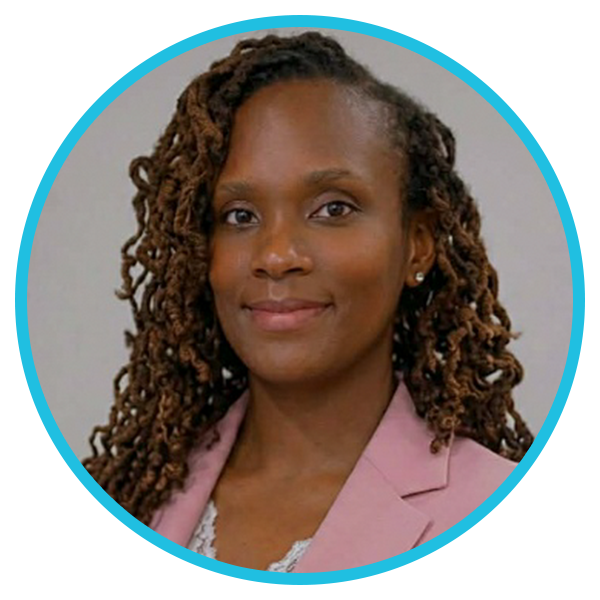
Danielle English Jones
Proviso West School
Hillside, IL
Danielle English Jones’s journey in science education is rooted in perseverance, opportunity, and a deep commitment to giving back to the community that shaped her. She often had to work harder to make the same academic gains as her peers, but she refused to give up. That determination continues to define both her approach to science and her work as an educator. She began her teaching career in Chicago Public Schools at a turnaround school serving students with significant academic and social-emotional needs. Teaching in this environment was challenging, but it reaffirmed her commitment to equity, access, and excellence in science education. She understood firsthand what it meant to struggle academically, to need multiple exposures, and to persist despite obstacles—experiences that continue to shape how she teaches and supports students. In 2025, she was named an Illinois State Board of Education (ISBE) Teacher of the Year. Attending the national conference will be a meaningful extension of her work as a science educator and instructional leader focused on inquiry-driven, equitable science instruction. Her professional goal is to continuously refine her practice in ways that make science engaging, relevant, and accessible to all students. This conference provides a valuable opportunity to deepen her learning, explore emerging instructional strategies, and bring innovative practices back to her classroom and school community.
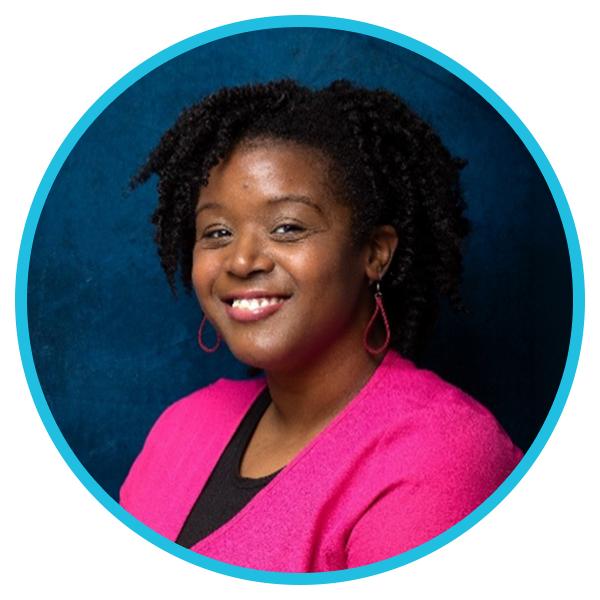
Tiffany Scott
Grovetown Elementary School
Grovetown, GA
Tiffany Scott’s love for STEM began in her formative years thanks to Mrs. Frizzle and Bill Nye the Science Guy. Though she didn’t know it then, their enthusiasm for teaching and inspiring curiosity would later shape her teaching philosophy and approach to science education. For 17 years, she has taught science to upper elementary students in Louisiana, where she brought authentic, memorable STEM experiences into and beyond her classroom. During her first year teaching third grade, her students extended their learning through a schoolwide Science Day where students worked alongside teachers while rotating through investigation stations. The next seven years of her career were spent teaching fourth grade. Highlights from this time included creating homemade lava lamps, hosting community members who worked in STEM careers, and participating in meaningful field trips. Her final decade in Louisiana was spent teaching fifth grade where she learned the power of building strong relationships with community partners. In her third year, she co-founded the school’s first FIRST LEGO League robotics club where students learned to code and competed in district competitions. For the past two years in Georgia she has brought enthusiasm, creativity, and STEM experiences to her fifth-grade scientists. Finally, she would love to empower her students to use AI technology properly, which would further refine their digital citizenship and possibly spark a career interest for a field they had not previously considered.
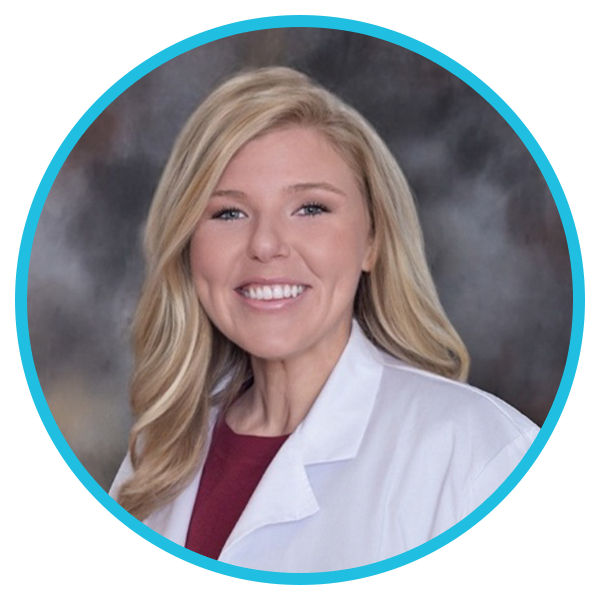
Stephanie Trimble
Brusly Elementary School
Baton Rouge, LA
Stephanie Trimble’s mission is to ensure that every child has access to high-quality, hands-on science learning that builds curiosity, confidence, and identity as a scientist. Her professional practice centers on creating relevant, culturally responsive science experiences that highlight the community’s strengths. She designed and implemented a schoolwide agriscience initiative where teachers installed a small animal pen, raised chickens from incubators, established a school garden, and created outdoor learning spaces. Students collect daily weather data, investigate plant and animal needs through direct observation, model habitats, and apply engineering design principles to create protective structures for the chickens. Bringing science to life in this way has significantly increased student engagement and pride. Through the success of this initiative, Trimble has taken on a leadership role in expanding STEM access for historically underserved populations. She collaborates with general education and special education teachers to differentiate investigations so all students can experience success. She also serves as a mentor teacher for interns and new hires, supporting their growth in aligned science instruction, effective student discourse routines, and integration of engineering design challenges. She collaborates with colleagues to plan professional learning communities focused on data-driven decisions to close gaps in science literacy. Last year’s NSTA conference reinforced her commitment to equitable STEM education and inspired her to implement new inquiry routines. Her goals for the next NSTA conference include building a network of educators committed to equity in STEM, gathering resources and strategies to lead professional development in her district, and planning sustainable follow-through to impact students and community.