


 Join
JoinFrom Chalkboards to AI
Beyond the Stock Image: Using AI Image Generation as a Learning Tool
By Christine Anne Royce, EdD, and Valerie Bennett, EdD, PhD
Posted on 2026-05-18
Disclaimer: The views expressed in this blog post are those of the author(s) and do not necessarily reflect the official position of the National Science Teaching Association (NSTA).
The evolution of artificial intelligence (AI) has been nothing short of a whirlwind over the past 3 1/2 years. AI has moved from simple text-based chatbots to sophisticated systems capable of generating intricate, high-fidelity imagery based on a mere string of words. For those of us navigating the intersection of technology and the classroom, this shift represents more than just a new digital tool; it marks a fundamental change in how we can visualize the invisible, document the observable, and bridge the gap between abstract scientific concepts and concrete understanding.
When we look at the rapid improvement in AI image generation—which has moved from images with distorted limbs to photorealistic, anatomically correct representations—we find a powerful tool to use in the science classroom. Using AI image generation isn’t about replacing hand-drawn diagrams, sketched observations, or existing technology such as a microscope; it’s about augmenting the pedagogical toolkit for both the educator and the learner.
The Teacher's Perspective: Precision and Pedagogy
For an educator, a primary challenge in science instruction often involves helping students visualize the extremely large, the minutely small, or the abstract. For instance, how can you show a middle schooler the specific mechanisms of ocean currents that influence wind patterns or illustrate the hypothetical landscape of an exoplanet based on atmospheric data? Teachers have typically relied on stock photos or textbook diagrams that may be dated or slightly off-topic. Furthermore, when students view these images, it is often from a passive perspective. AI illustration offers several benefits from a teacher’s perspective.
Customization and "Just in Time" Visuals
AI image generation allows teachers to create custom visuals that align perfectly (well, almost perfectly) with a specific lesson plan. Instead of searching for a “good enough” image of a tectonic plate boundary, a teacher can prompt a tool to create a cross-section showing a specific subduction zone, complete with labeled magma chambers and crustal folds. This customization ensures the visual aid is a direct extension of the lesson, rather than a tangential supplement.
Scaffolds for "What If?" Scenarios
Science is built on inquiry, questioning, and the exploration of variables. Generative AI allows teachers to create “comparative visual sets.” For instance, an environmental science teacher can generate a series of images depicting a local ecosystem under different climate scenarios:
- Scenario A: current rainfall levels
- Scenario B: 20 percent decrease in precipitation over 10 years
- Scenario C: two-degree increase in average temperature
Viewing these theoretical outcomes rendered with realistic detail helps students move from seeing abstract numbers to recognizing tangible environmental impacts.
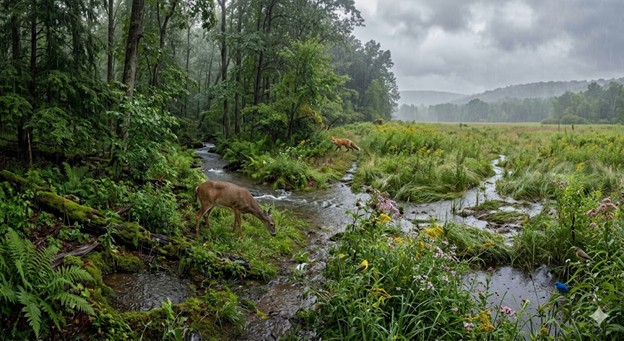
Scenario A prompt (Gemini with Create Image feature enabled): Generate a picture of a woodland or meadow ecosystem in Pennsylvania that has the current level of rainfall. Make the picture realistic.
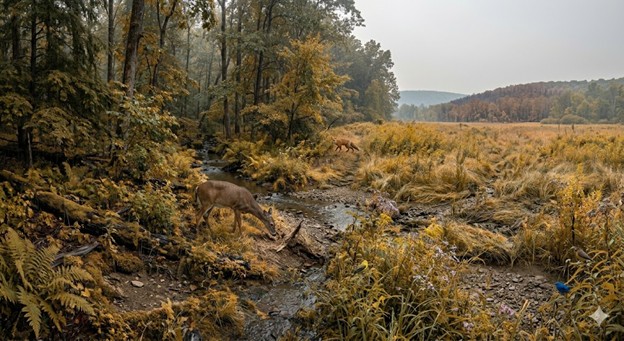
Scenario B prompt (Gemini with Create Image feature enabled): Regenerate the same picture, but account for the fact that over a period of a decade, the rainfall amount has decreased by an average of 20 percent. Change nothing else about the image except for factoring in this information.
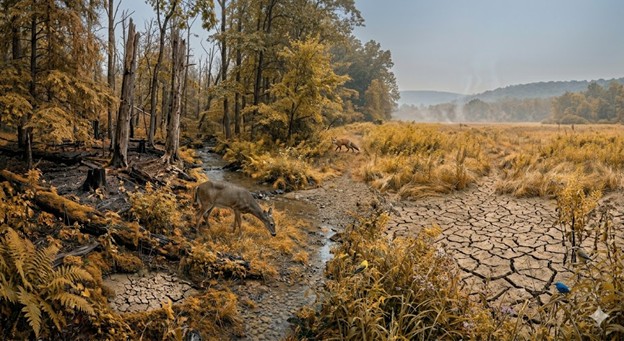
Scenario C prompt (Gemini with Create Image feature enabled): Regenerate the same pictures (so you are redoing picture A and picture B) and factor in the following information for each: a two-degree increase in average temperature each year for a decade. Change nothing else about the images except for factoring in this information.
By using photos like these, students can at least engage in conversation about what might cause the change with the information provided.
The "Prompt as Assessment" Strategy
In this context, the prompt itself becomes evidence of learning. Teachers can evaluate a student’s understanding of a concept by looking at the specific descriptors they fed to the AI:
- Novice prompt: “a picture of a mountain forming.”
- Expert prompt: “a cross-section diagram of a convergent boundary between an oceanic and continental plate, showing a subduction zone, a deep-sea trench, and the formation of a volcanic arc on the overriding plate.”
The difference between these two isn’t just “better writing”; the expert prompt demonstrates the student’s deep scientific literacy. AI’s improved ability to render high-detail imagery means it can now reward this level of specificity.
To get a usable result from an AI image generator, a student or teacher cannot simply type “Show me a cell.” The resulting image might be a generic blob or a stylized artistic interpretation that lacks pedagogical value, or the program may pull from an online stock image gallery. To create a tool for learning, the user must use technical vocabulary and structural understanding. When a student is required to prompt an AI, they essentially take a verbal practical exam. To generate a useful image of a chloroplast, the student must specify the components of the chloroplast. If they don’t understand the anatomy of the organelle, they cannot write the prompt; if they cannot write the prompt, the AI cannot produce the image. This need for a specific prompt creates a powerful feedback loop in which the technology demands the very content mastery it is being used to illustrate.
The Student’s Perspective: From Consumer to Creator
The true magic happens when the “prompting” power is handed to the students, which shifts their role from passive consumers of scientific information to active creators of scientific models. Developing a prompt also requires students to think deeply about the content and narrative they must use to create the images.
Mental Models and Conceptual Check-ins
Asking a student to “draw” a cell is a classic assessment. However, some students are limited by their artistic ability, which can mask their actual scientific understanding. AI image generation may level the playing field. If a student can accurately describe the organelles and their functions in a prompt such as “Generate a 3D cross-section of a plant cell featuring a prominent central vacuole, green chloroplasts, and a rigid cell wall,” then they are demonstrating conceptual mastery through descriptive language.
Visualization of Hypotheses
In the inquiry process, students form hypotheses. AI tools allow them to visualize those predictions. A student studying evolutionary biology could prompt an AI to visualize how a specific bird species might adapt its beak over 1,000 years if its primary food source changed from soft fruit to hard-shell nuts. This “visual hypothesis” serves as a springboard for deeper discussion and research into the actual mechanics of natural selection.
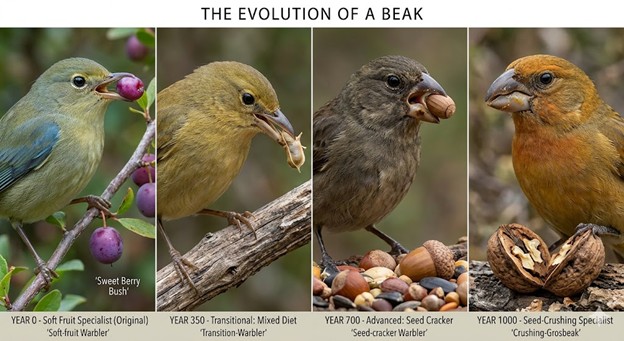
Prompt (Gemini with Create Image feature enabled): Generate a photo of a bird that normally eats a soft fruit. However, due to changes in their environment, provide three different pictures of how adaptations of that bird (specifically the beak) might change over 1,000 years if soft fruits begin to disappear and more hard-shell nuts and seeds emerge as the food source. Altogether, there should be four (realistic) pictures of the bird and the adaptations.
Digital Lab Reports and Creative Documentation
The standard lab report can be transformed into a rich, multimodal document. Students can use AI to create “reconstructions” of their experiments or to visualize data in artistic ways. For example, after a field trip to a local stream, students could use AI to create a microscopic-eye view of the macroinvertebrates they discovered by giving the AI their field notes and sketches. Students can not only provide their original sketches but also provide guidance to AI on how to enhance the sketches.
Navigating Challenges: The Need for AI Skepticism
As with any powerful tool, the use of AI in the science classroom must be tempered with a healthy dose of skepticism. This is where the teacher’s role as a facilitator of sensemaking activities becomes critical.
- Accuracy vs. aesthetics: AI can generate a beautiful image that is scientifically “hallucinated.” A student might generate a heart with five chambers because they think it looks better. Educators must teach students to verify the accuracy of AI-generated content against peer-reviewed sources and empirical data.
- Bias in training data: If a student uses the prompt “a scientist in a lab,” the AI might default to a stereotypical image. This image can provide a teachable moment regarding the biases inherent in technology and the importance of diversity in science, technology, engineering, and mathematics (STEM).
- The ethics of authorship: Discussing who “owns” an AI image and the importance of citing the AI tool used (and the prompts crafted) is an essential part of cultivating modern digital literacy.
Conclusion: Designing the Future of Science Literacy
The improvement in AI image creation is not a shortcut; it is a bridge. AI image generation allows us to take the complex, often invisible world of science and make it visible, personal, and interactive. We also need to ensure the technology is actually redefining the learning experience rather than just replacing a pencil as we empower the next generation of scientists to not only understand the world but also visualize its possibilities.
As we move from chalkboards to AI, the goal remains the same: Foster curiosity, encourage inquiry, and help students make sense of the magnificent complexity of the natural world.
The following video and audio synopsis of this blog were generated using Google NotebookLM's features. They have been reviewed for alignment to the blog and accuracy.
 Christine Anne Royce, EdD, is a past president of the National Science Teaching Association and currently serves as a professor in teacher education and the co-director for the MAT in STEM education at Shippensburg University. Her areas of interest and research include using digital technologies and tools within the classroom, global education, and the integration of children’s literature into the science classroom. She is an author of more than 140 publications, including the Science and Children “Teaching Through Trade Books” column.
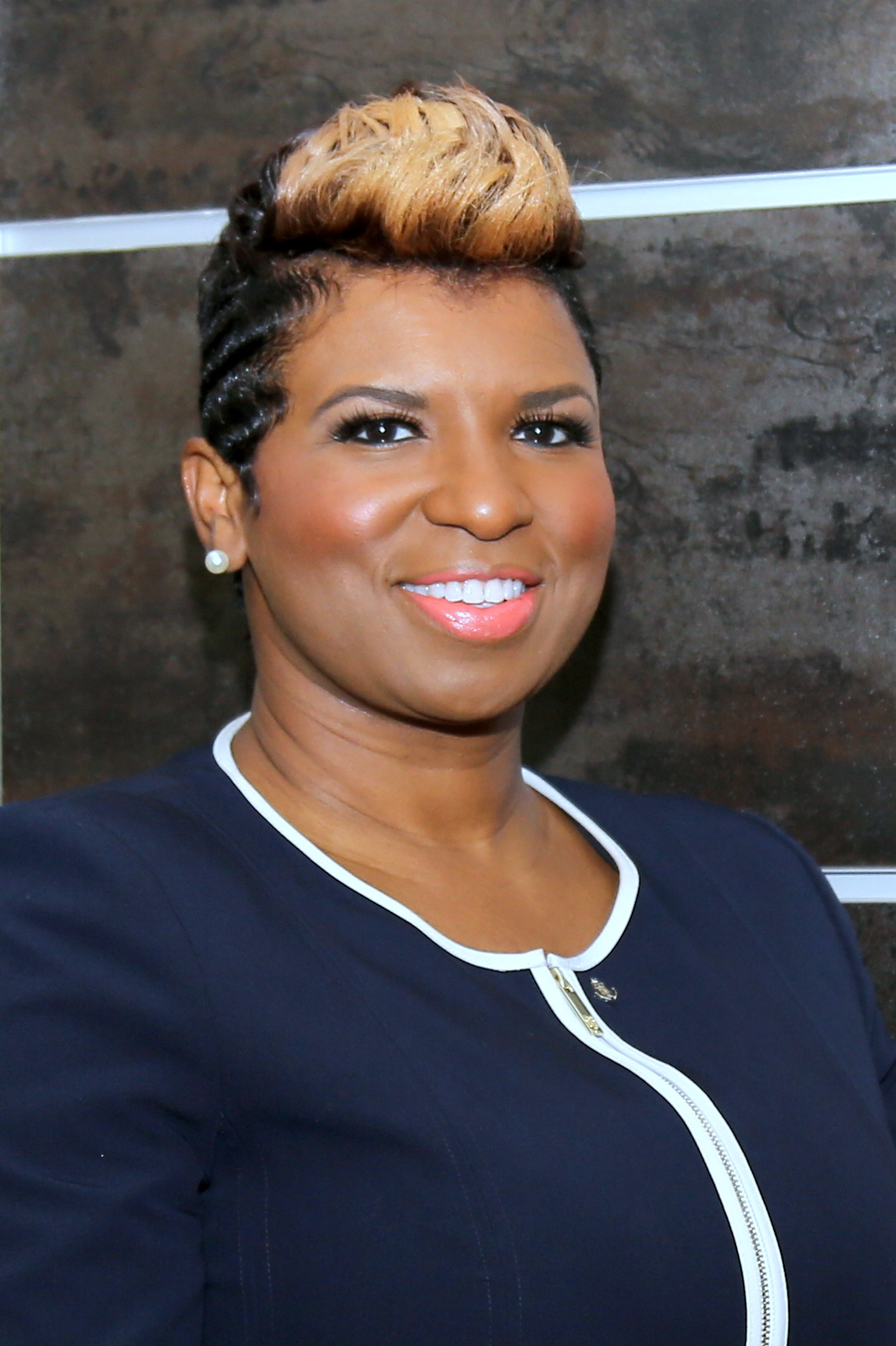 Valerie Bennett, PhD, EdD, is an assistant professor in STEM education at Clark Atlanta University, where she also serves as the program director for graduate teacher education and the director for educational technology and innovation. With more than 25 years of experience and degrees in engineering from Vanderbilt University and Georgia Tech, she focuses on STEM equity for underserved groups. Her research includes AI interventions in STEM education, and she currently co-leads the National Science Foundation Noyce grant, works with the Atlanta University Center Consortium Data Science Initiative, and collaborates with Google to address workforce diversity and engagement in computer science in the Atlanta University Center K–12 community.
This article is part of the blog series “From Chalkboards to AI,” which focuses on how artificial intelligence can be used in the classroom in support of science as explained and described in A Framework for K–12 Science Education and the Next Generation Science Standards.
The mission of NSTA is to transform science education to benefit all through professional learning, partnerships, and advocacy.