

 Join
JoinBuilding Futures: How Science Coaches Empower Title I Students Through Technology and Innovation
By Jason Strohl
Posted on 2025-12-10
Disclaimer: The views expressed in this blog post are those of the author(s) and do not necessarily reflect the official position of the National Science Teaching Association (NSTA).
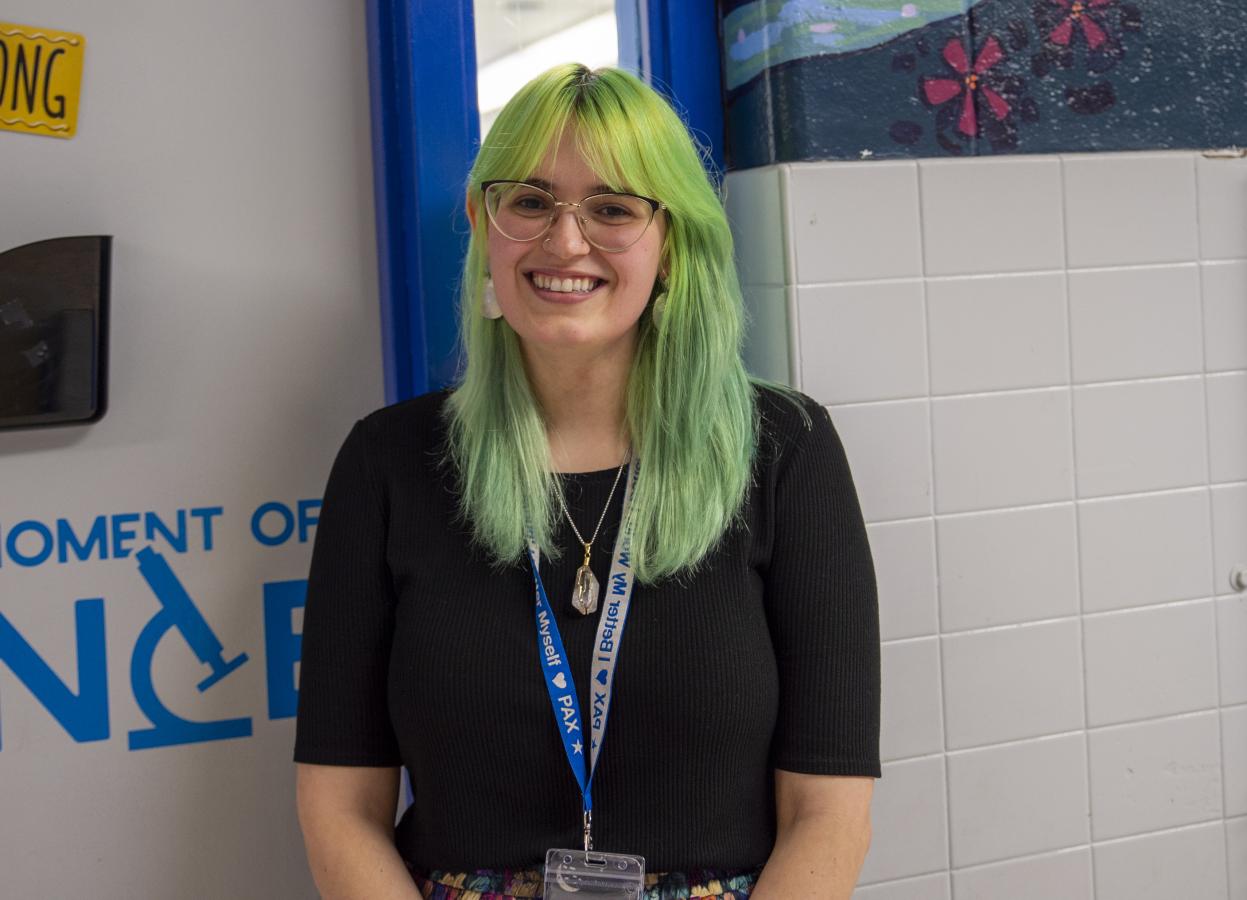
In a fourth-grade classroom at an elementary school in Richmond, Virginia, students aren't just memorizing that king snakes are predators: They're embodying them. They're designing business cards, creating animated voices, and advertising their "vermin removal services." This creative approach to science education, facilitated by educational technology integrator Arianna Trickey, represents a powerful shift in how Title I schools are preparing students for future success.
Trickey's journey to her current role mirrors that of many students she serves. Growing up in a low-income household, she experienced firsthand how dedicated educators could transform a child's trajectory. "I had these amazing educators my entire life [who told me] ‘You can use this brain and become anything you want to be,’" she recalls. Now, after more than a decade in education, she channels that same belief into her work across three Richmond elementary schools where all students qualify for free and reduced-price lunch programs.
As a technology coach, Trickey occupies a unique position that allows her to be "content agnostic," supporting teachers across all subject areas. But science holds particular significance in Richmond Public Schools, where performance in this area impacts school accreditation. Her response isn't to drill standards into students but to make science irresistibly engaging through technology integration.
The tools at her disposal range from micro:bit software that allows students to code and collect data, generating their own graphs and visualizations, to Adobe Express, which makes ecological concepts come alive through student-created content. These aren't just activities: They're doorways to future careers. "I want to see Title I students going down these pathways," Trickey explains. "And I think if somebody is not showing it to them really explicitly, then they don't even assume or imagine that's something they can do."
This intentionality proves crucial in Title I environments. It is widely accepted that students from low-income backgrounds have less exposure to STEM careers and fewer role models in these fields. Trickey addresses this gap directly through initiatives like her Girls Who Code club, in which 22 students in grades 3–5 gather not just to learn programming, but also to see themselves as future professionals. When fifth graders speak about "networking opportunities" and declare they'll be "women in STEM," as they do in Trickey’s club, the seeds of possibility are clearly taking root.
The phenomenon-based approach Trickey champions aligns with contemporary understanding of how children learn best. Rather than memorizing isolated facts, students engage with real-world phenomena that spark curiosity and demand explanation. When fourth graders use simulation platforms, like Gizmos, to observe cause-and-effect relationships that might take days or even years to unfold naturally, they develop both content knowledge and critical-thinking skills.
But perhaps Trickey's most important insight centers on mindset rather than methodology. "For elementary school, science instruction always boils down to [not just] getting students to understand the worlds that they're in, but also to think critically, use facts, and just find out what is really going on," she notes. In an era of misinformation and rapid technological change, these skills—curiosity, critical analysis, and evidence-based reasoning—may be the most valuable gifts educators can offer.
The long-term impact of her philosophy becomes visible as former students return with their success stories. Some have become the first in their families to attend college. Others have earned full scholarships to universities. These outcomes stem from more than academic preparation; they reflect a fundamental shift in how students see themselves and their possibilities.
Trickey's advice to new teachers reveals the communal nature of this work. "Teaching is not a solo sport. It's collaboration at its core," she contends. This principle applies equally to student success in Title I schools. When science coaches, classroom teachers, and specialized instructional teams work together, they create ecosystems of support that can overcome resource limitations and other barriers, she asserts.
As Trickey reflects on her students' futures, her hope transcends specific career paths or academic achievements. She envisions students who've discovered something that "sparked their interest in a way that's going to carry them through the difficult years" of middle and high school. Whether that spark comes from designing a business card or programming with micro:bit to collect temperature data matters less than the fundamental message such experiences convey: Your curiosity matters, your creativity has value, and you belong in spaces that shape the future, she maintains.
The mission of NSTA is to transform science education to benefit all through professional learning, partnerships, and advocacy.