


 Join
JoinSafety Blog
Laboratory PPE Condition Assessment & Resulting Replacement Protocol
By Ken Roy
Posted on 2026-03-12
Disclaimer: The views expressed in this blog post are those of the author(s) and do not necessarily reflect the official position of the National Science Teaching Association (NSTA).
How often should laboratory personal protective equipment (PPE) condition be assessed and, if necessary, replaced to help keep students and teachers safe during teaching /learning activities? This is often an overlooked question but is the one that has the highest impact relative to lab safety practices in school science/STEM instructional spaces. Old, damaged, or poorly fitted PPE gives a false sense of protection and is potentially worse than no PPE at all. This commentary will provide a practical, school-appropriate inspection assessment and replacement protocol aligned with legal safety standards (OSHA, NFPA, etc.) and better professional safety practices (NSTA, NSELA, ANSI, etc.).
How Often Should PPE Be Inspected?
Teachers should perform quick checks before every lab activity. This inspection should look for
- Cracks, tears, cloudiness, or warping
- Missing straps, loose fasteners, or poor fit
- Contamination from chemicals, biologicals (e.g. mold, mildew, etc.), or residues
- Dry rot, brittleness, or odor (especially gloves & aprons)
If it looks questionable, it should be removed immediately!
Teachers should also perform a monthly formal visual inspection that documents date, condition, and action taken. The inspection should include chemical splash goggles and safety glasses with side shields, face shields, lab coats and aprons, and gloves (stored stock). Discard anything borderline. Don’t stretch PPE life!
The teacher, department head, or safety compliance officer/chemical hygiene officer should also perform an annual review of all PPE inventory and compliance. The annual inspection should confirm that all PPE meets current standards (ANSI Z87.1, OSHA lab standard and PPE for eye protection), that sufficient sizes are available for all students, that emergency PPE (spill goggles, gloves) is accessible and intact and that a replacement budget is in place for the year.
When Should PPE Be Replaced?
The following recommendations provide guidance as to when PPE needs to be replaced.
Eye & Face Protection
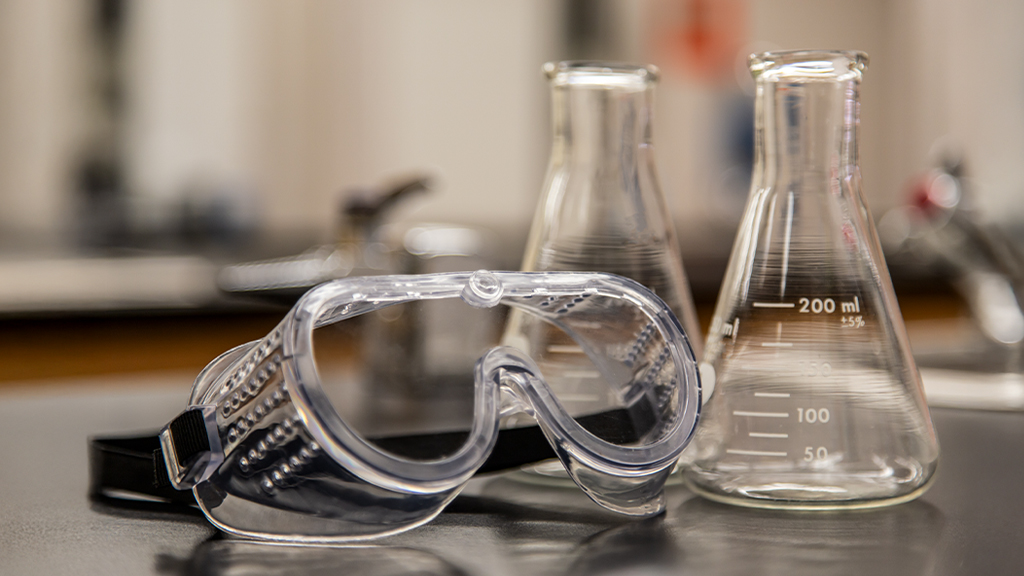
Eye and face protection (e.g., splash goggles/safety goggles, face shields, etc.) should be replaced when scratched, cloudy, cracked, or when it provides a poor seal on the face. Typical lifespans are 2-5 years.
Gloves
Disposable nitrile/latex gloves should be replaced after each use. Reusable chemical gloves should be replaced when stiff, cracked, swollen, or sticky. These should be inspected monthly. An expired glove could fail instantly upon use; the manufacturer’s dates should be checked before use.
Lab Coats & Aprons
Lab coats should be replaced if there are tears, chemical staining, or a loss of repellency. Lab coats used for chemicals should not go home for laundering. Chemical aprons with cracks, brittleness, or chemical damage should be replaced.
Best Practices That Work
To extend the life of PPE, the following safety practices should be followed:
- Assign a “PPE retirement bin” so unsafe gear doesn’t sneak back into the instructional laboratory space.
- Color-code inspection tags (green = OK, red = discard).
- Teach students how to inspect their own PPE
- Keep extra goggles or safety glasses on hand for quick swaps as needed.
- Store PPE away from heat, ultraviolet light (UV), and chemicals.
- Unsafe PPE must be placed in a retirement bin which is kept in an appropriate location.
Inventory and Training
Appropriate inventory levels must be established to ensure sufficient PPE for the class size, with approximately 20% additional equipment available to accommodate replacements. If PPE inventory is insufficient for the number of participants, hands-on activities or demonstrations should not be conducted. Additionally, students must receive instruction on proper PPE use and inspection protocols prior to utilizing the equipment.
Item-Specific Disposal Guidance
PPE disposal requirements vary depending on the type of equipment and any associated hazards. The following list outlines the recommended disposal procedures.
Gloves
Non-contaminated gloves can go directly into trash receptacles. However, if there is biological or chemical exposure, gloves need to be placed in hazardous/biohazard waste containers.
Safety Goggles and Face Shields
Reusable safety goggles/glasses and face shields must be cleaned with soap and water, then disinfected using a goggle sanitizer cabinet. Any goggles, glasses, or face shields that are broken or otherwise damaged should be placed in a plastic bag and discarded.
Lab Coats and Aprons
Cloth items must be laundered separately from other clothing. If the item is disposable, the appropriate decontamination procedure must be followed (see below).
Decontaminate when Possible
When it is appropriate and safe to do so (e.g., after the class has been dismissed), rinse safety goggles and face shields. Minor acid or base splashes should be neutralized in accordance with the guidance provided in the applicable Safety Data Sheets (SDS). PPE contaminated with solvents may be allowed to evaporate in a fume hood, if permitted by policy. However, heavily contaminated disposable PPE should never be cleaned.
Use Proper Containers
Ensure that laboratory instructional spaces are equipped with clearly labeled hazardous waste bins, red biohazard containers, sharps containers (for scalpel blades and other sharp objects), and designated boxes for broken glass. Appropriate signage should also be posted to clearly indicate proper disposal for each type of waste.
Legal Safety Standards & Better Professional Safety Practices
Teachers and supervisors must be aware of applicable legal safety standards and recognized professional safety practices to ensure appropriate replacement and maintenance of laboratory PPE. The following are examples of such standards and practices:
- OSHA 29 CFR 1910 Subpart I – PPE
https://www.osha.gov/laws-regs/regulations/standardnumber/1910/1910subparti - ANSI Z87.1 – Eye & Face Protection
https://safetyequipment.org/worker_protections/eye-face-protection/ - NFPA 45 – Fire Protection for Labs
https://www.nfpa.org/news-blogs-and-articles/blogs/2025/02/11/fire-safety-in-laboratories-and-nfpa-45 - NSTA Safety in the Science Classroom
https://static.nsta.org/extras/riseandshine/Appendix5.1.
Final Thoughts on Recycling PPE
If PPE is damaged, cloudy, improperly fitting, expired, or contaminated, it must be removed from the classroom or laboratory and properly discarded. Under no circumstances should it remain in use. It’s done – no exceptions!
Submit questions regarding health and safety issues in science/STEM instructional spaces to Ken Roy at safersci@gmail.com. Follow Ken Roy on X: @drroysafersci.
The mission of NSTA is to transform science education to benefit all through professional learning, partnerships, and advocacy.