


 Join
JoinBuilding STREAM Ecosystems in Rural Communities: Connecting Agriculture, History, and Real-World Learning
By Rochelle Darville, PhD
Posted on 2026-06-24
Disclaimer: The views expressed in this blog post are those of the author(s) and do not necessarily reflect the official position of the National Science Teaching Association (NSTA).
In rural communities, agriculture is not just part of a textbook lesson; it is a way of life. Agriculture shapes families, local economies, traditions, and the community's future, so schools must ensure that students understand the direct connection between what they learn and the world around them. This is why building strong STREAM ecosystems in schools is so important.
STREAM refers to more than science, technology, engineering, and mathematics. It includes reading, art, and agriculture because true learning happens when students can connect knowledge across disciplines and see how it applies to their everyday lives.
A strong STREAM ecosystem enables students to move beyond textbooks and worksheets into authentic, hands-on learning experiences that spark curiosity, build confidence, and prepare them to be leaders in the future.
Why STREAM Matters in Rural Communities
In many rural communities, agriculture is the heartbeat of the local economy. Students are surrounded by farming, land stewardship, food production, and environmental challenges, but they do not always see these experiences as connected to science, engineering, literacy, or innovation. Schools have a responsibility to help students make those connections.
Agriculture naturally integrates every other part of STREAM:
- Science helps students understand soil health, plant growth, ecosystems, weather patterns, and sustainability.
- Technology introduces students to drones, irrigation systems, GPS mapping, precision farming, and data collection.
- Reading ensures students can interpret agricultural data, research solutions, understand environmental issues, and communicate effectively.
- Engineering engages students in designing irrigation systems, hydroponic gardens, greenhouse structures, and solutions for farming challenges.
- Art supports creativity in design, environmental awareness campaigns, product development, and innovative problem-solving.
- Mathematics equips students with the skills to calculate crop yields, analyze costs, measure land, and understand economic sustainability.
When students experience STREAM through agricultural topics, learning becomes relevant and meaningful.
Connecting History to Agriculture Through Place-Based Learning
As part of my own journey to educate youth about agriculture, I began working with the River Road African American Museum in Louisiana to help students understand agriculture within their own communities through both today's farming practices and a community's deep historical roots.
Students need to recognize that agriculture involves more than planting crops. Agriculture is connected to culture, history, economics, sustainability, and community identity.
Through our work with the museum, students explored how agriculture shaped the lives of families and communities along River Road, learning about both the contributions and struggles of those who worked the land. They began to understand how land, labor, food systems, and environmental stewardship are deeply connected.
This kind of place-based learning helps students see agriculture as part of their own story. They learn that innovation in farming did not begin today; rather, it has always been part of survival, resilience, and progress within their communities.
When students understand both the historical and modern impacts of agriculture, they are better prepared to become informed leaders and advocates for sustainability.
Real-World Connections that Create Real Learning
Connecting students directly with local farmers, agricultural engineers, Local Universities such as Louisiana State and Southern A&M University Agriculture Centers, farming professionals, and 4-H clubs allows them to learn from the very people who shape the food systems around them.
These real-world connections help students understand the resources available within their own communities and show them that agriculture is both a career pathway and a community responsibility.
When students engage with farmers and agricultural engineering professionals, they see how science and technology are used daily to solve real problems related to irrigation, crop disease, soil health, livestock care, and sustainable food production, among other agricultural issues.
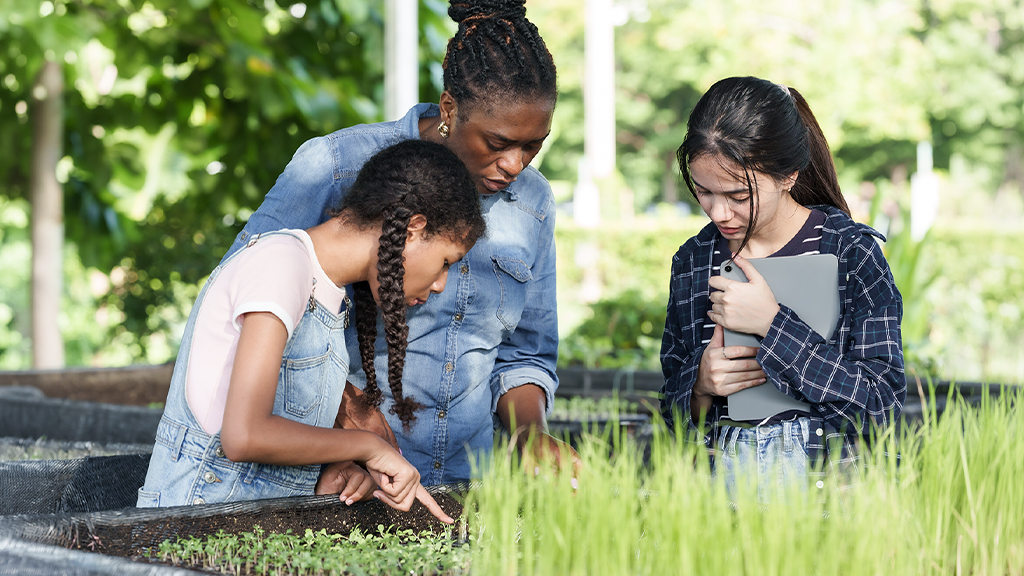
Most importantly, these experiences help students recognize how agriculture can help address one of the most pressing issues in many communities: food insecurity. Students should understand how local food production, school gardens, composting, water conservation, and sustainable farming practices can improve community health and create long-term solutions for hunger. School gardens become living laboratories where students can study ecosystems, food chains, plant life cycles, nutrition, and sustainability while they also learn responsibility and teamwork.
Whether teachers connect lessons to historical contexts or help students understand their relevance to today's world, they can use STREAM experiences to ensure real learning takes place.
Resources
Louisiana 4-H
Louisiana State University AgCenter
NSTA
River Road African American Museum
Southern University A&M College AgCenter
Rochelle Darville, PhD, is a STEM educator at Iberville Elementary School in Plaquemine, Louisiana, and the founder of Wings of Knowledge Blossom, LLC, through which she provides STEM-focused professional development and educational services that integrate literacy, global learning, and hands-on STREAM experiences. She is passionate about creating equitable opportunities for students in rural communities through agriculture, sustainability, and innovative STEM education. LinkedIn: Rochelle Darville
The mission of NSTA is to transform science education to benefit all through professional learning, partnerships, and advocacy.