

 Join
From Chalkboards to AI
Don’t Just Prompt—Build a System
Creating an AI Workflow for Science Teaching
By Valerie Bennett, PhD, EdD, and Christine Anne Royce, EdD
Posted on 2026-10-19

Disclaimer: The views expressed in this blog post are those of the author(s) and do not necessarily reflect the official position of the National Science Teaching Association (NSTA).
Science teachers already work in systems, even if we do not always call them workflows. Before students put on their goggles, teachers have already identified standards; selected phenomena; gathered materials; anticipated misconceptions; prepared investigations; built assessments; and thought carefully about what students should notice, question, model, explain, or defend with evidence. After instruction, that cycle continues as teachers review student work, adjust supports, revise lessons, and prepare for what comes next. And that in itself is a system!
Artificial intelligence (AI) can become part of that system, but only if we move beyond random prompting. Typing “Create a lesson on ecosystems” into a chatbot is not an AI workflow. Asking AI to generate a quiz, summarize a reading, or create a rubric from time to time is not a workflow either. Those are isolated uses of AI that may also not produce the quality output you want.
An AI teacher workflow is a repeatable system that defines when AI enters the teaching process, what job it performs, what information it receives, how its output is checked, how the teacher adapts the AI, and what remains entirely under human control. That distinction matters because AI can save time, but only when teachers use it intentionally. The point is not simply that teachers should use AI more—the more useful lesson is that teachers need a clear system for deciding how and where AI supports their work.
The AI Teacher Workflow
Before thinking about specific science applications for AI, make the workflow explicit. A useful AI teacher workflow can be organized into these seven repeatable steps. The order matters because teachers should begin not with the AI tool, but with the learning goal in mind. They also should not end with the AI output, but rather with professional judgment based on their understanding of content and pedagogy. That step turns prompting into a workflow.
Step 1: Define the Learning Goal
Begin with the science, not the chatbot. Before using AI, the teacher should identify what students should know, explain, model, investigate, or defend with evidence. A Framework for K–12 Science Education emphasizes practices such as modeling, investigating, analyzing data, explaining, and arguing from evidence, so those goals should drive the workflow from the start (National Research Council 2012).
Instead of asking AI to “create a lesson on ecosystems,” the teacher should begin with a clearer instructional goal, such as “Students will analyze how a disturbance changes relationships within an ecosystem and use evidence to explain the change.” The teacher defines the destination; AI helps with the route.
Step 2: Give AI the Instructional Context
AI cannot design effectively for a classroom it does not understand. The teacher should give the AI the context that matters: grade level, science discipline, standards, class length, available materials, instructional approach, student needs, and any constraints.
A reusable context statement might explain that the class emphasizes phenomenon-based learning, student discourse, modeling, inquiry, and evidence-based explanations. Research on generative AI and inquiry-based lesson planning suggests that AI is more useful when it supports clearly defined instructional functions rather than serving as an all-purpose lesson generator (Moundridou et al. 2024).
Step 3: Assign AI One Specific Job
Teachers should not ask AI to do everything; they should give it one clearly defined task.
For example, a teacher could ask AI to generate possible anchoring phenomena, draft formative assessment questions, identify likely misconceptions, create discussion prompts, suggest multiple-choice distractors, or provide a first draft of a rubric. Narrow tasks make the output easier to evaluate and revise.
Research suggests that teachers often use generative AI primarily by delegating tasks rather than deeply refining or interrogating the results (Velander 2026). A workflow keeps AI focused on one bounded job while the teacher retains instructional control.
Step 4: Generate a First Draft
Teachers should treat AI output as a starting point, not a finished product. When teaching Newton’s third law, for example, a teacher could ask AI to suggest several everyday phenomena that students could investigate. The teacher could then narrow the list, ask for likely misconceptions, and generate questions that could help students rethink those misconceptions without simply giving them the answer.
This approach keeps AI in a supporting role. Lee and Zhai (2024) found that preservice science teachers saw potential uses of ChatGPT for questioning, formative assessment, individualized support, and self-directed learning while also expressing concerns about accuracy and overdependence. The first draft should therefore lead to teacher review, not directly to students.
Step 5: Verify the Output
Every AI-generated resource should be treated as unverified until the teacher checks it. The teacher should review scientific accuracy, terminology, units, sources, safety, bias, rigor, and alignment with the learning goal.
Kim (2026) found that teachers using generative AI for environmental science lesson design valued its ability to expand ideas, but they still needed to evaluate and reshape outputs to match their instructional goals. In science, this step is especially important because polished language can still contain inaccurate content. For laboratory activities, for example, established safety guidance, district policies, manufacturer instructions, and Safety Data Sheets should always take precedence over AI-generated recommendations.
Step 6: Adapt for Students
Once the content is verified, the teacher should adapt it for their own learners. AI may suggest vocabulary supports, sentence frames, translations, alternate examples, visuals, or extensions, but the teacher decides which supports are appropriate and whether they preserve the rigor of the science.
This is where teacher knowledge matters most. AI does not know which misconception appeared yesterday, which example will connect with a particular class, or which student needs a different entry point. AI can generate options; the teacher makes them instructionally meaningful.
Step 7: Save, Evaluate, and Reuse What Works
A workflow becomes more valuable when teachers refine it over time. After using an AI-supported resource, the teacher should ask whether it actually saved time, improved the lesson, revealed student thinking, or supported access without reducing rigor.
Teachers can save the pieces that work, such as context blocks, phenomenon prompts, misconception checks, claim-evidence-reasoning (CER) feedback structures, question templates, or rubric frameworks. The goal is not to collect hundreds of disconnected prompts, but to build a repeatable teaching system that becomes more useful with experience.
Research on teacher lesson preparation suggests that structured AI use can reduce planning time when it is integrated purposefully into a teacher’s work (Roy et al. 2024). The long-term value comes from turning effective uses into reusable workflows rather than starting over each time.
What AI Workflows Can Look Like in Science Teaching
Workflow 1: Planning a Phenomenon-Based Lesson
A phenomenon-based workflow might begin with the learning goal, move to AI-generated possibilities, and then return quickly to teacher judgment.
Teacher defines learning goal → AI generates possible phenomena → Teacher selects one → AI predicts student notices and wonders → Teacher verifies likely misconceptions → AI drafts discussion questions → Teacher adapts the sequence → Students investigate
For example, when teaching thermal energy, a teacher might ask AI for observable phenomena involving temperature change. After selecting one, the teacher could ask AI to anticipate possible student explanations and generate questions that could help students refine their thinking. AI helps with planning, but the students still do the sensemaking.
Workflow 2: Designing a Laboratory Investigation
AI can also help teachers think through the structure of an investigation while leaving scientific validity and safety under teacher control.
Teacher defines learning goal → AI suggests investigation possibilities → Teacher selects a feasible design → AI helps identify variables and data structures → Teacher conducts safety review → AI drafts analysis questions → Teacher revises → Students investigate
For a force and motion investigation, AI might suggest measurable variables, ways to organize data, or possible follow-up questions. The teacher then can evaluate whether the investigation is scientifically sound, safe, developmentally appropriate, and realistic given the available time and equipment.
Workflow 3: Anticipating Misconceptions
A misconception workflow can help teachers prepare for the ideas students may bring into a unit.
Teacher identifies concept → AI generates possible misconceptions → Teacher verifies misconceptions against credible science education sources → AI drafts diagnostic questions → Students respond → Teacher identifies actual misconceptions → AI helps generate follow-up questions → Teacher selects the instructional response
For example, students may believe that plants obtain most of their mass from soil, that seasons result from Earth’s changing distance from the Sun, or that an object in motion must have a continuous force acting on it. AI can help surface possibilities, but classroom evidence demonstrates which misconceptions students actually hold.
Workflow 4: Building Better Question Banks
Science teachers can build reusable question-generation workflows for different purposes rather than repeatedly asking AI for generic sets of questions.
Teacher defines learning objective → Teacher identifies purpose of question → AI generates draft items → Teacher checks accuracy and cognitive demand → AI revises based on feedback → Teacher selects final questions
A teacher might use one workflow for eliciting prior knowledge, another for classroom discourse, another for multiple-choice distractors based on misconceptions, and another for transfer questions. Question and quiz generation was among the common ways that science teachers used ChatGPT in the trial conducted by Roy et al. (2024). The critical step is to define what student thinking the question is intended to reveal.
Workflow 5: Providing CER Feedback
CER assignments can also fit into a teacher-controlled AI workflow.
Teacher de-identifies the student response → AI compares response with teacher rubric → AI identifies possible strengths and gaps → Teacher reviews analysis → Teacher provides feedback → Student revises
Where institutional policy permits and student information is appropriately protected, AI may help a teacher notice that a claim is clear but the evidence is weak, or that the reasoning restates the evidence without connecting it to a scientific principle. The system can support preliminary analysis, but the teacher makes the final judgment and the student remains responsible for the revision.
Workflow 6: Differentiating Science Materials
AI can help teachers build multiple access points into the same rigorous learning experience.
Teacher identifies the original resource → Teacher identifies barrier → AI generates possible supports → Teacher checks accuracy and rigor → Teacher selects appropriate supports → Students engage with the same core learning goal
Possible supports might include vocabulary previews, sentence frames, chunked directions, translated teacher-created text, visual descriptions, worked examples, or extension questions. The learning target stays constant while the pathway becomes more accessible.
Workflow 7: Designing Data Sensemaking Activities
AI can also support the design of lessons built around authentic or teacher-created data sets.
Teacher identifies the scientific concept → Teacher identifies or creates data set → AI generates pattern-seeking questions → Teacher checks questions → Students analyze data → Teacher identifies areas of confusion → AI helps draft follow-up questions → Students construct explanations
A teacher working with weather data, population change, chemical reactions, or motion could use AI to generate questions that direct student attention toward patterns without revealing the conclusion. The technology assists with scaffolding, but students still perform the analysis.
Workflow 8: Creating Models Students Must Critique
One especially useful science workflow involves asking AI to generate a model or explanation that students should not simply accept.
Teacher identifies scientific concept → AI generates model or explanation → Teacher verifies and identifies limitations → Students critique the model → Students revise the model → Students defend their revisions with evidence
Students might examine an AI-generated representation of a cell, food web, water cycle, atom, ecosystem, or force system. They can identify what the model represents well, what is missing, what is misleading, and how the model should be revised. In this case, the limitations of AI become part of the learning experience.
The following video and audio synopsis of this blog were generated using Google NotebookLM's features. They have been reviewed for alignment to the blog and accuracy.
References
Kim, Won Jung. 2026. “Teachers’ Use of Generative Artificial Intelligence for Designing Science Lessons in Support of Environmental Science Agency.” Research in Science Education 56: 203–22. https://doi.org/10.1007/s11165-025-10262-0.
Lee, Gyeong-Geon, and Xiaoming Zhai. 2024. “Using ChatGPT for Science Learning: A Study on Pre-Service Teachers’ Lesson Planning.” IEEE Transactions on Learning Technologies 17: 1643–60. https://doi.org/10.1109/TLT.2024.3401457.
Miao, Fengchun, and Mutlu Cukurova. 2024. AI Competency Framework for Teachers. UNESCO. https://doi.org/10.54675/ZJTE2084.
Moundridou, Maria, Nikolaos Matzakos, and Spyridon Doukakis. 2024. “Generative AI Tools as Educators’ Assistants: Designing and Implementing Inquiry-Based Lesson Plans.” Computers and Education: Artificial Intelligence 7: 100277. https://doi.org/10.1016/j.caeai.2024.100277.
National Research Council. 2012. A Framework for K–12 Science Education: Practices, Crosscutting Concepts, and Core Ideas. National Academies Press. https://doi.org/10.17226/13165.
Roy, Palak, Helen Poet, Ruth Staunton, Katherine Aston, and David Thomas. 2024. ChatGPT in Lesson Preparation: A Teacher Choices Trial. Education Endowment Foundation.
Velander, Johanna. 2026. “Beyond Operational Skills: Teachers’ AI Knowledge and Interactions with Generative AI in Lesson Planning.” Computers and Education Open 10: 100371. https://doi.org/10.1016/j.caeo.2026.100371.
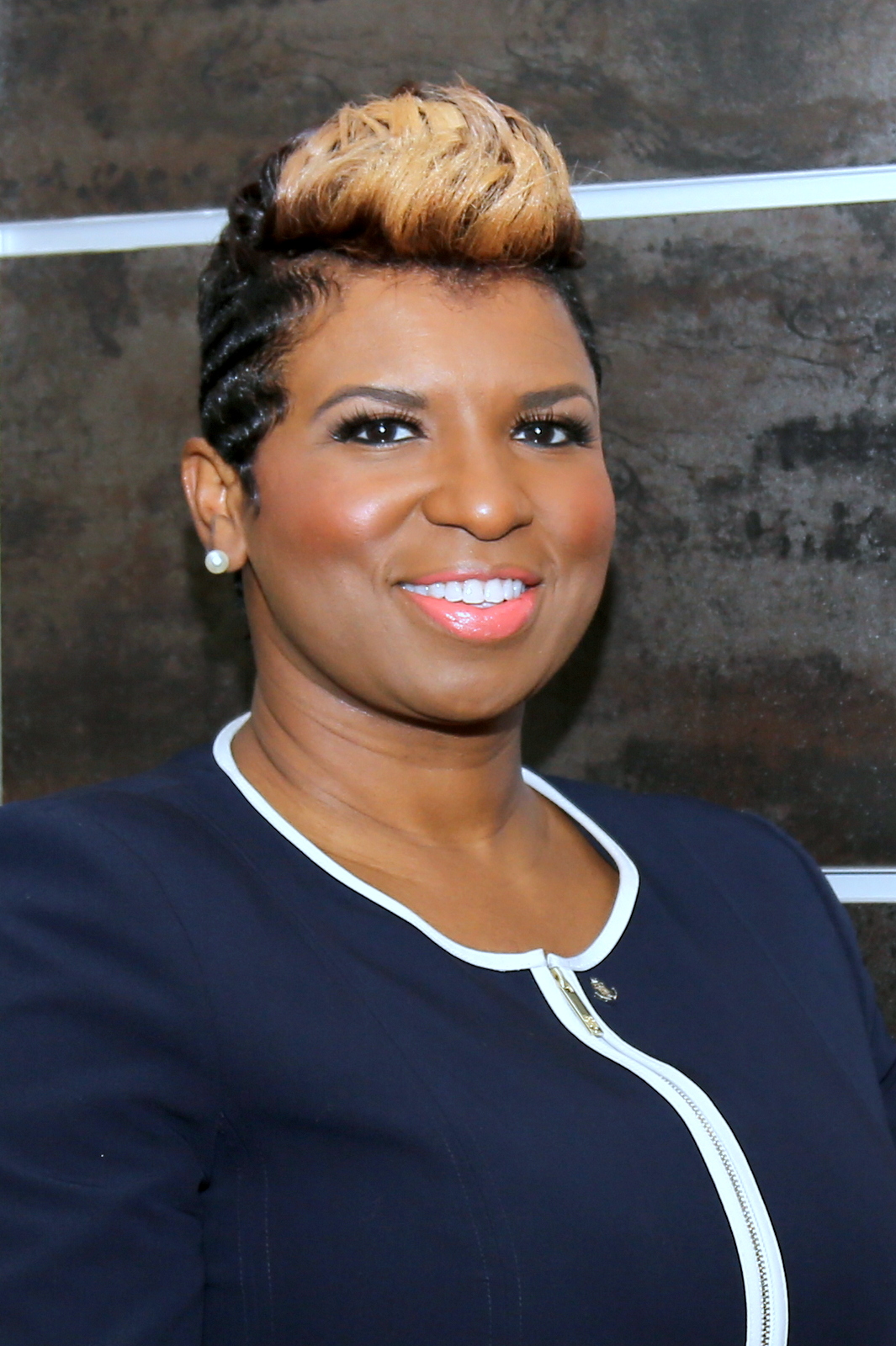 Valerie Bennett, PhD, EdD, is an assistant professor in STEM education at Clark Atlanta University, where she also serves as the program director for graduate teacher education and the director for educational technology and innovation. With more than 25 years of experience and degrees in engineering from Vanderbilt University and Georgia Tech, she focuses on STEM equity for underserved groups. Her research includes AI interventions in STEM education, and she currently co-leads the National Science Foundation Noyce grant, works with the Atlanta University Center Consortium Data Science Initiative, and collaborates with Google to address workforce diversity and engagement in computer science in the Atlanta University Center K–12 community.
 Christine Anne Royce, EdD, is a past president of the National Science Teaching Association and currently serves as a professor in teacher education and the co-director for the MAT in STEM education at Shippensburg University. Her areas of interest and research include using digital technologies and tools within the classroom, global education, and the integration of children’s literature into the science classroom. She is an author of more than 140 publications, including the Science and Children “Teaching Through Trade Books” column.
This article is part of the blog series “From Chalkboards to AI,” which focuses on how artificial intelligence can be used in the classroom in support of science as explained and described in A Framework for K–12 Science Education and the Next Generation Science Standards.
The mission of NSTA is to transform science education to benefit all through professional learning, partnerships, and advocacy.