


 Join
JoinFrom Chalkboards to AI
Before the First Bell: Five AI Truths Science Teachers Need to Know Before Day 1
By Valerie Bennett, PhD, EdD, and Christine Anne Royce, EdD
Posted on 2026-08-24

Disclaimer: The views expressed in this blog post are those of the author(s) and do not necessarily reflect the official position of the National Science Teaching Association (NSTA).
Before the first students enter our classrooms, science teachers complete a familiar set of rituals. We organize laboratory materials, review safety procedures, update course expectations, prepare the first phenomenon, and make sure the goggles still fit.
This year, another item belongs on the back-to-school checklist: deciding how artificial intelligence (AI) will—and will not—be used in the science classroom.
Students are returning to school with access to AI tools that can explain photosynthesis, generate graphs, draft a laboratory conclusion, create an image of a cell, translate scientific vocabulary, and confidently provide citations that may not actually exist. AI platforms are now producing teacher-specific models to aid in everything from management to preparation. Some students will arrive as frequent users of AI, and others will have limited access, little experience, or strong concerns about using it. Teachers will need to navigate that uneven landscape while new tools and features continue to appear.
The good news is that science teachers do not need to master every AI platform before the first day of school. The platforms will change. What teachers need are durable principles that protect students, strengthen scientific thinking, and keep human judgment at the center of learning.
Here are five things every science teacher should know now.
AI Is Not a Truth Machine.
Generative AI systems can produce polished explanations in seconds. The writing may sound authoritative, include technical vocabulary, and follow the familiar structure of a scientific explanation. However, fluency is not the same as accuracy.
AI systems generate responses by identifying patterns and predicting likely outputs. They do not conduct experiments, observe natural phenomena, or evaluate evidence in the same way scientists do. They can omit important variables, oversimplify complex systems, invent data, misrepresent uncertainty, and provide references that do not exist. The National Institute of Standards and Technology (2024) describes this risk as confabulation, or the production of confidently presented but inaccurate or misleading information.
For science teachers, this limitation can become an instructional opportunity. Instead of telling students they should never use AI, we can teach them to approach an AI response as they would any scientific model: Examine its assumptions, compare it with evidence, identify its limitations, and determine where it breaks down.
A student studying ecosystems might ask an AI tool to explain why a local pollinator population is declining. The response may emphasize pesticides while overlooking habitat fragmentation, climate patterns, invasive species, disease, or limitations in the available data. Students can compare the AI-generated explanation with field observations, government data, and peer-reviewed sources. Their task is not simply to decide whether the AI is “right” or “wrong,” but to determine whether the explanation is adequately supported.
Before the first bell: Establish a simple classroom expectation: Verify before you trust. Require students to confirm AI-generated scientific claims with data, course materials, credible scientific organizations, or peer-reviewed sources.
Knowing How to Prompt Is Not the Same as Being AI-Literate.
Many students can type a question into a chatbot, but that does not mean they understand how AI works, how its outputs should be evaluated, or when using it may be inappropriate.
AI literacy includes the ability to understand, evaluate, and use AI safely and responsibly. It also involves recognizing bias, protecting personal information, questioning sources, considering whom an AI system may help or harm, and deciding when human judgment should override a technological recommendation (Mills et al. 2024).
This distinction is especially important in science. A student may know how to ask AI to create a model of an atom but may not notice that the image incorrectly represents scale. A student may generate a graph without recognizing that the AI tool changed the units or removed an outlier. Another student may ask AI to summarize a climate study without reading the methodology or limitations.
UNESCO’s AI Competency Framework for Teachers emphasizes that teachers need more than technical skills. Effective AI use also requires a human-centered mindset, ethical awareness, pedagogical knowledge, and the ability to use AI for professional learning without surrendering teacher agency (Miao and Cukurova 2024).
Science teachers are particularly well positioned to develop these competencies because our classrooms already emphasize evidence, models, uncertainty, revision, and ethical decision-making.
Before the first bell: Plan a short AI-literacy conversation or activity. Ask students what AI can do, what it cannot do reliably, where its information comes from, and how they would test an AI-generated claim. These questions establish that AI use in science will involve judgment—not just prompting.
Student Privacy Is as Important as Laboratory Safety.
Science teachers should never allow students to begin an investigation without reviewing safety procedures. We identify hazards, require protective equipment, discuss appropriate behavior, and explain what to do when something goes wrong.
AI use requires a similar safety mindset.
Information entered into an AI platform may be stored, reviewed, or used to improve future systems, depending on the platform and account settings. Teachers and students should not enter personally identifiable information, grades, disability information, confidential records, private family details, or unpublished student work into any AI system.
UNESCO has warned that the rapid growth of generative AI has outpaced many regulatory and institutional responses, leaving schools with important questions about privacy, validation, age restrictions, and human oversight (Miao and Holmes 2023). The U.S. Department of Education similarly recommends that schools examine privacy, data security, accessibility, bias, civil rights, and equity before adopting AI-enabled educational tools (Office of Educational Technology 2024).
Before using an AI platform, teachers should know whether it has been approved by the school or district, what information it collects, whether students need individual accounts, what age restrictions apply, and whether students have a non-AI alternative.
Science activities create additional concerns because students may be working with photographs, geographic information, health-related data, field observations, or community-based research. Uploading a spreadsheet containing student names or precise locations may create risks that are not immediately visible.
Before the first bell: Create an AI safety rule that is as clear as your laboratory safety rules: Never enter private, identifying, sensitive, or confidential information into an AI tool. Use district-approved platforms, and provide an equivalent alternative when students cannot or should not use AI.
AI Detection Is Not a Substitute for Good Assessment.
One of the greatest back-to-school concerns is how to determine whether students completed work themselves. Teachers may be tempted to rely on AI-detection software, but current detection systems cannot consistently determine whether a passage was written by a person, generated by AI, or created through a combination of both.
In a large evaluation of AI-detection tools, Weber-Wulff and colleagues (2023) concluded that the tested systems were neither sufficiently accurate nor reliable. The performance of these systems also declined when AI-generated text was edited, translated, or intentionally modified. A detection score should therefore never serve as the sole evidence that a student violated an academic-integrity policy.
The stronger approach is to design assessments that make student thinking visible.
In science, this approach means collecting more than the final laboratory report or having students give a presentation. Teachers can examine students’ initial predictions, investigation plans, data tables, annotated models, laboratory notes, revisions, photographs of prototypes, explanations of unexpected results, and responses to follow-up questions.
Students who use AI can also submit a brief AI-use declaration that explains the following:
- what tool they used
- what they asked AI to do
- which suggestions they accepted or rejected
- how they verified the output
- what scientific thinking remained their responsibility
An AI tool may be able to produce a polished conclusion, but it cannot reproduce a student’s complete learning journey. It cannot independently explain why the student changed the procedure after the first trial, defend the decision to remove a data point, or respond authentically when the teacher asks, “What would you do differently next time?”
Before the first bell: Revise at least one major assignment so that the process counts as part of the assessment. Add checkpoints, drafts, brief conferences, oral explanations, model revisions, or AI-use reflections. Assessment design will provide better evidence of learning than an AI-detection percentage.
AI Needs a Clear Job Description.
The most important question is not “Should we use AI?” The better question is “What specific learning problem are we asking AI to help us solve?”
Research on AI-supported learning shows that outcomes depend heavily on instructional design. A systematic review of intelligent tutoring systems in K–12 education found generally positive effects when these systems were compared with conventional instruction, although the advantages were smaller when AI systems were compared against other digital tutoring tools. The researchers also emphasized the need for stronger, longer, and more diverse studies (Létourneau et al. 2025).
In other words, the presence of AI does not automatically improve learning. How the tool is used matters. AI may be useful when it helps students access scientific vocabulary, receive formative feedback, generate practice questions, compare competing explanations, analyze a large public data set, or examine a model from several perspectives. It becomes less helpful when it gives students answers before they have had time to think, completes the central reasoning of an investigation, interprets evidence for them, or replaces productive struggle.
A simple traffic-light structure can help teachers establish boundaries.
Green-light uses might include brainstorming investigation questions, translating directions, creating vocabulary practice, generating review questions, or organizing nonsensitive data.
Yellow-light uses require teacher permission, documentation, and verification. These might include obtaining feedback on a claim-evidence-reasoning response, summarizing a source, creating a scientific model, writing computer code, or analyzing data.
Red-light uses should include entering private information, generating fake experimental data, using AI during an independent assessment, allowing AI to assign grades or make high-stakes decisions, and submitting AI-generated work as the student’s own thinking.
The goal is not to use AI in every lesson. Sometimes the best instructional decision will be to close the laptop, observe a phenomenon, handle materials, draw a model by hand, talk with a partner, wrestle with an unexpected result, or sit with an unanswered question.
Before the first bell: Identify one low-risk activity in which AI can strengthen learning and one activity that should remain AI-free. Explain the reasoning behind both decisions to students.
Moving from AI Anxiety to AI Readiness
Teachers do not need to begin the school year with every AI question answered. No school, district, technology company, or research community has reached that point.
We can, however, begin with five commitments:
- Treat AI outputs as claims that require evidence.
- Teach AI literacy rather than assuming students already possess it.
- Protect student data as carefully as laboratory safety.
- Assess the learning process instead of depending on detection software.
- Give AI a limited, purposeful role that preserves human thinking.
Science education has always prepared students to enter uncertain territory. Science educators teach students to ask questions when explanations are incomplete, collect evidence when claims are contested, revise models when new information appears, and acknowledge the limitations of what they know.
Those same habits can guide us through the rapidly changing AI landscape.
The most important AI tool that students will bring into the science classroom is not the chatbot on their screen. It is the scientific judgment they develop under the guidance of a knowledgeable, thoughtful, and deeply human teacher.
The following synopsis of this blog was generated using Google NotebookLM's features. It has been reviewed for alignment to the blog and accuracy.
References
Létourneau, Angélique, Marion Deslandes Martineau, Patrick Charland, John Alexander Karran, Jared Boasen, and Pierre Majorique Léger. 2025. “A Systematic Review of AI-Driven Intelligent Tutoring Systems (ITS) in K–12 Education.” npj Science of Learning 10: 29. https://www.nature.com/articles/s41539-025-00320-7.
Miao, Fengchun, and Mutlu Cukurova. 2024. AI Competency Framework for Teachers. UNESCO. https://doi.org/10.54675/ZJTE2084.
Miao, Fengchun, and Wayne Holmes. 2023. Guidance for Generative AI in Education and Research. UNESCO. https://doi.org/10.54675/EWZM9535.
Mills, Kelly, Pati Ruiz, Lee, Keun-woo, et al. 2024. AI Literacy: A Framework to Understand, Evaluate, and Use Emerging Technology. Digital Promise. https://doi.org/10.51388/20.500.12265/218.
National Institute of Standards and Technology (NIST). Artificial Intelligence Risk Management Framework: Generative Artificial Intelligence Profile. NIST. https://doi.org/10.6028/NIST.AI.600-1.
Office of Educational Technology. 2024. Empowering Education Leaders: A Toolkit for Safe, Ethical, and Equitable AI Integration. U.S. Department of Education.
Weber-Wulff, Debora, Alla Anohina-Naumeca, Sonja Bjelobaba, et al. 2023. “Testing of Detection Tools for AI-Generated Text.” International Journal for Educational Integrity 19: 26. https://link.springer.com/article/10.1007/s40979-023-00146-z.
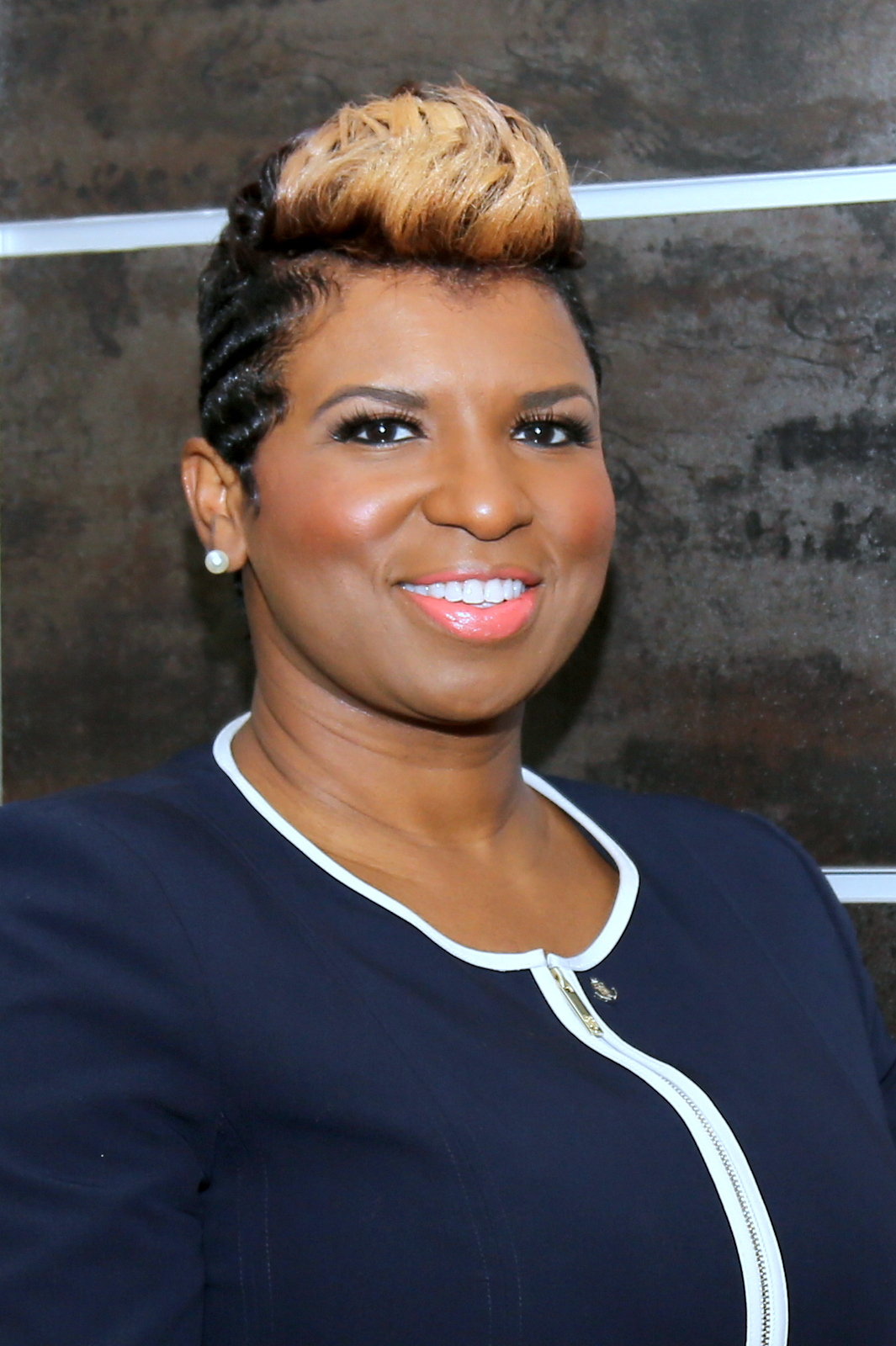 Valerie Bennett, PhD, EdD, is an assistant professor in STEM education at Clark Atlanta University, where she also serves as the program director for graduate teacher education and the director for educational technology and innovation. With more than 25 years of experience and degrees in engineering from Vanderbilt University and Georgia Tech, she focuses on STEM equity for underserved groups. Her research includes AI interventions in STEM education, and she currently co-leads the National Science Foundation Noyce grant, works with the Atlanta University Center Consortium Data Science Initiative, and collaborates with Google to address workforce diversity and engagement in computer science in the Atlanta University Center K–12 community.
 Christine Anne Royce, EdD, is a past president of the National Science Teaching Association and currently serves as a professor in teacher education and the co-director for the MAT in STEM education at Shippensburg University. Her areas of interest and research include using digital technologies and tools within the classroom, global education, and the integration of children’s literature into the science classroom. She is an author of more than 140 publications, including the Science and Children “Teaching Through Trade Books” column.
This article is part of the blog series “From Chalkboards to AI,” which focuses on how artificial intelligence can be used in the classroom in support of science as explained and described in A Framework for K–12 Science Education and the Next Generation Science Standards.
The mission of NSTA is to transform science education to benefit all through professional learning, partnerships, and advocacy.