


 Join
JoinFreeze! We're doing science!
By Gabe Kraljevic
Posted on 2018-08-13
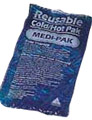 I have accumulated a large number of the freezer gel packs from a meal service. I’d like to find a way to use them in a classroom activity.
—P., Georgia
The best thing about these freezer packs is that they provide a constant that will help your class design and conduct a lot of experiments. Reusing these in your classroom is also a great environmental message.
A few ideas for experiments :
- Engineer the best picnic cooler. (Save styrofoam boxes and pellets from shipments you have received).
- Determine the optimum place to put a freezer pack in a standard cooler.
- What conditions speed up/slow down warming or cooling? Correlate the data with ambient temperature.
- Investigate the heat conductivity of different solids and liquids. Put the packs in ziplock bags and immerse them in oily/messy liquids.
- Surface area experiments: curl them up, lay them flat, stack them vertically/horizontally, spread them out. Relate this information to physical science, chemistry and even biology.
- The contents of freezer packs are non-toxic. Open them up and do carbohydrate, lipid, protein, and other chemical tests on the contents.
- Place them on different parts of the hands and arms to create a cold sensitivity map.
As useful tools:
- Keep them in the freezer to use instead of ice cubes for chemistry or biology activities.
- Putting live insects in a freezer for a few minutes will slow them down. Place the gel packs under the insects to keep them cool while observing them with microscopes or magnifying glasses.
Hope this helps!
Photo credit: By Dhenning2005, aka Dave Henning [Public domain], from Wikimedia Commons
Disclaimer: The views expressed in this blog post are those of the author(s) and do not necessarily reflect the official position of the National Science Teaching Association (NSTA).