


 Join
JoinSafety Blog
Planning for Safer Outdoor Instructional Space Activities
By Ken Roy
Posted on 2026-09-17
Disclaimer: The views expressed in this blog post are those of the author(s) and do not necessarily reflect the official position of the National Science Teaching Association (NSTA).
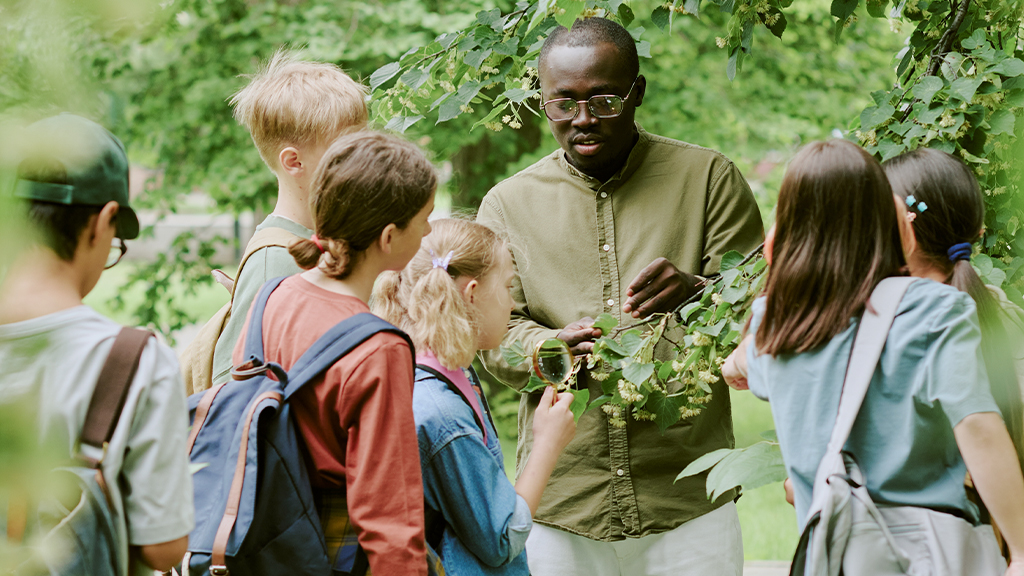
High school and middle school science programs often provide not only indoor laboratory and classroom instructional space activities but also outdoor science field trips. These outdoor activities can present a number of safety challenges that need to be addressed before students take the field trip. Planning for a safer outdoor science field trip activity requires the same rigor as preparing indoor activities and demonstrations, but there are numerous additional variables. This commentary provides a practical, school-ready framework aligned with legal safety standards such as those from the Occupational Safety and Health Administration and better professional safety practices developed by organizations such as the National Science Teaching Association.
Field Trip Planning
Trip planning should start with the teacher determining educational objectives aligned with the curriculum and checking the district policies and approval requirements.
Before the trip to the outdoor instructional site, the teacher should conduct a site-specific risk assessment, which includes researching the location. Teachers should review and address potential safety hazards and resulting health and safety risks, such as uneven terrain, water bodies, traffic, wildlife, poisonous plants, and weather exposure. The teacher should also determine cell phone service availability, including any communication limitations.
Environmental risks such as ticks, allergens, and contamination need to be explored and accessibility and emergency access points evaluated. The teacher should document all of the findings and adjust any plans as needed. Once the plans have been drafted based on findings, the teacher should submit a trip proposal to the chief building administrator and the curriculum supervisor for their approval.
Student Readiness
Students need to be ready for the outdoor field trip. For example, hands-on activities should align with students’ ages, maturity levels, and physical abilities. The teacher must also consider the needs of students with medical conditions such as asthma, allergies, and mobility limitations. In each case, the teacher should make accommodations and assign roles to reduce potential safety hazards and resulting health and safety risks.
Next, the teacher should obtain parent or guardian consent for each student that includes detailed information relative to location, itinerary, potential safety hazards and resulting health and safety risks, and required clothing and equipment. The teacher should also inform the chief building administrator and supervisors in accordance with district field trip policies and make sure that emergency contact procedures are in place.
Clear safety rules and behavioral expectations need to be established and shared with students before the field trip. Teachers should review expectations and boundaries, including “off-limits” areas, and establish a buddy system or small-group structure. Check-in times and signals should also be established. Students should be prepared for the trip by learning field skills such as sampling techniques and tool use, as well as environmental stewardship practices, such as leaving no trace at the field site. Teachers should also reinforce awareness of potential safety hazards, such as avoiding contact with unknown plants and animals.
Pre-Trip Preparations
Teachers should prepare emergency and first-aid plans. This involves carrying a well-stocked first-aid kit appropriate for potential outdoor safety hazards and health and safety risks. Student medical information should be gathered from parents or guardians and the school nurse. The teacher should know the location of the nearest hospital or emergency medical services, clearly assign staff roles for emergency situations, and make sure that at least one adult on the field trip is trained in CPR and first aid.
Prior to the field experience, the teacher should check the weather forecast leading up to and during the activity. They should prepare for different heat levels (e.g., by using hydration, shade, breaks), cold temperatures (e.g., layering, hypothermia prevention), lightning storms, and other weather challenges. The teacher should also have a cancellation or evacuation plan in place in case weather takes a severe turn.
The teacher should also check that appropriate equipment and supplies will be available. Everyone on the trip must wear proper clothing, such as closed-toed shoes, pants, and long-sleeve shirts. The teacher should provide personal protective equipment (PPE), including gloves and goggles or safety glasses with side shields as appropriate. Sunscreen and insect repellent should also be used as needed. In addition, the teacher should have a map of the area, any student medications, an emergency contact list, a cell phone, , and extra water and snacks. The teacher should inspect all equipment before the trip.
Adequate supervision is critical to ensure a safe field experience, so teachers should establish and maintain appropriate student-to-adult ratios, including by bringing additional chaperones if needed. Everyone should have name tags or group identifiers, and the teacher should bring a whistle or signaling device in case they need to get group’s attention. The teacher should identify a meeting point if the group is separated. The teacher should assign adult positions strategically (e.g., at the front, middle, and rear of the group).
The teacher should plan transportation and logistics carefully and follow district transportation policies. Teachers should include attendance records before departure, during the trip, and after returning to the initial location.
Teachers must follow legal safety standards and better professional safety practices by applying duty and standard of care expectations. They also must follow district policies and state guidelines. Resources from groups such as the National Park Service can provide outdoor safety guidance if applicable.
Post-Trip Activities
After the group has returned from the trip, the teacher should document and reflect on the activity, including any safety incidents that might have taken place or any near-misses. They can reflect on what worked and didn’t work and then adjust future safety plans accordingly.
Bottom Line
Outdoor learning activities should be treated as activities in mobile laboratory instructional spaces. Teachers should anticipate potential safety hazards and resulting health and safety risks and take appropriate actions to mitigate risks as much as possible. Teachers should prepare students for the outdoors activity and be active supervisors at all times.
Resource
National Park Service. 2023. “Be Prepared for Your Activity in the Park!” Health and Safety. https://www.nps.gov/subjects/healthandsafety/prepare-for-your-activity.htm
Submit questions regarding health and safety issues in science and STEM instructional spaces to Ken Roy at safersci@gmail.com. Follow Ken Roy on X: @drroysafersci.
The mission of NSTA is to transform science education to benefit all through professional learning, partnerships, and advocacy.