


 Join
Before Students Can Become Scientists, They Must Believe They Belong
By Carla Neely
Posted on 2026-10-22

Disclaimer: The views expressed in this blog post are those of the author(s) and do not necessarily reflect the official position of the National Science Teaching Association (NSTA).
Every year, students enter our science classrooms carrying an unspoken question: Do I belong here? Before students can master content, design investigations, or analyze data, they need to believe they belong in science and STEM fields. For many students, especially those from historically underrepresented backgrounds, that sense of belonging cannot be assumed; it must be intentionally cultivated through experiences, relationships, and opportunities we create for them.
When students see themselves as scientists, they are more willing to take risks, ask questions, collaborate with others, and persist through challenges. Throughout my career, I have found that STEM success is not just about what students know—it is also about how they see themselves.
Help Students See Themselves in Science
One way teachers can foster a feeling of belonging in STEM is by helping students connect science to their own lives and communities. Students are more likely to engage when they recognize that scientific work affects real issues that matter to them.
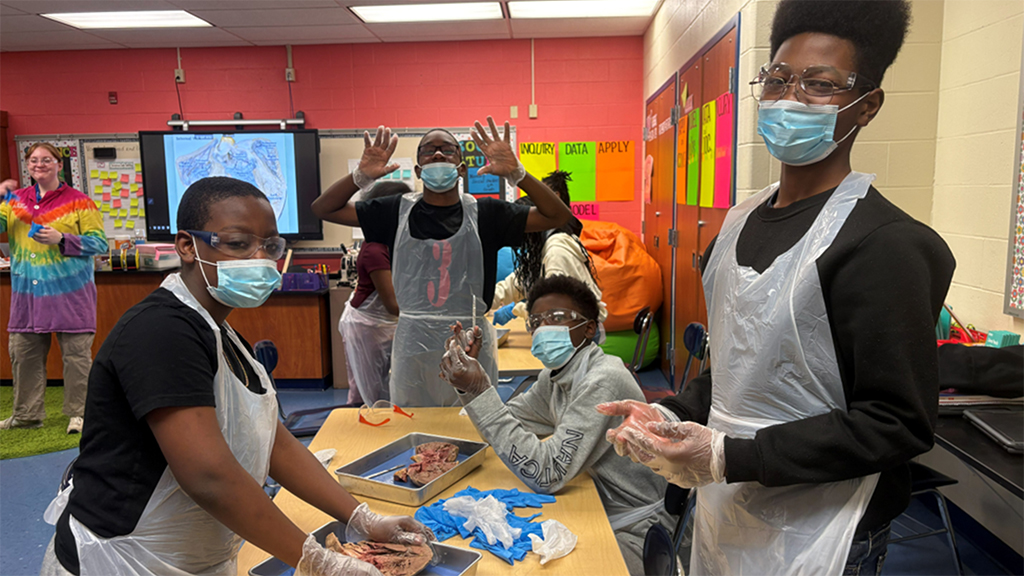
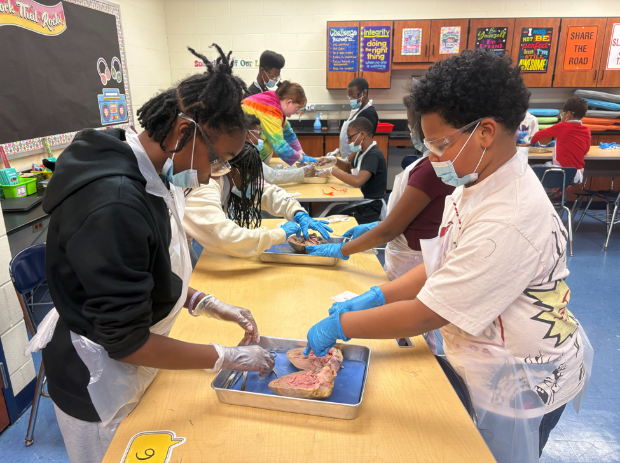
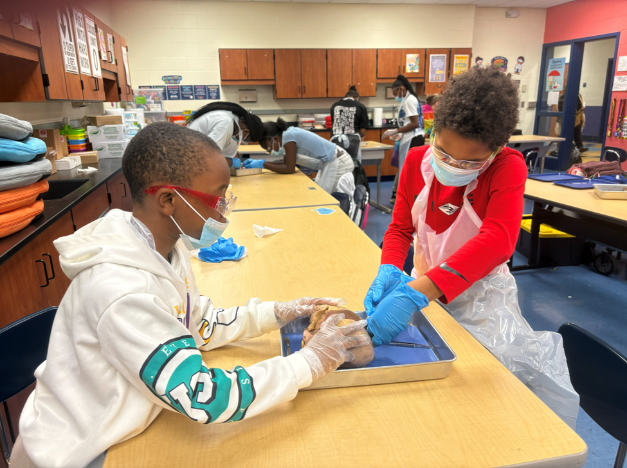
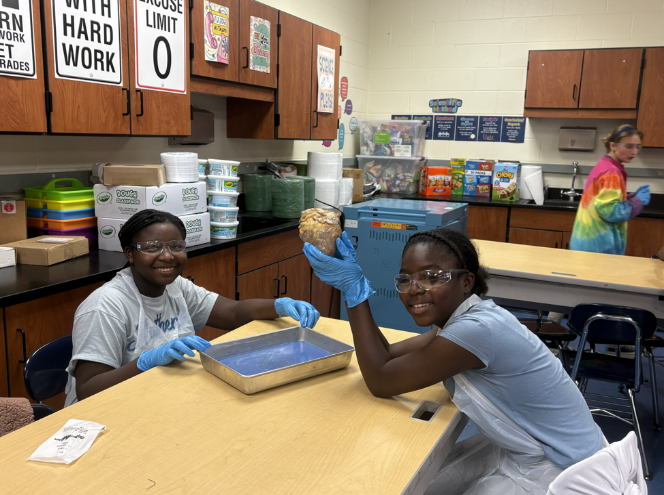
For example, during our unit on the cardiovascular system, students conducted a pig heart dissection to explore the structures and functions of the heart. As they examined chambers, valves, and blood vessels, we discussed how the heart works and how lifestyle choices can contribute to heart disease. Students made connections between what they observed during the dissection and health challenges that affect many families and communities. The experience transformed anatomy from textbook diagrams into something tangible and meaningful. By investigating a real organ and discussing real-world health concerns, students began to see how science helps us understand and improve our quality of life.
Create a Culture Where Mistakes Are Part of Learning
Belonging also grows when students feel safe taking academic risks. Too often, students believe science is only for people who get the right answer the first time. In reality, scientists learn through trial, error, and revision.
During a Newton’s laws of motion investigation, students designed balloon-powered cars using everyday materials. Many groups experienced multiple failed attempts before they improved their designs. Instead of focusing on which car traveled the farthest, we discussed what each test revealed. Students analyzed setbacks, revised their thinking, and learned from their classmates’ ideas. By celebrating perseverance and problem-solving, students began to understand that mistakes are part of the scientific process, not evidence that they do not belong in STEM.
Give Students Opportunities to Contribute and Lead
Students are most likely to develop a STEM identity when they have opportunities to contribute their own ideas. When learners take ownership of investigations and share their thinking with others, they begin to view themselves as capable scientists.
In my classroom, students regularly engage in scientific argumentation. They examine phenomena, analyze data, and present evidence to support their claims. Student teams often lead discussions and challenge their classmates’ thinking using data they have collected. These experiences help students recognize that their ideas have value and that they have an important role to play in the learning community.
A Final Reflection
Throughout my career, I have worked with many students who were underestimated by others. Yet, when they are given opportunities to investigate authentic problems, share their thinking, and see themselves reflected in STEM learning, these students consistently exceed expectations. Their growth is not simply the result of stronger content knowledge. It begins with a belief that they belong.
Before students can become scientists, engineers, or innovators, they must first believe those roles are meant for people like them. As educators, we have the opportunity to cultivate that belief every day. By ensuring that students see themselves in science, embracing mistakes as learning opportunities, and creating spaces for student leadership, we can help every learner develop both scientific knowledge and a sense of belonging in STEM.
Every student deserves the opportunity to see themselves as a scientist, an engineer, or an innovator. The small choices we make each day, whose voices we elevate, which experiences we provide, and how we respond to failure shape whether students believe they belong. As you reflect on your own classroom, ask yourself what is one change you can make tomorrow to help more students believe they belong in STEM.
 Carla Neely is a National Teachers Hall of Fame inductee, veteran educator, and NSTA District X Leader representing Ohio, Indiana, and Michigan. Throughout her career, she has served students in historically underserved communities, including East Cleveland City Schools and the Cleveland Metropolitan School District. Passionate about equity, student empowerment, and STEM identity development, she works to help young people recognize their strengths and envision futures filled with possibility. Carla currently teaches seventh- and eighth-grade science and social studies at Heskett Middle School in Bedford Heights, Ohio.
The mission of NSTA is to transform science education to benefit all through professional learning, partnerships, and advocacy.