
 Join
JoinBack-to-School Blues
By Brooke A. Whitworth, PhD
Posted on 2026-08-27
Disclaimer: The views expressed in this blog post are those of the author(s) and do not necessarily reflect the official position of the National Science Teaching Association (NSTA).
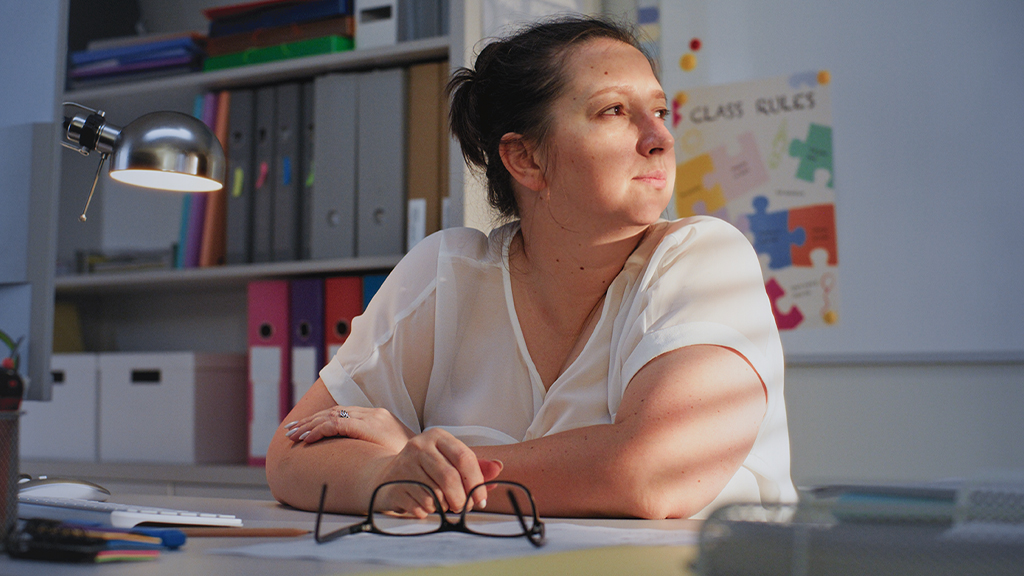
As we approach the start of another school year and I reflect on the summer, I am struck by how quickly it has passed, and by how little I am ready to return to school. I often hear in equal measure from those ready to go back to school and those who are dreading the start of school. This year; however, feels different. It harkens back to fall 2020 when many of us were depleted and unsure of what the year would bring. I have heard from teachers who seem to be more depleted, burned out, and not excited to return to school.
The past two years have seen great upheavals in our country’s support, funding, and understanding of public and higher education (Conerly, 2025). For myself, I think the events of the past two years have taken more of a toll than I realized. This type of “current event stress” is not to be ignored. Doing so can lead to anxiety, sadness, brain fog, sleep disturbances, and a variety of other emotional, physical, and behavioral symptoms (National Alliance on Mental Health, 2025). I think the continued lack of resolution and uncertainty in our country around education has also made moving forward difficult. It would be one thing if someone could say to us, “It will all be okay in six months. Funding for education is not going away.” But, alas, that is not the case, which leads to continued underlying stress, whether it is recognized or not.
I recently attended a National Science Foundation conference in Washington, D.C. I typically find these conferences a time to connect, to be encouraged in my work, and an opportunity to gain new knowledge and ideas. This year, I was still able to connect and to learn new things, but I walked away from the conference feeling less encouraged than normal and, frankly, sad. I heard of too many projects doing good work that had been ended by new policies. It was disheartening to hear the stories of those losing jobs, the effects to the boots on the ground, and most of all the impact on the students of our country because of policy changes.
As I walked some of the museums, buildings, and streets of our capital, I read quote after inspiring quote of our forefathers and nation’s greatest. One that particularly struck me, was the following:
Modern civilization depends on science … James Smithson was well aware that knowledge should not be viewed as existing in isolated parts, but as a whole, each portion of which throws light on all the other, and that the tendency of all is to improve the human mind, and give it new sources of power and enjoyment … narrow minds think nothing of importance but their own favorite pursuit, but liberal views exclude no branch of science or literature, for they all contribute to sweeten, to adorn, and to embellish life … science is the pursuit above all which impresses us with the capacity of man for intellectual and moral progress and awakens the human intellect to aspiration for a higher condition of humanity.
Joseph Henry 1797-1878
First Secretary of the Smithsonian Institution
I agree with Joseph Henry, and I believe, as science teachers and educators, it is our duty to help our students understand the importance and value of science. For us to excel as a country, we must do so. We, as teachers, must also learn to take care of ourselves, to build our resilience toolboxes, find ways to recharge, and avoid burnout. For me, walking the capital and being reminded of the noble call of science and education was rejuvenating. Now, don’t get me wrong, I still want a week on the beach or by a pool with nothing but fiction to engage my brain, but seeing the work of those who have gone before was a reminder that we too can survive hard times and that science will persist.
So, as you begin this new year, may I encourage you in the noble call of your profession. And that, despite current and global events, science matters, and the work you are doing is of huge importance. May I remind you to find ways to rest, recharge, and rejuvenate each week, each month, and each year. May this issue bring you an idea, a lesson, or a thought that excites you and that you want to pursue as you begin your new school year. Happy 2026-2027 Back-to-School!
References
Letter from Alicia Conerly, NSTA President. (2025). The Science Teacher, 92(3), 1. https://doi.org/10.1080/00368555.2025.2499391
National Alliance on Mental Health. (2025). Retrieved from:
https://helplinefaqs.nami.org/article/486-i-m-stressed-about-current-events-how-can-i-practice-self-care-during-uncertain-times
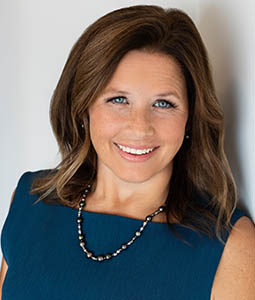 Brooke A. Whitworth, PhD, (bwhit@sc.edu) is editor of The Science Teacher and a professor of science education at the University of South Carolina. Her current research is focused on investigating the role of district science coordinators, professional development models, the differentiation of professional learning, and science teacher leaders. She previously served as an Associate Professor at Clemson University where she also served as the Assistant Chair of Teaching & Learning and the Teaching & Learning Doctoral Program Coordinator.
The mission of NSTA is to transform science education to benefit all through professional learning, partnerships, and advocacy.