


 Join
JoinSafety Blog
Mercury Spills in the Science Instructional Space: Hazards, Risks, and Safety Actions
By Ken Roy
Posted on 2026-04-10
Disclaimer: The views expressed in this blog post are those of the author(s) and do not necessarily reflect the official position of the National Science Teaching Association (NSTA).
Use of mercury in high school and middle school science classrooms and laboratory instructional spaces has well-known safety and health hazards and risks. Bottomline is don’t take any chances with safety and health—even to learn important science
The Nature of Mercury
Mercury use can be hazardous for a number of reasons. The biggest concern is the production of toxic vapors. Elemental mercury evaporates at room temperature. The vapor is colorless, odorless, and generally invisible so people likely won’t realize they have been exposed. Inhalation exposure can cause headaches, dizziness, tremors, memory and concentration problems, and nervous system damage. Children and adolescents tend to be more vulnerable than adults. Even a small amount can create vapor levels above safer limits in enclosed rooms.
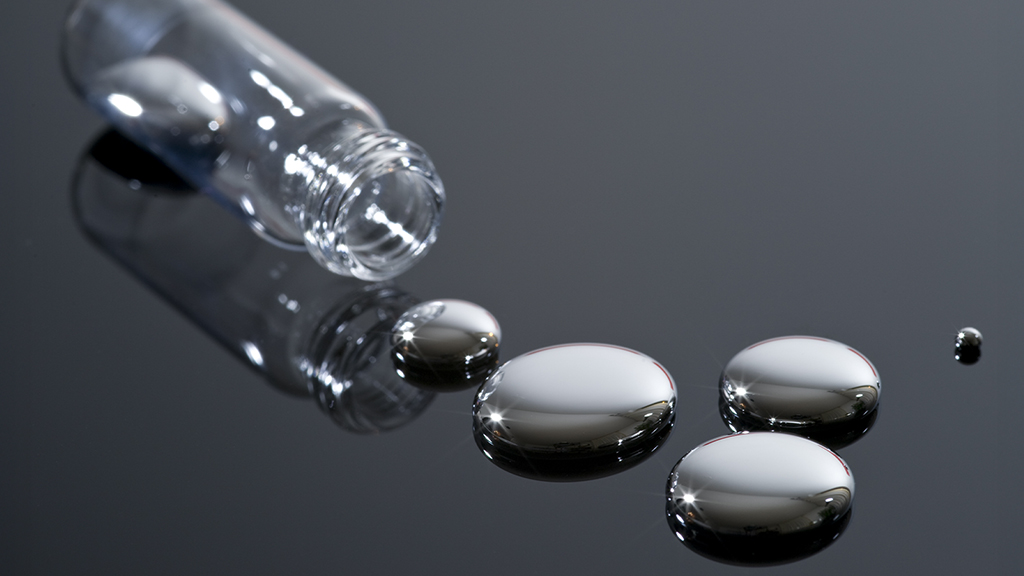
Mercury spills can create additional danger. The mercury breaks into tiny rolling beads that can spread into cracks, drains, floor seams, and carpets. It also can hide under lab equipment and baseboards. Ordinary cleanup methods (brooms, paper towels, and vacuums) can make a spill worse. For example, vacuums aerosolize mercury increasing, which results in massive exposure risk to those nearby. Porous surfaces become permanently contaminated. Chronic low-level exposure to mercury can lead to neurological effects, mood and behavior changes, and kidney damage. These effects could develop slowly and difficult to recognize in a school laboratory or classroom instructional space settings.
Environmental and Legal Risks
Mercury is a persistent environmental toxin, so disposal is tightly regulated because it is hazardous waste. Spills often require professional hazmat cleanup, instructional space closures, and environmental reporting. Cleanup costs can reach thousands of dollars for even small spills
Specific risks in science laboratory or classroom instructional spaces include the following:
| Risk | Why It's a Problem |
| Student handling | Students may drop or misuse mercury or may not take proper precautions due to their curiosity. |
| Old equipment | Thermometers, barometers, and switches may have mercury that can create risks if broken. |
| Inadequate ventilation | Typical school labs are not designed with enough ventilation to avoid mercury vapors. |
| Lack of spill kits | Most schools are not equipped to respond properly to mercury spills. |
| Delayed reporting | Students may not report spills immediately, leading to further risks. |
However, more stringent professional safety practices nationwide are needed:
- Do not free-use mercury in K–12 labs;
- Do not allow students to handle mercury;
- Do not use mercury in demonstrations without exceptional justification;
- Use mercury-free alternatives;
- Remove and dispose of legacy mercury devices, including the following:
- mercury thermostats: (used for temperature regulation in homes and schools;)
- blood pressure cuffs: (commonly used in medical practices for measuring blood pressure;)
- electrical switches and relays: (found in various electronic devices and appliance) electrical switches and relays;
- barometers: (used for measuring atmospheric pressure.)
Mercury Use Prevention
Eliminate or Minimize Mercury Use
Avoid using mercury instruments whenever possible. Replace mercury thermometers and manometers with mercury-free alternatives (for instance, alcohol or digital thermometers or electronic sensors). Many states and school districts ban mercury in laboratory and classroom instructional spaces entirely because, as mentioned, even small spills are hard to manage.
Implement Safer Storage and Handling Practices
Although using mercury is not advised, some schools do allow it for one reason or another. Remember, only keep mercury if absolutely necessary, and in the smallest amount possible. Store mercury in clearly labeled, sealed, unbreakable containers placed inside a secondary containment bin. Do not move or open mercury containers outside of a designated safer area (ideally under a fume hood or over a spill tray). Remember to handle mercury only with appropriate personal protective equipment (PPE): chemical-resistant gloves (nitrile or equivalent), indirectly vented chemical splash safety goggles, and a lab coat or apron. Keep mercury well away from heat sources or drains. It must never enter plumbing.
Ensure Proper Ventilation
Make sure the classroom or laboratory instructional space has appropriate ventilation. As noted earlier, mercury vapor is colorless and odorless but harmful if inhaled. Ensure that your lab has good general ventilation, and use a fume hood for any operation with mercury.
Provide Training and Written Protocols
Ensure teachers and lab assistants have formal training on mercury hazards before any activities are adopted. Maintain and post written procedures and Safety Data Sheets (SDS) for mercury. Students should be informed ahead of using mercury that any spill—no matter how small—must be reported immediately.
The written protocol should note how to prevent spills in the first place, including the following details:
- When working with mercury devices, use trays or secondary containment underneath to catch mercury if a breakage occurs.
- Plan to work over impervious surfaces that are easy to clean.
- Keep the lab uncluttered and free of trip hazards to reduce accidental knocks of mercury.
- Do routine inspections and upkeep of equipment containing or near mercury to catch wear or instability early.
Be Prepared to Respond to a Spill
If a spill does, take the following steps immediately:
- Clear the area immediately. Keep students and unnecessary staff out.
- Ventilate the space by opening windows and doors. Do not use a regular broom or household vacuum, as doing so can spread mercury droplets and vapor.
- Don’t wash mercury down a sink or throw it in regular trash.
- Make sure the cleanup is controlled by using a mercury spill kit (which includes absorbent powder, sponges, scoops, and proper disposal bags) to collect beads and droplets.
- Use small tools (such as an index card, a pipette, or a squeegee) to gather mercury into one spot and pick it up carefully.
- Place all contaminated materials into sealed and labeled hazardous waste bags for proper disposal.
- For large spills or areas that are impossible to clean with available kits, contact the school’s environmental health officer or professional cleanup team.
- Proper disposal requires all mercury and mercury-contaminated cleanup materials to be handled as hazardous waste and disposed of through approved channels.
Safer Alternatives
The following safer alternatives are strongly recommended:
| Traditional Mercury Use | Safer Alternative |
| Mercury thermometers | Alcohol-filled or digital thermo |
| Barometers | Aneroid barometers or digital sensors |
| Density demos | Steel shot, glass beads, or non-toxic liquids |
| Electrical switches | Solid-state or mechanical switches |
Bottom Line
In high school and middle school science instructional spaces, mercury poses an unacceptable risk and should not be used.
The combination of toxic vapor, potential spills, student exposure, regulatory burdens, and cleanup costs makes mercury unsafe and unnecessary for modern science instruction! Educators can preserve educational value without introducing this hazard.
Additional Safety Information
McLeod, Vince. 2020. “Dealing with Mercury Spills in the Lab.” Lab Manager, November 2, 2020. https://www.labmanager.com/dealing-with-mercury-spills-in-the-lab-24205?_hsenc=p2ANqtz-_Ps__cZI2nNDK04HO7Cvv5SPGWZiWRYBkSLe58uAKK5VZiOVQnjuGG9jvfIxERCsZExap2Ric1wHVMv5e83dJjeD7Mng&_hsmi=377674480
Submit questions regarding health and safety issues in science/STEM instructional spaces to Ken Roy at safersci@gmail.com. Follow Ken Roy on X: @drroysafersci.
The mission of NSTA is to transform science education to benefit all through professional learning, partnerships, and advocacy.