

 Join
JoinPlace-Based Scientific Learning: Why It Matters for Generation Alpha
By Jennifer Sauer
Posted on 2026-10-12
Disclaimer: The views expressed in this blog post are those of the author(s) and do not necessarily reflect the official position of the National Science Teaching Association (NSTA).
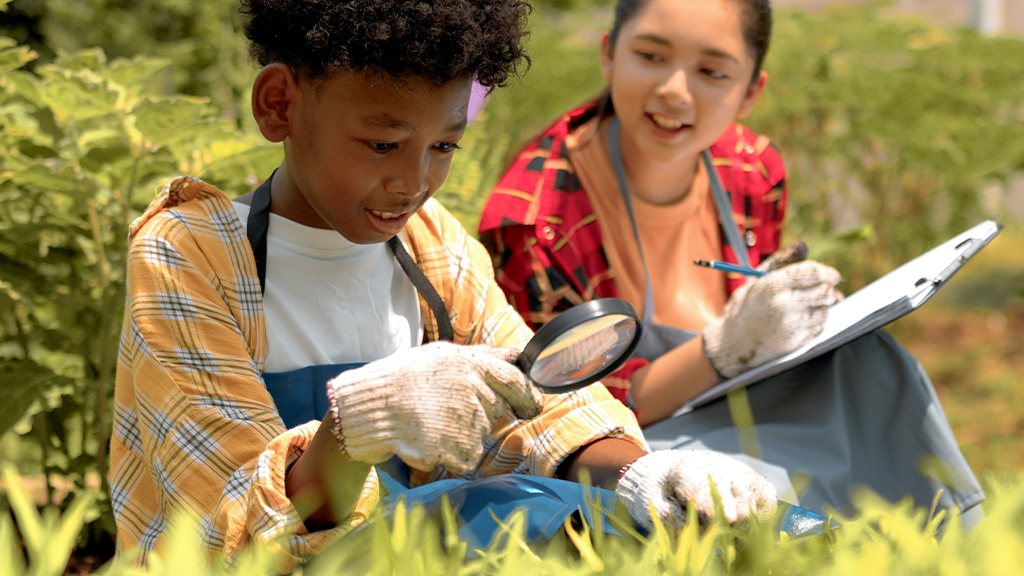
As student achievement dwindles and young people struggle with their mental health, more states are looking to reduce students’ screen time. Place-based learning offers a research-backed strategy for connecting students to real-life science to ignite their learning and agency in their communities. Using asset-based strategies can keep students in school, wanting to learn more. In a nutshell, the term place-based learning refers to learning science “where your feet are” and integrating science with social studies, literacy, mathematics, and community to create a more authentic learning experience. Students investigate local real-world problems through inquiry-based investigations. They experience probabilistic thinking as they embrace scientific uncertainty alongside their teacher, learning that science often involves interpreting incomplete evidence rather than finding one “correct” answer (Rosenberg et al. 2026).
Where to Start: Knowing your Community
Learning begins with understanding a school’s local communities. It uses culturally relevant instruction that values community and student knowledge.
Preschool teacher Nichole Efird—who teaches in the Qualla Boundary in North Carolina—focuses on Cherokee storytelling to teach science. She said, “Storytelling goes beyond ‘just a legend,’ more than fiction. This is how our people make sense of the world. . . . The legend of the Milky Way helps kids understand astronomy and remember those constellations.” She continued:
It's a connection to the community that gets passed on. It’s important to tell these stories because kids want to know how their world works and have a sense of belonging in their community. Sharing these stories with non-Indigenous teachers can be helpful so that teachers can better understand our culture and even compare them with our Indigenous stories to learn more. Storytelling was how we shared traditional ecological and cultural knowledge like how and why to dig ramps, weave a basket, make pottery. (Sauer 2024)
As a STEM teacher, when I start with place, I look at what local issues might affect my students in Knoxville, Tennessee. I ask, “When I drove up here this morning, I noticed there was a lot of fast food, but where are all the fresh veggies?” Students discuss questions and then explore issues of food insecurity as we map out and analyze how many nutritious versus non-nutritious food locations there are in our school community. I use local resources to inspire students, such as an interview with local activist and pastor Chris Battle to help educate students on food insecurity. I videotaped the interview so that other classes can hear his story. Pastor Battle puts the issue in a local context as he explains that food deserts hurt families with fewer resources. Students learn how science can be used for action, as Paster Battle inspired community gardens and the upcoming ONE FIVE Grocery Store, where healthy produce is priced at just a nickel for each piece to ensure affordability (Sauer 2025).
Alternative school educator Tyra Brantner in Blount County, Tennessee, looks to the river near her school to educate her students. She inspires her students in science by getting them to raise trout and release them into the biodiverse Little River, which has more than 100 species of fish, with the Trout in the Classroom program. Place-based learning not only makes scientific concepts stick but also helps students dealing with trauma feel welcomed in the learning.
Brantner spoke to me about how some in her community felt that students in alternative schools “did not deserve experiential education,” but she believes students with the hardest lives really need these valuable educational experiences. She recently took her students to Little River, and the experience was “life-changing” for the students and for her. While laughing, she recalled, “The kid who had tried to hit me earlier was now having the time of his life learning. . . . We couldn’t get him out of the water” (Tyra Brantner, personal communication, July 24, 2026).
Place-Based Research Ahead of the Practice
Dr. Zhen Xu, a science education researcher at the University of Tennessee, Knoxville, noted that there is a huge gap between the research trend and the practice trend when it comes to place-based science. Dr. Xu knows that place-based learning works when done right in the classroom, as it “engages students to connect their lived experience within the classroom to abstract science concepts, encompassing multiple observations in nuanced ways. This can help inform life decisions that affect them, like whether or not to get a vaccine” (Zhen Xu, personal communication, July 25, 2026). Place provides a way to bridge those issues with knowledge, social issues, and student experience.
David Krebs, a high school science teacher in Knox County Schools, works with Dr. Xu and other science educators to bring more locality into their lessons through Project CREDIBLE, a research-practice partnership that supports educators in using local, student-created data in their science classrooms. This partnership has been instrumental in supporting Krebs’s passion for place-based science. Through this partnership, more of his students were inspired to lead real-life biodiversity field studies in their schoolyard and alongside other scientists in nature centers and national parks such as Great Smoky Mountains National Park.
Challenges to Implementing Place-Based Science
Teachers and administrators often feel pressure to prioritize testing over experience. In an effort to streamline inquiry-driven learning, High-Quality Instructional Materials (HQIM) have captivated our schools. Equitable HQIM curricula will intentionally leave locality out, as students may not have safe access to the outdoors. In early 2025, Lawrence Hall of Science hosted a conference titled Promoting Equity Through Localization and High-Quality Instructional Materials: Bringing Together Practitioners, Researchers, and Designers in an effort to address this issue. According to working group notes from the conference, attempts to modify “‘NGSS-built curricula are particularly difficult to adapt and modify. . . . It’s all so interconnected. . . . [It’s a] tapestry, if you unravel one thread . . .’” (Lawrence Hall of Science 2025, 4). Participants suggested creating HQIM with localized adaptation in mind in the first place. A major hurdle for educators is the limitation of these scripted curricula. No matter how good HQIM may be, they can never fully include the communities where your students live.
Place-based learning requires considerable investment in field trip experiences, funding for the initial costs of supplies for hands-on learning, and paid planning time for teachers to make place-based learning interdisciplinary and ensure it aligns with state standards. Tom Vander Ark, author of the blog post “The Power of Place-Based Education,” notes that students from wealthier backgrounds often take trips abroad and in general have stimulating experiences outside of school that ignite their passion for learning (Vander Ark 2020). Teachers, administrators, and school board members should advocate for funding to support this type of experiential learning.
Why Place-Based Science Is Essential for Generation Alpha in 2026
Generation Alpha has grown up surrounded by digital technology. We now know that students’ overuse of devices is linked to mental health issues, less academic success, and reduced physical activity (Awan 2026). Place-based science can help students reignite their natural curiosity as they connect to their environment. Students can build meaningful relationships with classmates, teachers, and community members as they see themselves as scientists solving real community problems. This approach will increase both attendance and academic achievement, as students who are directly involved in science will want to come to school and will become better critical thinkers. Ultimately, we should prepare students to make informed decisions about the environmental and social challenges they will inherit. Centering learning where their feet are is a good place to start.
For more information on how to teach place-based science with your students, check out Project CREDIBLE.
References
Awan, O. (2026, August 26). School phone bans are increasing across America—Here’s what the science says on their effects on mental health. Forbes. https://www.forbes.com/sites/omerawan/2026/08/26/school-phone-bans-are-increasing-across-america-heres-what-the-science-says-on-their-effects-on-mental-health/.
Lawrence Hall of Science. 2025. NSF Localizing HQIM Conference Summary. University of California, Berkeley. https://localizinghqim.lawrencehallofscience.org/wp-content/uploads/sites/23/2025/07/NSF-Localizing-HQIM-Conference-Summary-Overview-Analysis-and-Takeaways.pdf.
Rosenberg, Joshua M., Marcus Kubsch, Stefan Sorge, et al. 2026. “Embracing Uncertainty in Science: The ABCs of Data and the Confidence Updater.” Science Scope 49 (1): 44–50. https://doi.org/10.1080/08872376.2025.2601357.
Sauer, Jen. 2024. “Traditional Ecological Knowledge in the Preschool Classroom: An Interview with Nichole Efird.” Rethinking Schools 39 (1). https://rethinkingschools.org/articles/traditional-ecological-knowledge-in-the-preschool-classroom-an-interview-with-nichole-efird/.
Sauer, Jennifer. 2025. “Food Deserts in Knoxville: Solutions with Pastor Chris Battle.” December 26, 2025. YouTube, 19 min., 54 sec. https://youtu.be/ABCE5aMfGE0.
Vander Ark, Tom. 2020. “The Power of Place-Based Education.” ISTE+ASCD Blog (blog). ASCD, March 30. https://www.ascd.org/blogs/the-power-of-place-based-education.
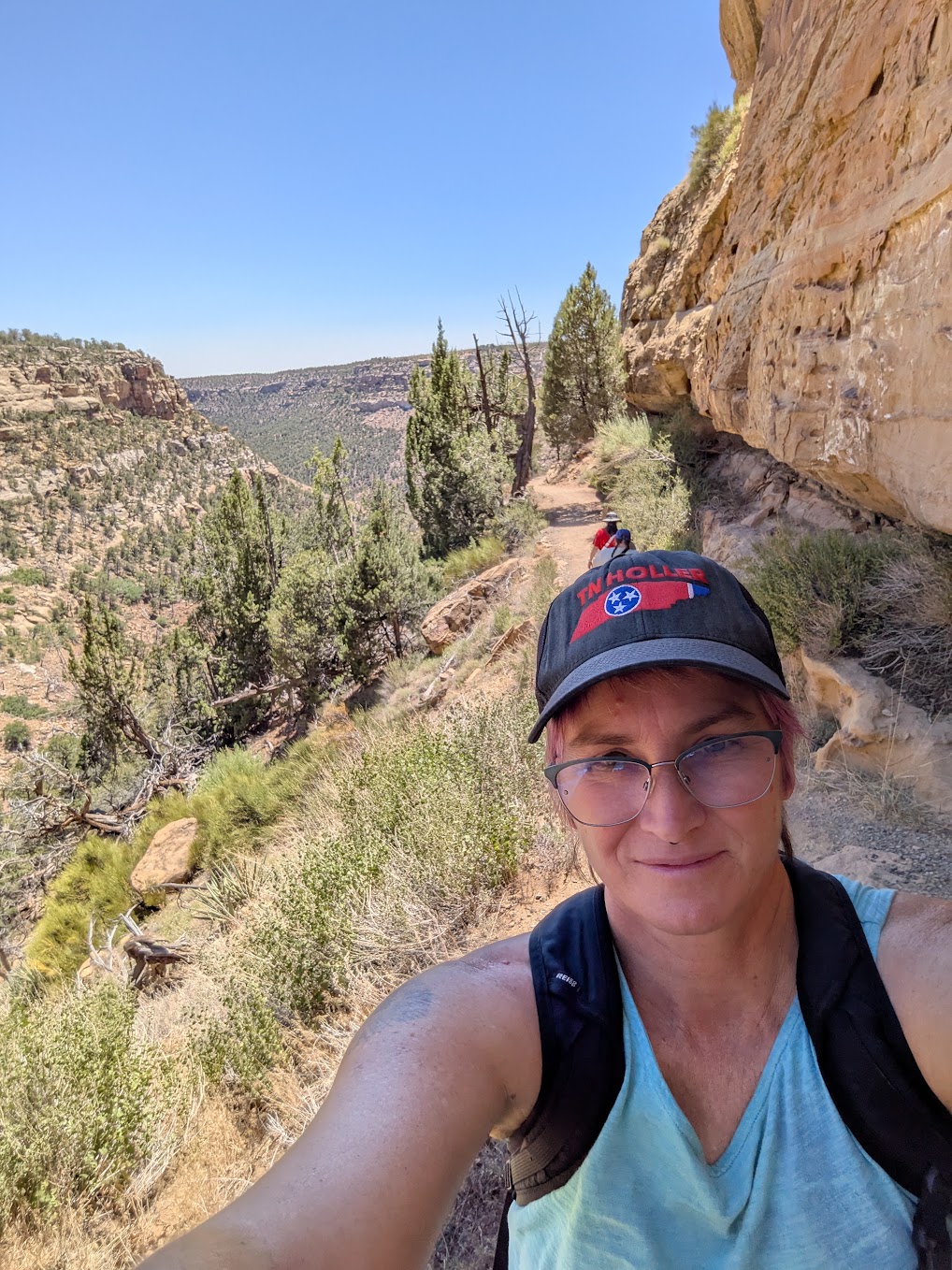 Jennifer Sauer teaches 6-8th grade environmental science in a public school in East Tennessee. She received a B.S. in Elementary Education at the University of Memphis and an MS in Science Education at Georgia State. She is active in her NEA local and serves on the science committee at Rethinking Schools Magazine. Connect with her on Instagram.
The mission of NSTA is to transform science education to benefit all through professional learning, partnerships, and advocacy.