


 Join
JoinFrom Chalkboards to AI
From Static Images to Moving Models: Using AI Video Generation as a Science Learning Tool (Part 2 of “Beyond the Stock Image”)
By Valerie Bennett, Ph.D., Ed.D., and Christine Anne Royce, Ed.D.
Posted on 2026-06-15
Disclaimer: The views expressed in this blog post are those of the author(s) and do not necessarily reflect the official position of the National Science Teaching Association (NSTA).
In our May post, we explored how artificial intelligence (AI) image generation can help science teachers move beyond the limitations of stock photos and generic textbook diagrams. We described AI-generated images as a bridge between abstract scientific ideas and concrete classroom visualization—especially when students must use accurate vocabulary, evidence, and conceptual understanding to generate a meaningful image.
Now, the next question is clear: What happens when those images begin to move?
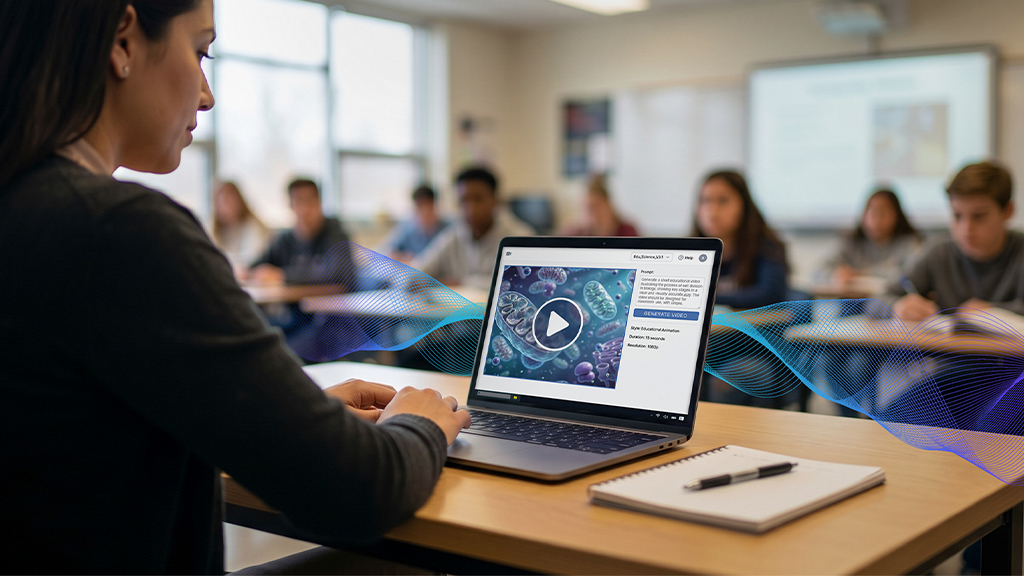
AI video generation is quickly becoming one of the next frontiers for science teaching and learning. Just as AI image tools can help students visualize the unseen, AI video tools can help students model change over time. In science, that modeling matters. So much of what we teach is not still: Molecules collide. Water cycles. Erosion reshapes land. Ecosystems respond to disruption. Cells divide. Energy transfers. Weather systems move. Evolution happens across generations.
For science educators, AI-generated video should not be viewed as a replacement for labs, fieldwork, drawing, discussion, or teacher explanation. Instead, it can become another instructional tool—one that helps students make scientific thinking visible, test their explanations, communicate phenomena, and revise misconceptions.
Why Video Matters in Science Learning
Science is filled with processes that are difficult to capture in real time. Some are too small, like diffusion across a cell membrane. Some are too large, like planetary motion. Some are too slow, like fossil formation. Some are too dangerous, like chemical reactions that cannot be safely performed in a school lab. Some are too complex to observe in one setting, like the relationship among climate, rainfall, plant life, and animal migration.
AI video generation allows teachers and students to create short visual models of these processes. The keyword is models. In science education, a video should not simply be something students watch passively; it should become something students critique, revise, explain, and compare against evidence.
The Teacher's Perspective: From Explanation to Demonstration
For teachers, AI video generation can support “just in time” science demonstrations. A teacher introducing plate tectonics could generate a short clip showing two plates converging, one plate subducting beneath another, magma rising, and volcanic mountains forming. A life science teacher could generate a simplified animation of pollination that shows pollen transfer, fertilization, and seed development. An Earth science teacher could create a time-lapse model of a coastline experiencing erosion after repeated wave action.
The power is not only in the video itself. The power is in how the teacher uses the video.
A teacher might begin by showing students an AI-generated video of the water cycle and then asking a few questions:
- What is scientifically accurate in this video?
- What is missing?
- What sequence is unclear?
- What would we need to revise to make this model stronger?
This approach turns the AI video into an object of scientific critique. Students are no longer merely consuming content; instead, they are evaluating a model.
The Student's Perspective: From Viewer to Scientific Storyteller
When students create AI videos, they must think like scientists and communicators. A strong AI video prompt requires more than “Make a video about photosynthesis.” Students must identify the setting, organisms, structures involved, sequence of events, and science vocabulary that should appear visually or in narration.
For example, a novice student might use this as a prompt: “Make a video about plants making food.”
A stronger student prompt might say the following: “Create a 30-second educational animation showing photosynthesis in a green plant. Begin with sunlight reaching the leaves. Show carbon dioxide entering through stomata, water moving up from the roots through the stem, chloroplasts inside leaf cells, and glucose and oxygen being produced. Use labels for sunlight, carbon dioxide, water, chloroplast, glucose, and oxygen. Make the animation accurate for middle school life science.”
The second prompt demonstrates far more than simply stronger writing. It shows conceptual understanding—that the student understands inputs, outputs, structures, sequence, and vocabulary. Just as our May blog described the “prompt as assessment” strategy for AI images, the same approach can apply to AI videos.
Three Classroom Uses for AI Video Generation in Science
Phenomenon-Based Video Starters
Instead of beginning a lesson with a stock video from the internet, teachers can create a short, AI-generated phenomenon video connected to the exact concept students are studying. For example, a seventh-grade teacher might show a 15-second video of a fish population changing after pollution enters a stream.
Students could then develop initial explanations in response to these questions:
- What do you notice?
- What do you wonder?
- What evidence would we need before making a claim?
- What variables might be affecting the fish population?
The AI video becomes a launch point for inquiry, but it should not be treated as evidence by itself; rather, it is a model or scenario. Students still need real data, readings, observations, or lab results to support their explanations.
Student-Created Process Models
Students can use AI video tools to create models of scientific processes. This approach works especially well for concepts that involve sequence, transformation, or cause and effect.
Here are a few examples:
- 30-second model of mitosis showing prophase, metaphase, anaphase, and telophase
- time-lapse model of sedimentary rock formation
- model showing how thermal energy transfers from warmer particles to cooler ones
- video explaining how a vaccine helps the immune system recognize a pathogen
- model showing how invasive species affect an ecosystem over time
After generating the video, students should submit a brief reflection that responds to questions such as these:
- What science concept did your video explain?
- What did the AI represent accurately?
- What did you have to correct?
- What evidence or source did you use to verify the science?
- What would you change in your prompt if you generated the video again?
This reflection is essential. Without it, the activity can become a technology task instead of a science learning task.
Misconception Checks and Model Revision
AI-generated videos are not always scientifically accurate, but that is not a limitation; it can become a powerful teaching opportunity. Our blog in May warned that AI-generated visuals can be beautiful but scientifically inaccurate. The same is true for AI videos.
A teacher might ask students to evaluate an AI-generated video of the seasons. If the video incorrectly suggests that summer happens because Earth is closer to the Sun, students can identify the misconception and revise the model to show Earth’s axial tilt.
This approach helps students practice scientific argumentation. They must use evidence to explain why the video is wrong and how it should be improved. In this way, AI becomes a tool for sensemaking rather than a source of unquestioned answers.
Keeping Science at the Center
The most important classroom question is not “Can students create an AI video?” The better question is “What science thinking does the video make visible?”
A strong AI video assignment should require students to do at least four things:
- Use accurate science vocabulary.
- Represent a process, system, or phenomenon.
- Verify the video against evidence or trusted sources.
- Explain what they revised and why.
This process matters because generative AI can easily produce polished work that looks impressive but contains errors, stereotypes, or oversimplified science. UNESCO’s guidance emphasizes a human-centered vision for generative AI in education, and the U.S. Department of Education highlights the importance of keeping humans in the loop so teachers and learners retain agency over meaning-making and decisions (Holmes and Miao 2023).
In science classrooms, the teacher must remain the instructional designer, while students remain the thinkers, investigators, and explainers. AI is the tool—not the authority.
A Sample Classroom Activity: “Make the Invisible Visible”
Grade Band: middle school
Topic: particle motion and states of matter
Task: Students create a short AI-generated video modeling how particles behave in a solid, liquid, and gas.
Student Prompt
Create a 30-second educational animation showing particles in a solid, liquid, and gas. Show that particles in a solid vibrate in fixed positions, particles in a liquid move past one another while staying close together, and particles in a gas move freely and spread apart. Include labels for solid, liquid, gas, particle motion, temperature, and energy. Make the model appropriate for middle school science.
Student Reflection Questions
- What did the AI video show correctly?
- What was missing or misleading?
- How does the video help explain the relationship between thermal energy and particle motion?
- What would you change to make the model more scientifically accurate?
- What source did you use to check your explanation?
Assessment Focus
The teacher should assess the science explanation, prompt quality, accuracy check, and revision—not just the final video.
A Word About Equity and Access
AI video generation can be exciting, but it also raises practical classroom concerns. Not every student has the same access to devices, internet, paid tools, or quiet time to create videos. Some AI video platforms may also have age restrictions, privacy concerns, or school district limitations. Teachers should review school policies; avoid requiring students to create accounts without approval; and provide alternative options such as storyboards, teacher-generated clips, group creation, or paper-based video planning.
Equity also includes representation. If students generate videos showing “scientists,” “engineers,” “doctors,” or “environmental researchers,” they should be encouraged to notice who appears in the AI output and who is missing. As with AI images, biased outputs can become teachable moments about who is represented in science and whose knowledge is valued (Royce and Bennett 2026).
Conclusion: Moving Models, Deeper Thinking
AI video generation gives science teachers a new way to help students visualize change, sequence, systems, and cause-and-effect relationships. But the goal is not simply to create attractive videos. The goal is to deepen science learning.
When used well, AI-generated videos can help students ask better questions, build stronger explanations, critique models, revise misconceptions, and communicate scientific ideas with clarity. When used carelessly, these videos can become another polished product that hides a more shallow understanding.
As we continue moving from chalkboards to AI, we should remember that the best science classrooms are not defined by the newest tool. They are defined by curiosity, evidence, questioning, revision, and wonder. AI video generation belongs in that classroom only when it helps students think more deeply about the natural world—and see themselves as capable creators of scientific meaning.
The following video and audio synopsis of this blog were generated using Google NotebookLM's features. They have been reviewed for alignment to the blog and accuracy.
References
Atkinson, Alvina, Patrice Bell, Indhira De La Rosa, et al. 2024. “Student-Created Videos in Online STEM Education: A Large, Interdisciplinary, Randomized Control Study.” Discover Education3 (1): 178. https://doi.org/10.1007/s44217-024-00283-8.
Holmes, Wayne, and Fengchun Miao. 2023. Guidance for Generative AI in Education and Research. UNESCO Publishing.
Office of Educational Technology. 2023. Artificial Intelligence and the Future of Teaching and Learning: Insights and Recommendations. U.S. Department of Education.
Pellas, Nikolaos. 2025. “The Impact of AI-Generated Instructional Videos on Problem-Based Learning in Science Teacher Education.” Education Sciences 15 (1): 102. https://doi.org/10.3390/educsci15010102.
Royce, Christine Anne, and Valerie Bennett. 2026. “Beyond the Stock Image: Using AI Image Generation as a Learning Tool.” From Chalkboards to AI (blog). National Science Teaching Association, May 18, 2026. https://www.nsta.org/blog/beyond-stock-image-using-ai-image-generation-learning-tool.
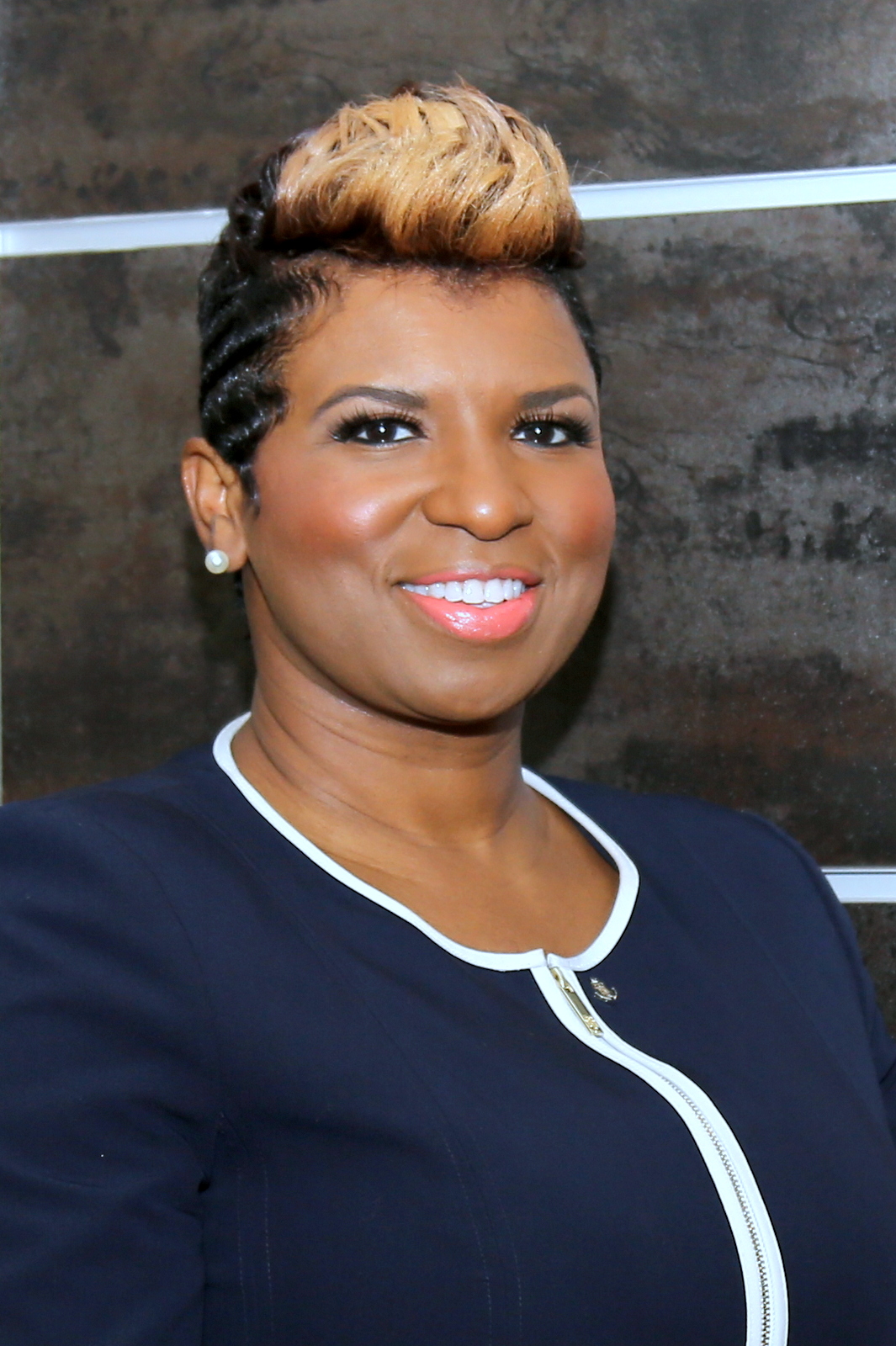 Valerie Bennett, Ph.D., Ed.D., is an Assistant Professor in STEM Education at Clark Atlanta University, where she also serves as the Program Director for Graduate Teacher Education and the Director for Educational Technology and Innovation. With more than 25 years of experience and degrees in engineering from Vanderbilt University and Georgia Tech, she focuses on STEM equity for underserved groups. Her research includes AI interventions in STEM education, and she currently co-leads the Noyce NSF grant, works with the AUC Data Science Initiative, and collaborates with Google to address CS workforce diversity and engagement in the Atlanta University Center K–12 community.
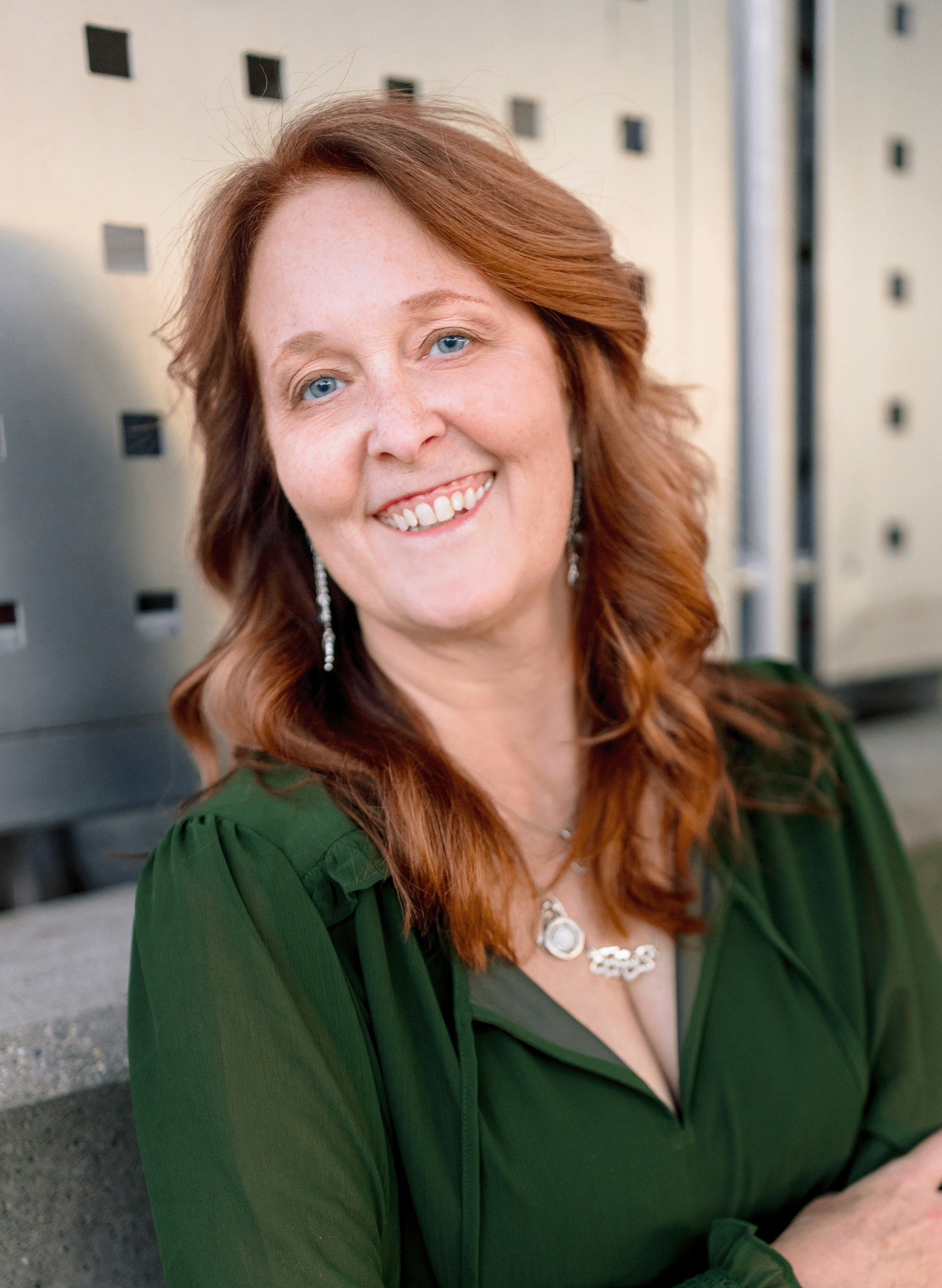 Christine Anne Royce, Ed.D., is a past president of the National Science Teaching Association and currently serves as a Professor in Teacher Education and the Co-Director for the MAT in STEM Education at Shippensburg University. Her areas of interest and research include utilizing digital technologies and tools within the classroom, global education, and the integration of children's literature into the science classroom. She is an author of more than 140 publications, including the Science and Children Teaching Through Trade Books column.
This article is part of the blog series From Chalkboards to AI, which focuses on how artificial intelligence can be used in the classroom in support of science as explained and described in A Framework for K–12 Science Education and the Next Generation Science Standards.
The mission of NSTA is to transform science education to benefit all through professional learning, partnerships, and advocacy.