


 Join
JoinMiddle School | Daily Do
How can we clean our classroom’s air?
Earth & Space Science Engineering Is Lesson Plan STEM Middle School Grades 6-8
Sensemaking Checklist




Lesson Snapshot
Middle school students, as scientists, investigate the problem of poor indoor air quality in
schools. Indoor air quality matters, because we spend about 90% of our time indoors.
Things in the air such as particulate matter (PM) and airborne viruses such as Sars-CoV-2
can have negative impacts on human health, especially for younger people whose
respiratory systems are still developing. Because classrooms have more people per unit
area, the air quality can be worse than other settings like homes and offices. In this lesson,
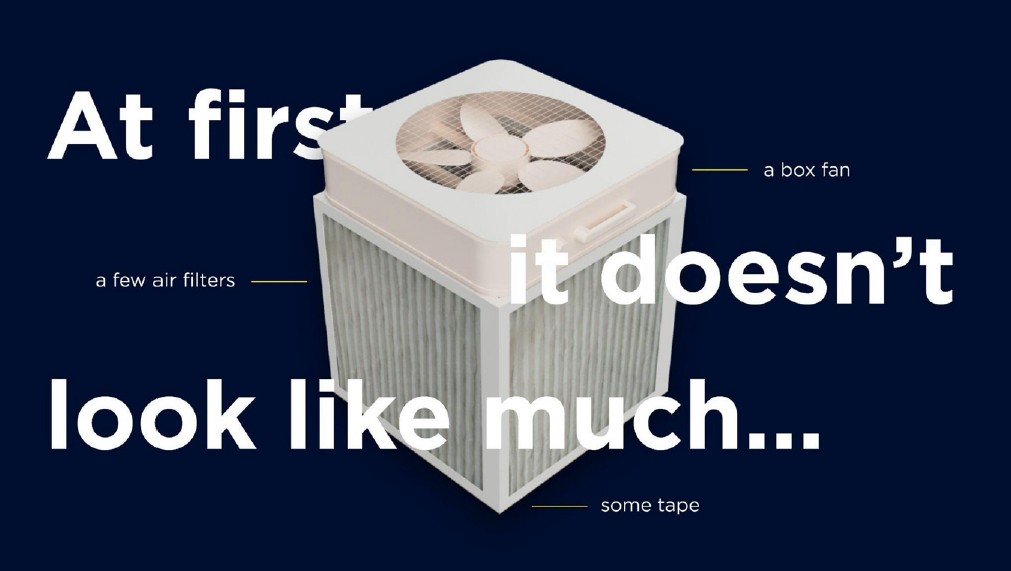
students define indoor air quality as an engineering problem, build an air purifier, and
analyze data about their classroom air. Then, students share their new understanding with
relevant stakeholders.
This lesson was developed by the UConn Indoor Air Quality Initiative.
Click the Download PDF button above for the complete Lesson Plan.
Materials
Student Materials
Per Student
Per Small Group (2 to 4 students)
- Duct tape
- Scissors
- 20” box fans with boxes
- MERV-13 filters
- Tissue
Teacher Materials
- Slides
- Air quality monitor
- IQAir Air Visual Pro Indoor Monitor (the one shown here is ~$329)
- Purple Air PIXEL (~$120)
Optional Teacher Resources