


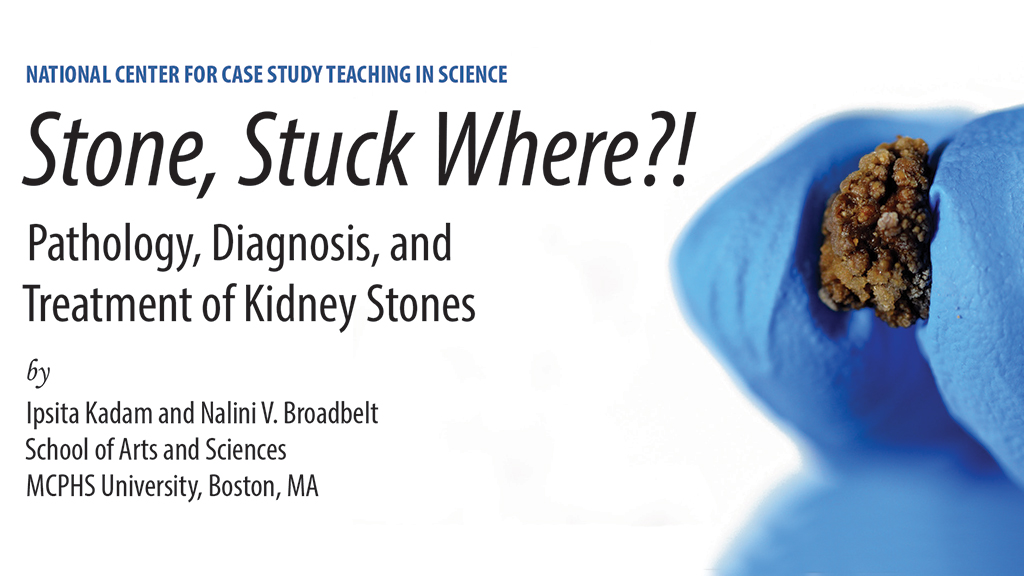
 

Stone, Stuck Where?!

Pathology, Diagnosis, and Treatment of Kidney Stones

By Ipsita Kadam, Nalini V. Broadbelt

Stone, Stuck Where?!


Abstract

This case study presents the clinical scenario of “Sandeep,” a male patient diagnosed with kidney stones. It is designed to provide a comprehensive exploration of the pathology, diagnosis, and treatment of kidney stones through an integrated lens of clinical, biochemical, anatomical, and physiological principles. Aimed at both first-year and upper-level anatomy students, the case encourages critical thinking by prompting learners to analyze symptoms, interpret laboratory findings, and evaluate a range of conventional and alternative treatment options. 


Date Posted

03/30/2026

Overview

Objectives

  • Identify referred pain regions associated with kidney stones and recognize common symptoms and diagnostic findings.
  • Explain the chemical processes underlying calcium oxalate stone formation and identify dietary and metabolic sources of calcium and oxalate that contribute to stone development.
  • Describe physiological mechanisms that regulate blood calcium levels.
  • Trace the formation and movement of kidney stones from their origin to potential exit from the body.
  • Explain how stones become lodged in the ureter, including associated symptoms and complications.
  • Compare key medical treatments and lifestyle strategies used to manage and prevent kidney stone formation.

Keywords

Kidney; kidney stones; kidney stone disease; KSD; urinary system; calcium oxalate; Ca2+; renal tubules; ureter; Neeri;


Subject Headings

Anatomy
Biology (General)
Physiology

EDUCATIONAL LEVEL

Undergraduate lower division, Undergraduate upper division


FORMAT

PDF


TOPICAL AREAS

N/A


LANGUAGE

English


TYPE/METHODS

Directed


Asset 2