


 Join
JoinHigh School | Daily Do
How can we monitor astronaut health to ensure the success of missions to Mars?
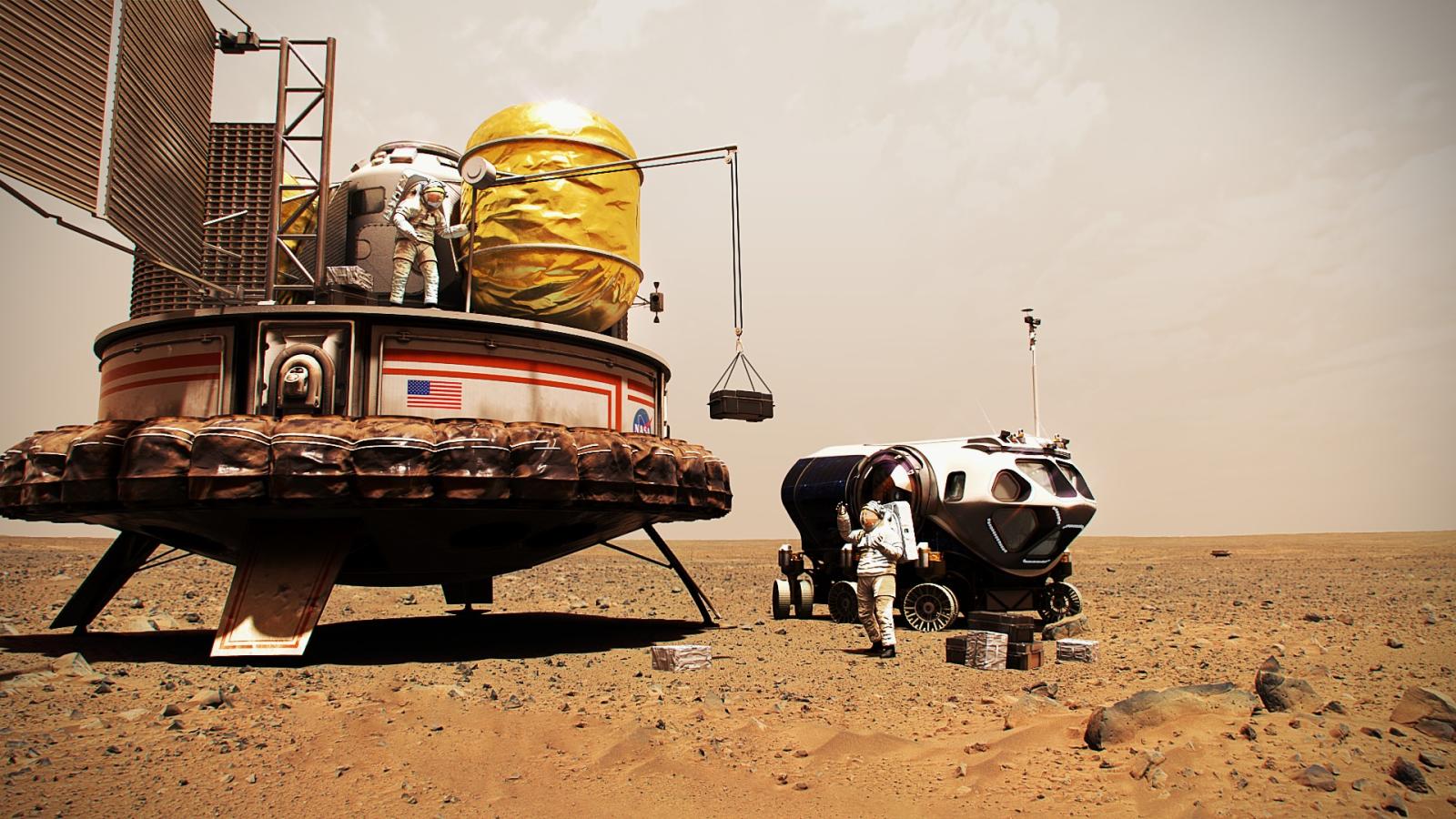
Aerospace Biology Earth & Space Science Is Lesson Plan Life Science STEM High School Grades 9-12
Sensemaking Checklist




Lesson Snapshot
In this lesson, high school students, as scientists, apply life science ideas to answer the driving question: How can we monitor astronaut health to ensure the success of missions to Mars? Students begin by considering how a mission to Mars would affect astronauts’ bodies. From there, they are introduced to one of many problems that will need to be addressed on missions to Mars: elevated CO2 levels. Students will evaluate information, develop a driving question, and share ideas about what they need to investigate to answer their question. The students’ investigation begins by analyzing data from studies on elevated CO2 and task performance. From there, they investigate how elevated CO2 affects human body systems. Next, they evaluate information about how astronaut health is monitored and two different approaches that could be taken. Finally, students work in groups to develop an argument for which approach should be taken for monitoring astronauts’ health on missions to Mars. Groups will receive feedback through a gallery walk and make revisions to their arguments.
This lesson plan was created in collaboration with Johns Hopkins University Press, the Johns Hopkins Office of Research, and Mark Shelhamer, ScD, based on his 2026 Wavelengths book Are We Ready for Mars? The book will be available for free from Project Muse in October 2026. The lesson plan is sponsored by Johns Hopkins Wavelengths, a program dedicated to connecting cutting-edge research with public audiences through books, digital toolkits, museum exhibits, and speaker events.
Click the Download PDF button above for the complete Lesson Plan.
Materials
Student Materials
Per Student
Per Small Group (2 to 4 Students)
- Internet-connected device for reaction tests
and slides
Teacher Materials
Optional Teacher Resources
- N/A