


 Join
JoinFrom the Field: Events and Opportunities, January 26, 2021
By Debra Shapiro

Feature
Sparking a Movement
DIY triboelectricity experiments
The Science Teacher—January/February 2021 (Volume 88, Issue 3)
By Matthew D. Stilwell, Chunhua Yao, Dale Vajko, Kelly Jeffery, Douglas Powell, Xudong Wang, and Anne Lynn Gillian-Daniel

Feature
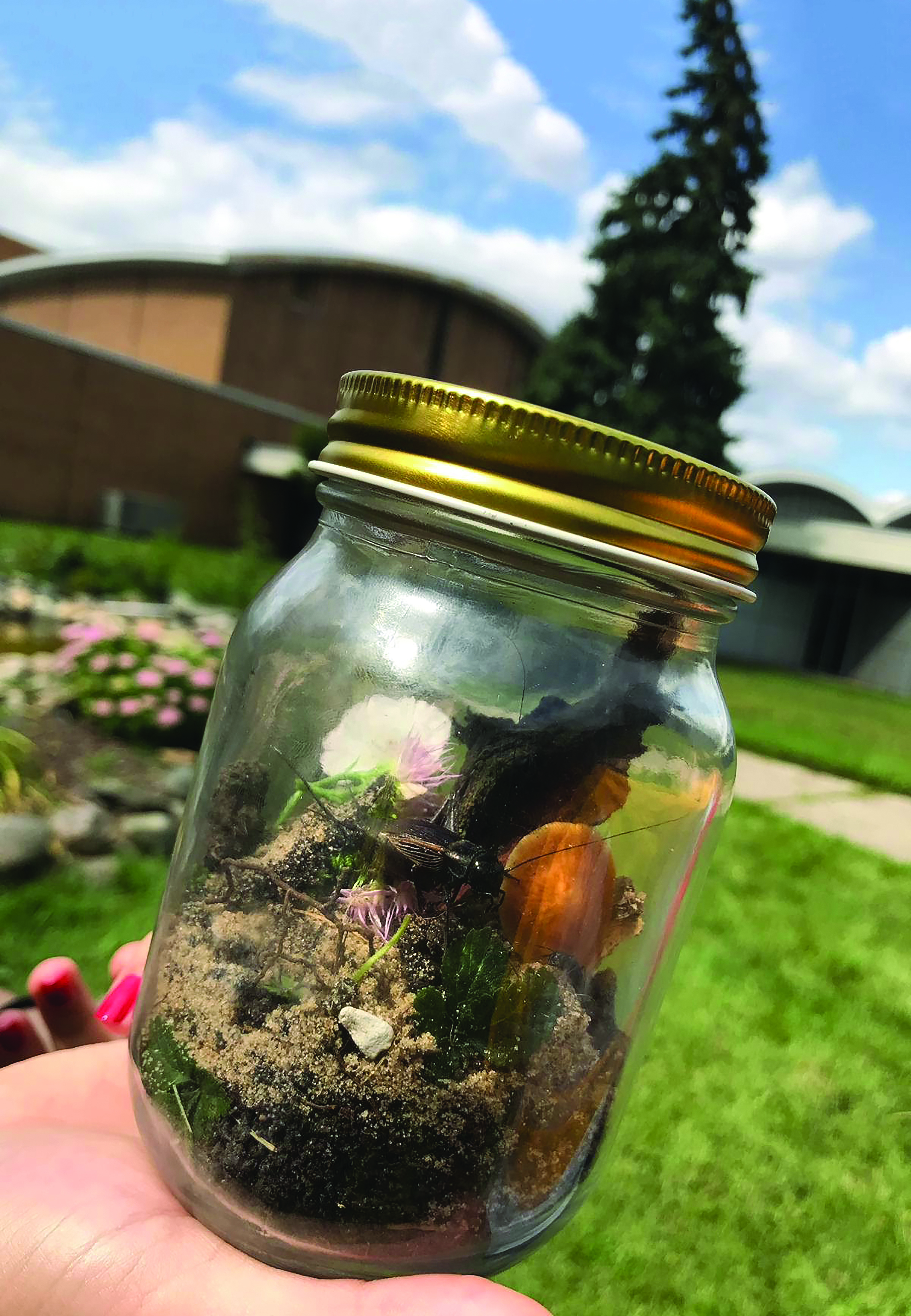
Ecosystem in a Jar
Inspiring observation and appreciation of natural systems
Feature
The Survival Games
Linking science and science fiction to better understand the realities of biomes, fitness, and climate change
The Science Teacher—January/February 2021 (Volume 88, Issue 3)
By Gabriela E. Rodriguez, Zainab Shoda, Hannah R. Assour, Vanessa Fischer, and Janelle M. Bailey

Current Science Classroom
Field Trips Last a Lifetime
The Science Teacher—January/February 2021 (Volume 88, Issue 3)
By Chris Anderson
Focus on Physics
The Bohr Model of the Atom
The Science Teacher—January/February 2021 (Volume 3, Issue 88)
By Paul G. Hewitt
Citizen Science
A Window to the Wild
Teacher Spotlight
Teacher Spotlight: Steve Metz
Point of View
Taking the Office Hour Out of the Office
Journal of College Science Teaching—January/February 2021 (Volume 50, Issue 3)
By Patrick Cafferty
Science classrooms across our campus have changed dramatically over the past 10 years as an increasing number of instructors have incorporated a variety of active learning techniques into their teaching practice, using, for example, classroom response systems to poll their students and guided inquiry and case study activities to facilitate small group work (AAAS, 2011; McGill et al., 2019). However, the primary way students interact with faculty outside the classroom remains unchanged: the office hour. Despite evidence that students benefit from office hour visits, low office hour attendance is common. Here, I describe a novel addition to my typical office hours, holding one of my four weekly office hours outside as a group run called the “Active Office Hour.” Students view the Active Office Hour positively, with a subset of my students attending weekly. Active Office Hour participants report their primary motivator for attendance is to seek comradery with their peers and instructor, not the specific activity of running, suggesting alternative forms of out-of-office office hours may work well for different students and instructors.
Science classrooms across our campus have changed dramatically over the past 10 years as an increasing number of instructors have incorporated a variety of active learning techniques into their teaching practice, using, for example, classroom response systems to poll their students and guided inquiry and case study activities to facilitate small group work (AAAS, 2011; McGill et al., 2019). However, the primary way students interact with faculty outside the classroom remains unchanged: the office hour.
Science classrooms across our campus have changed dramatically over the past 10 years as an increasing number of instructors have incorporated a variety of active learning techniques into their teaching practice, using, for example, classroom response systems to poll their students and guided inquiry and case study activities to facilitate small group work (AAAS, 2011; McGill et al., 2019). However, the primary way students interact with faculty outside the classroom remains unchanged: the office hour.
Feature
Practice Makes Better
A Classroom Investigation of Practice Effects
Practice effects are ubiquitous human phenomena that have been scientifically studied for over half a century. They are also among the most directly applicable psychological phenomenon, holding broad implications for any domain involving human expertise, and especially for education. Yet the details of how practice works to improve performance are often poorly understood by the users of this phenomenon, such as teachers and coaches. In this paper I describe a simple classroom activity, The Seeker Game, which introduces students to the basics of practice effects, and to some of its complexities. After describing the game I suggest directions for discussion, focusing on “Microgenetic Analysis,” a method that exposes the sources of performance change in detail. This analysis reveals the multifactorial nature of change, demonstrating that performance change often takes place not primarily in participants’ heads, but spanning the cognitive, physical, and social domains.