


 Join
JoinCritical thinking
By Mary Bigelow
Posted on 2009-09-16
 Two items titled “Critical Thinking” are on my desktop right now: the September issue of Science Scope and an op-ed piece in the Boston Globe Critical thinking? You need knowledge. In this article, the author Diane Ravitch discusses “21st century skills” such as critical thinking and cooperative learning and suggests these are being emphasized to the exclusion of “knowledge.” It’s an interesting article, and the comments that have been submitted are diverse and thought-provoking, too.
One thing I looked for in the article was a definition of “critical thinking.” It seems like a phrase we all use but may have different interpretations. Does the term refer to questioning, synthesizing, problem-solving, creating, reflecting, judging, evaluating? Something else? We also should consider what we mean by “knowledge” Is knowledge information from the outside that gets absorbed (memorized?) or does it also involve a deeper level of understanding that comes from making internal connections? How do we determine what information and experiences should be internalized as knowledge? Just some rambling thoughts.
I’m sure we’ve all had experiences in classrooms where the teacher emphasized the acquisition of facts and definitions, with few opportunities to use the information in any context. On the other hand, there are classrooms that focus on projects and activities but the students don’t really understand why they are doing them. We often hear “They are having so much fun, they don’t know they’re learning.” Maybe we should help students know that they are learning, how the activity is helping them learn, what content is important, and that learning can be enjoyable (and challenging).
But as I read the articles in Science Scope, I have the impression that these teachers use critical thinking and cooperative learning, not as isolated skills, but as ways of helping students learn science through investigations, discussion, readings, and writing. The activities they describe integrate essential content with experiences that help the students internalize and apply what they are learning in creative ways
The Internet is changing the way we locate and share information, so I’ll put in a plug for SciLinks as a tool for finding relevant science content!
Two items titled “Critical Thinking” are on my desktop right now: the September issue of Science Scope and an op-ed piece in the Boston Globe
Take-home projects
By MsMentorAdmin
Posted on 2009-09-11
I’m thinking of requiring some “take-home” projects for students this year. (I teach at the elementary level). I think these would provide a good opportunity for students and parents to work together on science topics. Do you have any suggestions or guidelines?
—Janine, Boise, Idaho
I suspect the most dreaded words many parents hear from their children are “I have to do a science project,” often spoken the night before it’s due!
Optional or supplementary take-home projects may be of interest to many students (and their parents or other caregivers). But I’d consider some questions before requiring all students to complete take-home projects.
What kind of project do you have in mind? How does the project relate to the learning goals or objectives for the unit? I’ve seen many traditional “projects” such as models of volcanoes or the solar system, pretzel-stick log cabins, and shoebox dioramas, but I wonder how they demonstrate student learning of specific content knowledge or skills. Take-home packets with items such as coloring pages or word searches may be enjoyable for students, but I question their instructional value in terms of learning science.
Does the project rubric relate to the learning goals and focus on content, organization, and depth of information? Some students (and parents) may not know what a presentation looks like or how to design a science fair poster, so having pictures or videos of projects from other years may help. How much will the project count toward final grades? Remember, giving “extra” credit for take-home projects penalizes students who have limited resources at home.
What level of parent involvement is acceptable? “Involvement” may range from providing materials and some guidance to taking over the project and doing it for the student. Some students have parents who work evenings, have other children to care for, or may not have a lot of skills or self-confidence to assist with projects. Do your students have the knowledge and skills to complete them on their own?
How much time will be required? Many students have evening schedules with various community activities as well as homework in other subjects.
Does the project require costly materials or resources? How will you accommodate students who either cannot afford materials or get to a store to purchase them? Do all of your students have access to computers and the Internet at home? Students may be concerned whether the finished project can be transported on the bus.
Your intention to connect parents and their children through science activities is commendable. It sounds like you want the projects to be enjoyable, but you must keep in mind formal take-home projects with ironclad deadlines could be a burden in terms of time and resources. Much has been written about project-based learning in the classroom (see Edutopia’s Why Teach with Project Learning? or the September 2009 issue of NSTA Reports). These formal projects require intensity, planning, and resources and should be structured so all students, regardless of their home circumstances, can participate. But don’t give up on finding ways to involve students and parents with informal, science-related activities.
In your school or class newsletter, website, or blog, include information about free events at local parks, nature centers, libraries, or museums. Encourage students who attend these events to share their experiences. NSTA’s SciLinks can help you create a list of appropriate websites related to your unit topics to share with parents.
Annotate the school or class calendar with prompts for family conversations—What is your first memory of being outdoors? How have inventions and technology changed over the years? Play I Spy at home and find objects made of metal, plastic, glass, wood. Talk about where food comes from. If other subject areas get involved, every day can have a conversation-starter. The “Everyday Science” calendar in NSTA’s Science and Children each month could be a starting point.
I worked with an elementary school that had take-home “kits” in plastic bags, created by a high school service group. The materials were donated or bought at a dollar store or flea market. For science, these kits included CDs or DVDs with podcasts or science programs, trade books to read at home with suggested discussion questions, vocabulary flash cards (even better if your students make them), small collections (such as leaves, seashells, rocks, or pictures) with directions for sorting or classifying, a plastic ruler and a magnifying glass with some simple directions for observing and collecting data, maps of the night sky for star gazing, an inexpensive pair of binoculars and a field guide on birds, and a set of building blocks. Students signed out a kit to take home, and they were not “graded” on the use of the kits. Of course, some kits never made it back to the classroom, but that did not discourage teachers from continuing the project.
I’m thinking of requiring some “take-home” projects for students this year. (I teach at the elementary level). I think these would provide a good opportunity for students and parents to work together on science topics. Do you have any suggestions or guidelines?
—Janine, Boise, Idaho
I suspect the most dreaded words many parents hear from their children are “I have to do a science project,” often spoken the night before it’s due!
Chemistry for a changing world
By Mary Bigelow
Posted on 2009-09-10
 Welcome to the 2009-2010 school year! I was excited by the theme of this kick-off issue. I loved chemistry as a high school student (Thank you, Sister Maureen!), majored in the subject in college, and taught it as part of a physical science course. Even today the smell of a chemistry lab gets me psyched up.
Some students do not take chemistry in high school; those in a traditional course may never realize how what they are learning applies to the real world. And some of my students would have the misconception that chemistry is about blowing things up and is the domain of nerds in stereotypical white coats and plastic pocket protectors! The outside world is not the only thing that is changing. The authors of these articles describe how the teaching and learning of chemistry is changing in their own classrooms.
The activities in Shrinking Our Footprints are built around a real-world problem and use an interesting online calculator, the Ecological Footprint Quiz. The online nature of the quiz enables students to test their ideas about reducing carbon consumption.
Project-based learning was the focus of in What Happens to Cemetery Headstones? Students applied their learning of acids and bases to a study of a local environment. Wouldn’t it be interesting to incorporate this into an interdisciplinary project involving social studies? Check out How to Read a Graveyard or History Comes Alive in the Graveyard from the Colonial Williamsburg Foundation.
Not all learning in the classroom is done by students! The authors of Teacher Research: Challenging Our Assumptions describe their own inquiry into what student do or do not understand about the gas laws. (Their findings are interesting. Would they apply to your students?) If you’re logged into SciLinks, you can search for websites that may help your students understand the laws conceptually, in addition to doing the algebra to solve problems!
On a smaller scale, check out articles on Investigating Membranes, The Science Behind Nanosunscreens, and Teaching with Crystal Structures. And use SciLinks to search for resources on membranes, nanotechnology, and crystalline solids.
Welcome to the 2009-2010 school year! I was excited by the theme of this kick-off issue. I loved chemistry as a high school student (Thank you, Sister Maureen!), majored in the subject in college, and taught it as part of a physical science course. Even today the smell of a chemistry lab gets me psyched up.
Book lovers and science
By Peggy Ashbrook
Posted on 2009-09-01
 Just in case you have not yet read the column “Teaching Through Tradebooks” in Science and Children, the National Science Teachers Association’s elementary school journal, I’ll share why I like it with you. The column writes up two activities, one for K–3 and one for 4–6. The book choices are always excellent, the kind of books that you hold onto for 20 years because they are scientifically accurate and resonate so well with children. The content of featured books is appropriate for elementary school grade levels and aligns with the National Science Education Standards. The books are a pleasure to read with illustrations that add to our understanding of the text.
This month the titles are I See a Kookaburra! Discovering Animal Habitats Around the World by Steve Jenkins and Robin Page (Houghton Mifflin Books for Children, 2005) and The Salamander Room by Anne Mazer and Steve Johnson (Random House Children’s Books, 1994).
“Picture” books make great teaching tools for older elementary students too! Reading aloud develops students’ vocabulary and is a jumping off point for large group discussion.
Do you have a favorite book that ties into your science lessons? Bet you can’t choose just one!
Peggy
Just in case you have not yet read the column “Teaching Through Tradebooks” in Science and Children, the National Science Teachers Association’s elementary school journal, I’ll share why I like it with you. The column writes up two activities, o
Planting this fall for springtime blooms
By Peggy Ashbrook
Posted on 2009-08-29
I’m planning a fall gardening activity now, before school starts, and the first step is to mark my calendar to buy spring flowering bulbs before the end of September. Seasonal changes vary across the many climates in the United States. If you get temperatures below 40°F for extended periods of time, you can plant these bulbs too. If not, go to the Tag Cloud menu on the left and click on “Growing Plants” to see the September 15, 2008, post with a link to growing other types of bulbs.
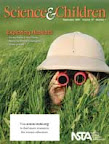 Read the activity about planting spring-flowering bulbs in the Early Years column in the September issue of Science and Children, the National Science Teachers Association’s elementary school journal.
If all your students are years beyond the exploring-with-their-mouth stage then they can plant my favorite flower, daffodils or jonquils. If there is any chance that a student might bite into a bulb, buy Camassia spp. (also called Camas, Quamash, and Wild Hyacinth) bulbs which are a safe plant to eat (although I never have). Check out plant toxicity online using the lists for unsafe and safe plants at the California Poison Control System before making garden choices. And most importantly, know your students and be watchful.
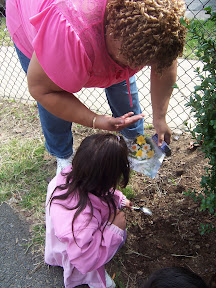 Sing a song before and after planting bulbs, and all winter long while wondering if the bulbs really will sprout.
Act out the following song while you sing it, to the tune of the traditional song “Jack in the Box”.
Spring flowering bulb, (children curl face down on floor, hiding face)
So safe in the ground,
Way down inside, your little dirt mound, (hands curve over head)
Spring flowering bulb so quiet and still,
Won’t you sprout up? (heads up and jump up, stretch arms up high)
Of course I will!
Do you have a favorite book about planting flowering bulbs? Both non-fiction and fiction that ties into the science topic are useful. Here are some that have been successful in my classes:
- A Flower Grows by Ken Robbins. 1990. Dial Books.
The book follows the growth of an amaryllis bulb through photos.
- From Bulb to Daffodil by Ellen Weiss. 2007. Children’s Press (CT).
This excellent book includes plant structure details through photography and introduces some vocabulary so it can be useful for English language learners as well as early readers. I wish the book did not use the word “sleeping” instead of “leaf senescence” to describe the leaf and flower die-back because young children can learn, and like to use, big words that are more precise. “Senescence.” I clap and say it to help myself remember: sen-nes-ence, (sənes′-əns).
- The Life Cycle of a Flower by Molly Aloian and Bobbie Kalman. 2004. Crabtree Publishing Company.
Photographs reveal the details of flower structures and plant parts and the text describes seed production and other ways plants reproduce.
- Investigate Plants by Sue Barraclough. 2009. Heinemann Library.
With a question and answer format, this book asks readers to answer before turning the page.
- Planting a Rainbow by Lois Elhert. 1988. Harcourt Brace Jovanovich.
This classic shows bulbs in the ground before sprouting and when blooming.
What seasons do you experience? Do your students remember the way it rained and rained last spring or the big snow that happened as long as 1/4 their lifetime ago? Here are some books for discussing the cycle of seasons and the passage of time with young children:
- Boxes for Katje by Candace Fleming Candace Fleming and Stacey Dressen-McQueen. 2003. Farrar, Straus and Giroux.
This story about tough times in post World War II Holland is based on the experiences of the author’s mother who sent boxes to a family in Holland.
- Spring: An Alphabet Acrostic by Steven Schnur, illustrated by Leslie Evans. 1999. Clarion Books.
Spring from A to Z, each page an acrostic poem beginning with the letters of the alphabet. Your class may want to write their own acrostic poem about a word related to the season. The series includes Winter, Summer, and Autumn.
- What Comes in Spring by Barbara Horton, illustrated by Ed Young. 1992. Knopf.
In this story a mother relates the family’s milestones to the seasons.
- When This Box is Full by Patricia Lillie, illustrated by Donald Crews. 1993. Greenwillow Books.
Children love to guess what the girl will put in the box next to represent the month (one object per month). It reminds me of The Important Book by Margaret Wise Brown in that it says what is important to a child about a time of year. For me it would be ice, a heart, seeds, a kite, sunscreen, swimming pool, a novel, tomatoes, school supplies, birthday cake, pumpkins, and a candle. What would you and your class choose?
- A Year in the City by Kathy Henderson, illustrated by Paul Howard. 1996. McGraw-Hill.
Some seasonal changes are specific to urban environments: snow grey with car exhaust, Chinese New Year parades, and city park garden blooms.
Share the seasonal books you find useful by posting a comment below. Hope you get to plant with your class!
Peggy
I’m planning a fall gardening activity now, before school starts, and the first step is to mark my calendar to buy spring flowering bulbs before the end of September. Seasonal changes vary across the many climates in the United States. If you get temperatures below 40°F for extended periods of time, you can plant these bulbs too. If not, go to the Tag Cloud menu on the left and click on “Growing Plants” to see the September 15, 2008, post with a link to growing other types of bulbs.
Cooperative learning
By MsMentorAdmin
Posted on 2009-08-29
What’s the best way to set up cooperative learning groups for labs and other activities? How often should I change the groups? I’d also like to assign roles for group members, but I need some examples.
— Doug, Henderson, Nevada
Cooperative learning is a strategy supported by a wealth of research. The term often reflects a continuum of approaches, from generic “group work” to more structured activities. (Use the phrase in an Internet search to find resources such as Why Use Cooperative Learning? and Cooperative Learning.
There is no single or “best” way to set up groups. This is a great opportunity for action research as you try different configurations and note which ones seem to work better for your students. Consider these questions:
How many should be in a group? Groups of four seem to be effective in my experience. It’s easy in a triad for one student to be ignored, more than four is a crowd at lab tables, and in a pair there is the issue of what happens when one of the students is absent.
How should the groups be structured? This is where you’ll need to do some experimentation, because each class is different.
- You could start with a random assignment. There are websites with random number generators, and programs like Excel have them, too. Some teachers take a low-tech approach and literally draw names using craft sticks or index cards. As the students work in these initial groups, you can observe the students’ interpersonal skills, work habits, and how combinations of personalities work.
- I hesitated to use student-selected groups. Usually, friends wanted to work with friends, and I was concerned about the students who were selected last or not at all (remembering my own experiences as a non-athlete at recess). I was also worried students wouldn’t learn how to work with a variety of people. Recognizing the need for students to have a voice in the classroom, I tried a variation in which students could give me a note with the name of one person they would like to work with. I then structured the groups to try to accommodate their choices, with no guarantees.
- Some teachers suggest grouping by ability. I’m wasn’t sure how to determine science “ability”—I suspect teachers use factors such as reading or math ability, grades, work habits, or behavior. I found heterogeneous grouping worked best for my classes most of the time. Once I did put four slackers together. After a while they realized they had not accomplished much, and no one was going to bail them out! Sometimes if I had students with an intense interest in a topic, I had them work together.
- There are other student variables to consider. Depending on your class, you many find single-gender groups provide more opportunities for student participation. If your class includes special education students, check with the specialist to determine their needs in terms of their IEPs.
How often should the groups change? Changing groups for each activity allows students to get to know others, but students also learn if they don’t get along, it doesn’t matter—the group will change next time and they don’t need to resolve any difficulties. I would usually try to keep the groups intact for a unit. This also saved time, because the students knew who their partners were and which lab table was theirs.
Setting roles is a key component of cooperative learning so students share the responsibility for learning. The roles may vary from task to task: group leader, presenter, data recorder, measurer, equipment manager, liaison (to ask questions of the teacher or other teams), artist, online researcher, questioner, timekeeper, notetaker. The literature on cooperative learning describes other roles. Have job descriptions for each role (as checklists or on the bulletin board), and ask students to describe how they and their teammates did their jobs (this could be a exit activity). Rotate the roles so students have a variety of experiences.
To keep the groups focused and on-task, be sure that students understand the expectations for the project or investigation. Share the rubric ahead of time. Monitor the groups as they work, eavesdropping on their discussions and observing their interactions (this can be a formative assessment). Cooperative learning models emphasize the importance of both groupwork and individual accountability. You could have the group create some parts of a report together (perhaps in their notebooks or with a class Wiki or GoogleDoc page) and then have each student write his or her own conclusion or summary. Some teachers hold each student be responsible for one part of a project, evaluating each component separately and then assigning a holistic evaluation for the entire project.
You may have students who do not have a high level of interpersonal skills. Start with brief and highly structured activities. Model cooperative behavior, and work with them on what types of language is appropriate in their groups. And remember there are times when cooperative learning is effective, times when large group instruction is appropriate, and times when you want students working independently.
For more information on how other science teachers are using this strategy, go to the NSTA Learning Center to search for articles on cooperative learning.
What’s the best way to set up cooperative learning groups for labs and other activities? How often should I change the groups? I’d also like to assign roles for group members, but I need some examples.
— Doug, Henderson, Nevada
More resources from PBS
By Mary Bigelow
Posted on 2009-08-28
I’ve just heard of a few new resources from PBS. They’ve recently redesigned the PBS Teachers page (it seems to be the month for redesigning sites — have you seen the new SciLinks site?). PBS provides many free resources in science and technology, including lessons derived from programs such as NOVA and Nature, “interactives” (which are online animations and simulations), and projects from member stations, searchable by grade level and topic.
I’m especially fascinated by the Activity Packs, which are “widgets” you can add to a webpage or social media site such as FaceBook, making them available to students and parents. (I’ve included a short cut link – from the main PBS Teachers page, scroll down the right to find it). These widgets look like sidebars and have links to video clips and other resources on science-related topics such as medical research, weather, inventions, and forensics.
Another new feature from PBS is the PBS Digital Learning Library, a repository of digital resources that will be made available through local stations beginning this fall. According to the press release, the project is being piloted at this time by a number of public television stations. (The press release has the list.)
I’ve just heard of a few new resources from PBS. They’ve recently redesigned the PBS Teachers page (it seems to be the month for redesigning sites — have you seen the new SciLinks site?).
A memorable visit
By Mary Bigelow
Posted on 2009-08-22
Last week, I went to the Franklin Institute in Philadelphia for the exhibit on Galileo: The Medici and the Age of Astronomy. It was awesome to see an actual Galileo telescope and learn more about the social, political, and cultural contexts in which he did his work. I was impressed by the variety of instruments that were on display, not just as scientific tools but also as works of art and craftsmanship. Unfortunately, this is the only North American venue for this exhibit, but the website has recordings of the symposia (featuring scientists from around the world) on topics such as “What Would Galileo Think?” and “Revolutions in Art and Science,” and an educators guide with more resources. (And don’t forget that SciLinks can help you find even more resources on topics such as Galileo, astronomy, and telescopes.
Just walking into the museum, I was transported back in time to another era–my own childhood. Seeing the giant statue of Benjamin Franklin reminded me of my visits to this fascinating place where I saw my first planetarium show and many other wonders. And then I heard it–lub DUB, lub DUB. The giant, walkthrough heart was still there, still beating! I couldn’t resist walking through again (although the passages seemed smaller than I remember). I realized that this museum was part of what stimulated my interest in science. There were many children there–families on vacation and summer camp groups. I wonder how many children are (or have been) turned on to science through visits to museums, zoos, parks, botanical gardens, science centers, and other informal science institutes. I was fortunate in that my parents were able to take me to places such as the Franklin, but I also wonder how many children have these experiences only through school or camp field trips and what will happen when funds for trips are no longer available (or when other issues cause them to be eliminated).
No matter where you live, there are places that can turn kids on–even your own schoolyard–and the Internet lets you find these places and the resources to make the experiences meaningful ones. I do volunteer work at a local nature center, and today I had a wonderful conversation with a youngster about snakes and turtles. Even if he does not become a herpetologist, I hope he keeps his interest in learning more about living things.
Please feel free to share you own memories of those special places that sparked (or continue to spark) your interest.
Last week, I went to the Franklin Institute in Philadelphia for the exhibit on Galileo: The Medici and the Age of Astronomy. It was awesome to see an actual Galileo telescope and learn more about the social, political, and cultural contexts in which he did his work. I was impressed by the variety of instruments that were on display, not just as scientific tools but also as works of art and craftsmanship.
Perseverance and "failure"
By MsMentorAdmin
Posted on 2009-08-19
With all of the curricular demands and a focus on preparing for state exams, I am concerned that we do not create situations for students to persevere if they don’t succeed in their first attempts at experiments in science. How do we communicate the value of curiosity and perseverance to high school science students and the notion that repeated “failure” is common on the road to major breakthroughs?
—Noelle, New York, New York
When watching children play video games or teenagers texting at the speed of light, I marvel at how they learned these skills on their own–through trial and error, practice, watching each other, and self-evaluation. You raise a good question: Are students encouraged to use these learning strategies in school?
Students hear failure and mistakes are not an option, with airline pilots and brain surgeons as examples. While I hope pilots and surgeons would not make errors in the cockpit and operating room, I suspect they did make some errors during simulations and supervised training—under controlled circumstances where they see the results of their decisions in a variety of situations. This training provides opportunities to learn how to recognize when things go wrong and to experience many problem-solving and decision-making situations, so they’ll remain calm and collected when things go haywire in real life, as they inevitably do. .
What happens when students make mistakes or when something does not go well the first time? I suspect some teachers use the red pencil to focus on the mistakes and take points off, even when students are learning and practicing new concepts and skills. Do students learn that mistakes are bad in school, perfection is required at all times, and there are no second chances? Perhaps some students are so afraid of being labeled a “failure” they’ve learned it’s less painful to do nothing. It could be helpful if we model how to recognize a mistake or error and what to do about it. Even if we have to make a deliberate error, we can demonstrate how it could be corrected and prevented and what can be learned from it. We could even describe our own attempts at learning something new. (I told my students that if they ever felt frustrated to visualize me in my first aerobics class—what a disaster!)
We should not condone sloppy or careless work, but I wonder if sometimes it would be helpful to allow students to make mistakes. Shouldn’t we encourage them to reflect, ponder, and problem-solve before asking for help? Just as “helicopter parents” hover over their children to prevent mistakes or failure, I think well-intentioned “helicopter teachers” hover over their students and intervene even if students do not ask for (and may not really need) immediate assistance, just a little time to think things through. Of course, teachers must intervene if there are safety issues or when students are genuinely frustrated.
Can we help students learn perseverance if science activities are neatly packaged in one-period chunks rather than opportunities for ongoing investigations? What do students learn about the nature of science if all activities have a single, correct answer or conclusion? It would be helpful for students and teachers to meet scientists (either in person or online) and learn about their day-to-day work. A museum scientist described to my students how his longitudinal research on amphibian populations was taking several years (it was interspersed with other projects). He noted how he revised the project several times and how some data did not seem to “fit,” which led to other research questions.
It’s not necessary to wait until high school to encourage perseverance and curiosity. In a fourth grade class I visited, students were investigating the relationship between volume and temperature. They had made predictions/hypotheses, but as the teacher put their data on the board, it was apparent that they were too varied to see any trends and come to any conclusion. As the teacher tried to think of an explanation, a student remarked, “Maybe we didn’t all do the experiment in the same way.” Other students chimed in with suggestions: they may have read the thermometers incorrectly, perhaps they did not all measure the balloons accurately, or maybe the balloons had tiny holes in them that allowed air to escape. The teacher then joined the discussion about the importance of controls in an experiment and the value of consistency and accuracy in measurement. When the students asked if they could repeat the experiment, she helped them annotate the procedure with their suggestions and promised they could try again. After class, she reflected on the lesson. She said that at first she was disappointed the activity did not work out as planned, but she was excited about the way the students responded. She concluded that learning from a “failed” experiment was a valuable experience. (And later in the year, her class scored well above average on the state science exam!)
A recent blog entry Student Success: Genius or Perseverance? on the International Society for Technology in Education (ISTE) web site also addresses this topic. Readers, feel free to share your own experiences or other resources, too.
With all of the curricular demands and a focus on preparing for state exams, I am concerned that we do not create situations for students to persevere if they don’t succeed in their first attempts at experiments in science. How do we communicate the value of curiosity and perseverance to high school science students and the notion that repeated “failure” is common on the road to major breakthroughs?
—Noelle, New York, New York
New look for SciLinks
By Mary Bigelow
Posted on 2009-08-14
I received a “tweet” from NSTA yesterday – the new version of SciLinks is operational! If you’ve been a longtime user of SciLinks, you’ll notice the new look right away. It’s more visually appealing but the basic functions are there.
After logging in, you still have the option of searching by a textbook code or keyword. You can save the search for future reference, and you can also start a list of favorite websites for your lesson planning or to share with students. When you try some of the functions, you’ll get a note that more features (such as the class roster) are in the works. But I’m glad that the basic functions are available as we get ready for the new school year. If you’re a novice to SciLinks, there are several ways you can use the results of your search.
Recommending sites to students. As a teacher, you can provide logins for students to look at particular sites, or you can give them a printed list of suggestions. For interested students, you might go to the next grade level or you could go down a level for students who may struggle with the text. Share a login with the librarian so that he/she can remind students of this resource. In my town, many students use the technology at the local public library. Perhaps the staff there could be alerted to how and why students would access this.
In large group settings. Why just talk about science topics when there are many sites that lend themselves to illustrating the concepts? Building bridges, watching volcanoes erupt, seeing animals congregate around a water hole at night, or accessing photographs and video of various topics bring these topics to life. If you’re fortunate enough to have a smart board or projection unit, using a simulation or video clip with the class or a small group of students could be an engaging experience for them – and the resources are free and ready when you are. Print out or save some of the pages of a site to supplement or update the textbook information.
Teacher learning. One thing I’ve enjoyed over the years is using SciLinks to keep current on topics such as the human genome and climate change. I especially love the earth science topics (I taught life and physical science, so I’m continuing to learn). If you’re unfamiliar with a topic, searching for sites geared to middle or high school students would be a quick and painless way to learn more about it.
I received a “tweet” from NSTA yesterday – the new version of SciLinks is operational! If you’ve been a longtime user of SciLinks, you’ll notice the new look right away. It’s more visually appealing but the basic functions are there.