


 Join
JoinHigh School | Daily Do
What solutions reduced malaria case numbers and deaths in Macha and Sub-Saharan Africa between 2000 and 2020?
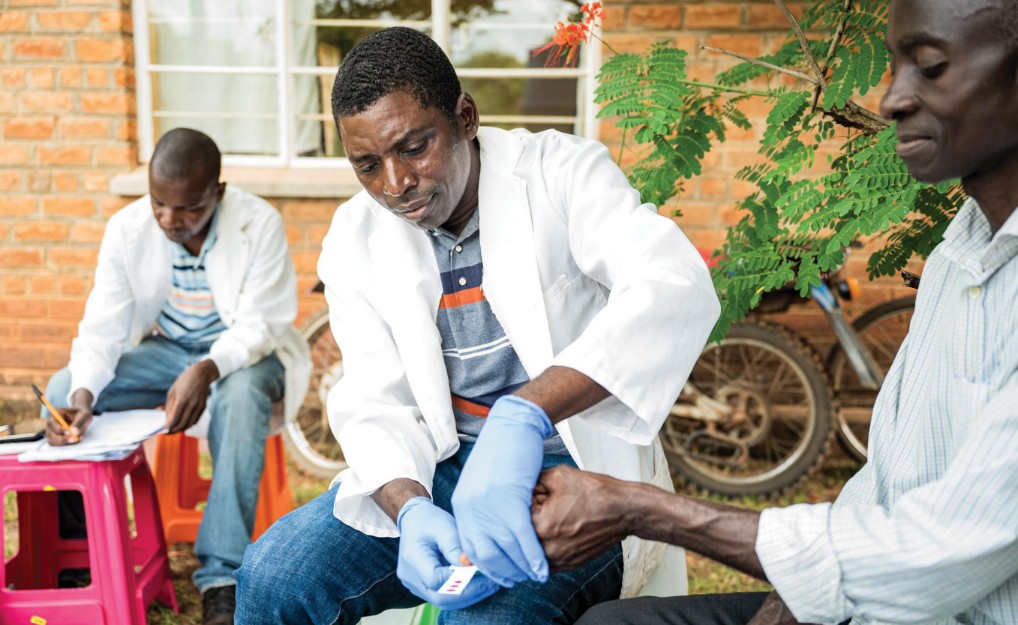
Biology Engineering Is Lesson Plan High School
Sensemaking Checklist




Lesson Snapshot
In this lesson, high school students, as scientists, apply life science and engineering ideas to answer the driving question: What solutions reduced malaria case numbers and deaths in Macha and Sub-Saharan Africa between 2000 and 2020? Students begin by connecting prior knowledge about diseases and recognizing that empirical evidence is needed to establish cause-and-effect relationships. Next, they analyze data and evaluate information on malaria in Macha, Sub-Saharan Africa, and worldwide, using videos, scientific texts, and models. In their investigations, students summarize scientific texts, use multiple models, and apply ideas about genes and natural selection to develop a mechanistic account of resistance to artemisinin-based monotherapy (oAMT1) and malaria treatment strategies. Students also consider how social and cultural contexts influenced the development and implementation of malaria solutions, including collaborative approaches with local communities. Finally, students summarize the empirical evidence and models to construct an explanation for the decrease in malaria cases and deaths between 2000 and 2020, considering both scientific and social factors.
This lesson plan was created in collaboration with Johns Hopkins University Press, the Johns Hopkins Office of Research, and Nobel laureate Dr. Peter Agre, based on his 2025 Wavelengths book Can Scientists Succeed Where Politicians Fail? The lesson plan is sponsored by Johns Hopkins Wavelengths, a program dedicated to connecting cutting-edge research with public audiences through books, digital toolkits, museum exhibits, and speaker events.
Click the Download PDF button above for the complete Lesson Plan. Note: You must be logged in to a NSTA member or free account to download PDFs.
Materials
Student Materials
Per Student
Teacher Materials
Optional Teacher Resources