


 Join
Jointeaching teachers
When Can We See Makali‘i?
Place-based storylines focused on modeling how Earth’s motion causes patterns we see in the sky
Science and Children—November/December 2022 (Volume 60, Issue 2)
By Lori Andersen
start with phenomena
Observing the Unobservable
Using multiple representations to shine light on Earth science phenomena
Science and Children—November/December 2022 (Volume 60, Issue 2)
By Jessica McClain, Celeste Nicholas, Katherine Zimmermann, Edward Pierce, Joshua Danish, and Qiu Zhong
engineering encounters
Bringing Engineering Into Play
Using guided play to help kindergarteners engage with pushes and pulls
Science and Children—November/December 2022 (Volume 60, Issue 2)
By Jesse Wilcox, Caitlyn Potter, Sarah Nolting, Sarah Voss, and Elyse Webb
science 101
Q: Do You Have an Activity for Daily and Seasonal Patterns and Motions of Earth?
Science and Children—November/December 2022 (Volume 60, Issue 2)
By Matt Bobrowsky
feature
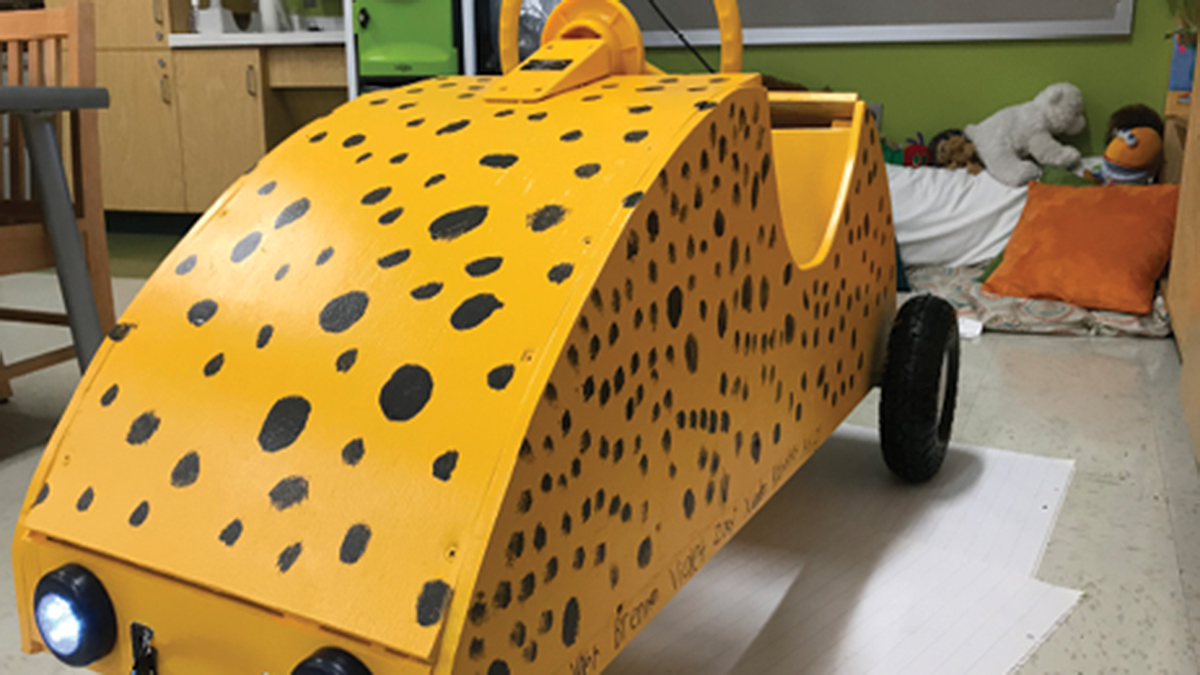
Courageous Cheetah Car
Kindergarten engineers build a functional playground car with the help of family members
Science and Children—November/December 2022 (Volume 60, Issue 2)
By Rebecca Stobbs and Jeanne Norris
feature
Moon, Math, and Literacy
Interdisciplinary connections through a space science study in preschool
Science and Children—November/December 2022 (Volume 60, Issue 2)
By Candi Clevinger, Alissa A. Lange, and Elizabeth Schock

feature
Making Sense of Apparent Brightness
An integrated approach for fifth graders
Science and Children—November/December 2022 (Volume 60, Issue 2)
By Alexis Kaczor, Laura Robertson, Jamie Price, Lindsay Lester, and Ryan Nivens

feature
Shining a Light
Fifth graders delve into the nature of science and technology by investigating the stars
Teaching Through Trade Books
Patterns From Earth’s Place in Space
Science and Children—November/December 2022 (Volume 60, Issue 2)
By Christine Anne Royce
formative assessment probes