

 Join
JoinAll Resources
NSTA Press Book
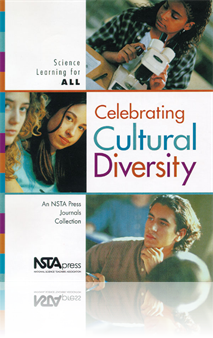
Celebrating Cultural Diversity: Science Learning for All
Science Learning for All: Celebrating Cultural Diversity covers three must-know” areas of multicultural science education: inclusive curriculum design, multicultural teaching strategies, and language diversity in science teaching and learning. Wit...
By NSTA Press
NSTA Press Book
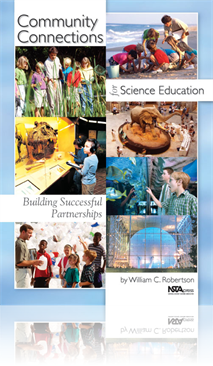
Building Successful Partnerships: Community Connections for Science Education
No single educator can help children learn all they need to become scientifically literate. Resources are all around us—not only in traditional science classrooms and laboratories, but also in gardens, nature centers, parks, youth programs, museums...
By William C. Robertson

Journal Article
Editor's Corner: Hail to the Awardees
The Science Teacher’s editor shares thoughts on the current issue featuring some of the favorite activities of the Presidential Awardees who were honored in past years for excellence in secondary science teaching....

Journal Article
The Learning Cycle and Instructional Conversations
Engaging students in instructional conversations creates opportunities for discovering and internalizing the critical attributes of a concept. In this article, the authors will identify questioning practices for the Exploration Phase of the Learning ...
Journal Article
Mixture Mystery: Basic lab techniques and rules for the first day of chemistry class
This article features a lab that is easy to prepare, takes about 30 minutes to do, involves simple equipment and techniques, and yet allows students to experience the scientific method. The only subject matter involved is the idea that different mate...

Journal Article
Can meeting actual scientists change students' perceptions of scientists? In this investigation, it appears that the face-to-face interactions during the classroom visit influenced the students' perceptions and provided an opportunity to see a scient...
Journal Article
Peer-Led Team Learning: A new teaching model focuses on student achievement through active learning
Students are more likely to honestly express their ideas—both scientifically valid conceptions and misconceptions—in a peer group where they have no fear than in front of a teacher who will be issuing grades. The Peer-Led Team Learning (PLTL) mod...

Journal Article
Is it practical to expect teachers to tailor instruction to meet the needs of gifted students when many teachers are already taxed by trying to differentiate curriculum for exceptional education students? It seems an impossible task, but teachers can...
Journal Article
Versatile Vee Maps: An alternative to the traditional laboratory report
The Vee map is a tool that guides students' thinking and learning during laboratory experiences. As an alternative to the traditional laboratory report, vee maps allow teachers to look into the thinking of students while providng a format to guide st...
Journal Article
Suckers for Science: Lessons with leeches teach students to think like scientists
Suckers for Science is a model inquiry-based program for integrating curriculum, incorporating technology, providing alternative assessment, demonstrating connections between classroom and real-life applications, and motivating students to learn more...
Journal Article
Science and Children’s editor shares thoughts regarding the current issue....