


 Join
JoinAll Resources
Book Chapter
Developing writing skills along with content by incorporating hands-on science experiences and related writing lessons provides students with a purpose for writing, which makes it more meaningful to students. The Mystery Box lesson discussed in this ...
Book Chapter
Unlocking Reading Comprehension with Key Science Inquiry Skills
As secondary science teachers, we must remember that scientific literacy cannot be attained without fundamental literacy--the ability to read and comprehend textual information and write competently about the subject under study. To achieve literacy ...
Book Chapter
What do we learn from the world around us? After months of exploring various ecosystems, a third grade teacher incorporates "Nature's Advice Book", a writing tool created to assess what her students had learned and to gain insight into their ideas ab...
Book Chapter
Third-grade students display their understanding of life science concepts by creating an imaginative newspaper. This creative writing project engages students in researching, writing, and editing a newspaper based on a prairie ecosystem....
Book Chapter
Two Bad Ants, a fictional story detailing the journey of “two bad ants” that stray from their colony and choose to stay in a container full of large, white, sweet-tasking crystals (sugar)—was the catalyst for an engaging five-day study with thi...
Book Chapter
Children love seeing their work and photos of themselves at work. Make this an opportunity for an early literacy experience by creating a book about a classroom investigation. Document each step of the process with photographs and student drawings. W...
Book Chapter
One way to help students develop their writing skills is through the “key-word process.” In this method, students select key words about a topic and then use those words to build their own sentences and paragraphs. The key-word process can be exp...
Book Chapter
The communication skills of reading and writing go hand in hand with science as natural partners for fostering students’ understandings of the world. The similarities that exist between reading and writing strategies and science-process skills add ...
Book Chapter
Creative Writing and the Water Cycle
Creative writing provides one strategy for helping students combine their powers of imagination with their arsenal of knowledge. Teachers also can use creative writing exercises to assess student understanding of science content. Use the story, “Th...
Book Chapter
Tired of building a paper mâché volcano to teach about plate tectonics? Do you want to connect science and writing? Then the volcano résumé project is perfect for you. This one-week, problem-based learning (PBL) project requires students to resea...
Book Chapter
That a relatively small piece of writing such as Albert Einstein's three-page paper of relativity could be so important certainly illustrates the significance of writing to science. A science class is not complete unless it helps students learn to th...
Book Chapter
Integrated science journals provide educators with valuable insight into teaching. They allow students to reflect on how engaged they were in learning about a particular topic while also providing information about how successful the teacher was in c...
Book Chapter
Science Interactive Notebooks in the Classroom
Writing is one of the ways in which children learn in science. When students make observations and explain them in writing, they clarify and organize their thoughts and ideas. Keeping science interactive notebooks is a technique for increasing studen...
Book Chapter
Using Science Journals to Encourage All Students to Write
It seems that everyone is using science journals or notebooks lately. As middle school science teachers, the authors use science journals as a tool to enhance students' knowledge and understanding of content and reinforce students' writing skills. In...

Book Chapter
Learning Logs: Writing to Learn, Reading to Assess
Just what do children get out of inquiry? Good inquiry activities help students hone their inquiry abilities and teach them about the nature of science. Inquiry is also a way to teach science content, and teachers need to know if this instruction is ...
Book Chapter
Using Web Logs in the Science Classroom
As educators we must ask ourselves if we are meeting the needs of today’s students. The science world is adapting to our ever-changing society; are the methodology and philosophy of our educational system keeping up? In this chapter, you’ll learn...
Book Chapter
Interactive Reflective Logs: Opening Science Notebooks to Peer and Teacher Feedback
Ho do we as educators ensure that all students are given the opportunity to respond or engage students who are embarrassed to speak in front of others? The authors created an interactive reflective log (IRL) to provide teachers with an opportunity to...
Book Chapter
Students are using the tools of scientists when keeping a science notebook. To bring students’ existing ideas out for examination, the author implemented a “quick-write,” which entails asking an open-ended question and having the students write...
Book Chapter
Science journals are wonderful tools. They offer a glimpse into children’s science understandings, and they are both diagnostic and pedagogically informative to teachers. Examining and reflecting on children’s journal work lets teachers embed ass...
Book Chapter
The P.O.E.T.R.Y. of Science: a Flexible Tool for Assessing Elementary Student Science Journals
Writing about inquiry-based science experiences can provide students with opportunities to communicate their questions, observations, and reflections while expanding our instructional and assessment options as teachers. But how can teachers encourage...
Book Chapter
This Isn't English Class! Using Writing as an Assessment Tool in Science
Writing is a huge part of science. It is the way scientists communicate ideas, results, conclusions, and opinions to other scientists. Thus, the author uses writing in a number of ways to have students demonstrate knowledge and as an assessment tool....
Book Chapter
Making Thinking Visible: A Method to Encourage Science Writing in Upper Elementary Grades
Writing, in conjunction with other activities such as reading and hands-on experiences, contributes to greater critical thinking, thoughtful consideration of ideas, and better concept learning. This chapter discusses a comprehensive approach toward s...
Book Chapter
By using the writing process to explore science, students and teachers can find new ways of clarifying, revising, and consolidating knowledge. To achieve this goal, try using The Writing in Science Wheel activity described in this article. The Writin...
Book Chapter
Helping Students Write About Science Without Plagiarizing
Most students don't plagiarize just because they are lazy. Most of them simply do not know how to write about science. As teachers, we can use planning strategies to help make some of the process of writing automatic, which frees working memory to fo...
Book Chapter
Learning to Write and Writing to Learn in Science: Refutational Texts and Analytical Rubrics
Most middle school science teachers are familiar with the idea of reading and writing across the curriculum. We, as science teachers, understand that our students need time, practice, and lots of encouragement in order to learn how to read and write ...
eBook
Project Earth Science: Meteorology, Revised 2nd Edition (e-book)
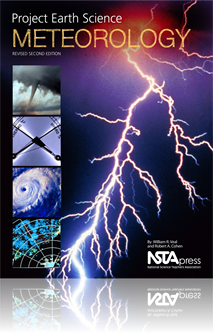
Can your students— • Track a hurricane? • Illustrate the inside of a thunderstorm? • Describe the basics of urban air quality? • Make rain fall on their desks? ...
eBook
Science the “Write” Way (e-book)
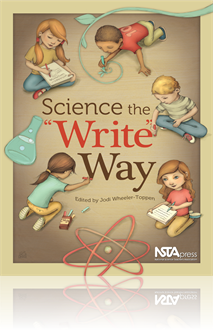
Writing skills are high on the list of real-world requirements for all students—including science students. Every scientific discipline needs professionals who can ably communicate in writing. Scientists must be able to describe their proposed stud...
Book Chapter
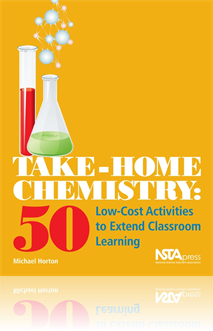
In this activity, students will make a series of liquid layers with different densities using nontoxic chemicals. This free activity includes the Teacher Pages and Student Pages for this activity and the Table of Contents, Introduction, and Index...

Book Chapter
Building Models in the Classroom
In this chapter, the author will go into more detail about using MBST in the lab and field, focusing on the practical concerns and techniques of model building in the science classroom. ...
Book Chapter
The Creative Processes of Science
In this chapter, the author examines a way to create new problems for your students to solve in the lab and field. Also looks at ways to stimulate our students to think creatively about the meaning and structure of scientific models in general. Creat...
Book Chapter
MBST and the Scientific Worldview
In this chapter, the author outlines the elements of a model of science in several operational social and personal contexts. Once you developed a model for these contexts, you will look at ways you might ways might contextualize science in your class...
Book Chapter
Can science really provide us with the ultimate answers to life, the universe, and everything? To answer this question and others, we first have to understand models. What are they? How do they work? Why do we use them? Once we have this background, ...
Book Chapter
Mental models provide us with a framework for understanding Models-Based Science Teaching (MBST), as well as some of the tenets and limitations of science suggested by philosophers of science. This chapter is background reading for anyone who wants t...
Book Chapter
This chapter will provide you, as a teacher, with an overview of science: where it comes from, what it is, and how it relates to the MBST model. The chapter begins by defining science and exploring its relationship with its first cousin, technology. ...
Book Chapter
In this chapter, the authors take a look at the three most common forms of communication used in science: verbal, written, and graphical. They will also discuss general guidelines for using communication in an inquiry-based science classroom so that ...
Book Chapter
Because measurements are an important part of inquiry-based science, teachers need to teach measurement skills to their students. Doing so requires a basic understanding of measurement theory and must take into consideration students’ levels of dev...
Book Chapter
Observation is frequently called the most basic of all the scientific skills. Ideally, observations should not include any assumptions, interpretations, opinions, or conclusions on the part of the observer. You should never attempt to explain why som...
Book Chapter
A desire to sort and group objects that have similar characteristics is innate to humans. In science, the process of grouping and organizing items and ideas into categories in accordance with specific rules is known as classification. Scientific clas...