


 Join
JoinAll Resources
Book Chapter
Lesson Plan 1: Forces Push Back
This lesson introduces students to the module and the culminating challenge of the module, the Swing Set Makeover Design Challenge. A video, discussions, and a trip to the school playground help students connect to the project and excite their curios...
Book Chapter
Lesson Plan 2: Slippery Slide Design
In this lesson, students investigate Newton’s laws of motion and apply their learning to make a more efficient ramp on which a car will travel. This learning activity is directly connected to the final challenge in which students build a model of t...
Book Chapter
Lesson Plan 3: Swinging Pendulums
In this lesson, students continue to explore the forces acting on swing set equipment and the motion that results. Science activities focus on balanced and unbalanced forces as demonstrated by pendulums. Lessons learned from measuring pendulum motion...
Book Chapter
Lesson Plan 4: Swing Set Makeover Design Challenge
This lesson serves as the capstone of the module and challenges students to complete their swing set makeovers. The science and mathematics activities guide student teams through building a model of the proposed designs. Students use the engineering ...
Journal Article
Inspiring STEM Interest Using Foldscope
The Gaining Options to College Collaborative (GO College) is a successful college mentoring program within the Erie, Pennsylvania, school district. It provides free, on-site, extracurricular resources for local high schools. Faculty members from Ga...
By Anne Schmitz, Nicholas Conklin, Quyen Aoh, and Barbara Priestap
Journal Article
The Great Lakes Stewardship Initiative (GLSI) is a statewide network in Michigan that promotes rigorous place-based education experiences for K–12 students....
By Sarah Waters, Brandon Schroeder, and Tracy D'Augustino
Journal Article
Cocreating Transformative Change
Leveraging community to create a mobile, cultural makerspace that travels to schools, powwows, and community events throughout a Native American reservation in Montana....
By Holly Truitt, Ruth Swaney, William Swaney, Nick Wethington, and Nathalie Wolfram
Book Chapter
This lesson asks students to devise a solution to the challenge of a decrease in pollinator availability for crop production. The first goal is to introduce students to justified design, which occurs when design choices for an engineering solution ar...
Book Chapter
This lesson asks students to engage in a series of activities to understand the relationship among photosynthesis, respiration, carbon dioxide (CO2), and human impact on the environment. The purpose is to have students design, evaluate, and refine a ...
Book Chapter
This lesson asks students to develop strategies for matching genetic characteristics with environmental conditions to optimize the growth of the Pacific yew tree, which is a threatened species. Student teams will propose and analyze a breeding progra...
Book Chapter
This lesson asks students to develop a synthetic genetic code to minimize the change in amino acid sequence in a protein due to mutations, within given criteria and constraints. Students compile and analyze data for their synthetic genetic code model...
Book Chapter
This lesson asks students to consider the aspects of cell cycle regulation and feedback as they propose a mechanism to stop cancerous cell division with the strategic use of cell cycle regulators. The purpose of designing a cancer treatment protocol ...
Book Chapter
This lesson asks students to explore the positive and negative factors affecting ecosystems and their impact on either an endangered species or an invasive species. Student teams first conduct research on the real-life challenges. Next, the teams des...
Book Chapter
This chapter contains five engineering case studies. Each one presents an engaging story of how engineering was used to find a solution to a real-world problem or opportunity. The stories were chosen to span a range of science and engineering fields....
Book Chapter
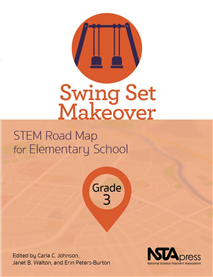
Swing Set Makeover, Grade 3: STEM Road Map for Elementary School (Book sample chapter)
What if you could challenge your third graders to design a swing set that’s safe but still lots of fun? With this volume in the STEM Road Map Curriculum Series, you can!Swing Set Makeover outlines a journey that will steer your students toward auth...
Book Chapter
Technological Advances in Automobiles
In this lesson, students are introduced to and experiment with mousetrap cars and the science and industry of crash testing cars with a focus on safety improvements. Students investigate the history of technologies that have allowed cars to achieve g...
Book Chapter
In this lesson, students use the law of conservation of momentum and energy to investigate the forces and motions involved in three scenarios—a car striking a stationary object, two vehicles colliding head-on, and two vehicles colliding at an angle...
Book Chapter
In this lesson, students investigate the history of safety features in cars and apply this understanding to a question that has existed since the origination of civil society—Under what conditions should governments establish rules for safety that ...
NSTA Press Book
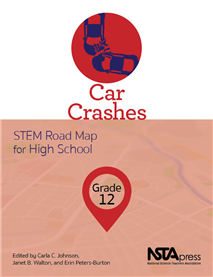
Car Crashes, Grade 12: STEM Road Map for High School
What if you could challenge your 12th graders to understand car crashes in the context of physical forces, manufacturing challenges, government safety standards, and individual rights? With this volume in the STEM Road Map Curriculum Series, you can!...
eBook
Car Crashes, Grade 12: STEM Road Map for High School (e-book)
What if you could challenge your 12th graders to understand car crashes in the context of physical forces, manufacturing challenges, government safety standards, and individual rights? With this volume in the STEM Road Map Curriculum Series, you can!...
NSTA Press Book
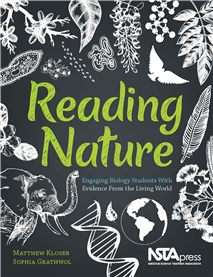
Reading Nature: Engaging Biology Students With Evidence From the Living World
By making room for this book in your curriculum, you’ll have a fresh way to motivate your students to look at the living world and ask not only “Why?” but also “How do we know?” Unique in both its structure and approach, Reading Nature is a...
By Matthew Kloser, Sophia Grathwol
NSTA Press Book
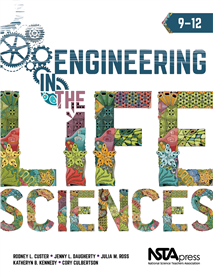
Engineering in the Life Sciences, 9–12
When the authors of this book took part in Project INFUSE, the National Science Foundation–funded teacher development program, they noticed something. Life science teachers were highly receptive to engineering ideas related to everything from genom...
By Rodney L. Custer, Jenny L. Daugherty, Julia M. Ross, Katheryn B. Kennedy, Cory Culbertson
eBook
Reading Nature: Engaging Biology Students With Evidence From the Living World (e-book)
By making room for this book in your curriculum, you’ll have a fresh way to motivate your students to look at the living world and ask not only “Why?” but also “How do we know?” Unique in both its structure and approach, Reading Nature is a...
eBook
Engineering in the Life Sciences, 9–12 (e-book)
When the authors of this book took part in Project INFUSE, the National Science Foundation–funded teacher development program, they noticed something. Life science teachers were highly receptive to engineering ideas related to everything from genom...
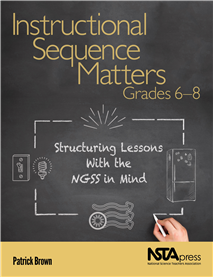
eBook
Instructional Sequence Matters, Grades 6–8: Structuring Lessons With the NGSS in Mind (e-book)
Instructional Sequence Matters shows how to make simple shifts in the way you arrange and combine activities to improve student learning. It also makes it easy for you to put the NGSS into practice. After explaining why sequencing is so important, au...