 Join
Join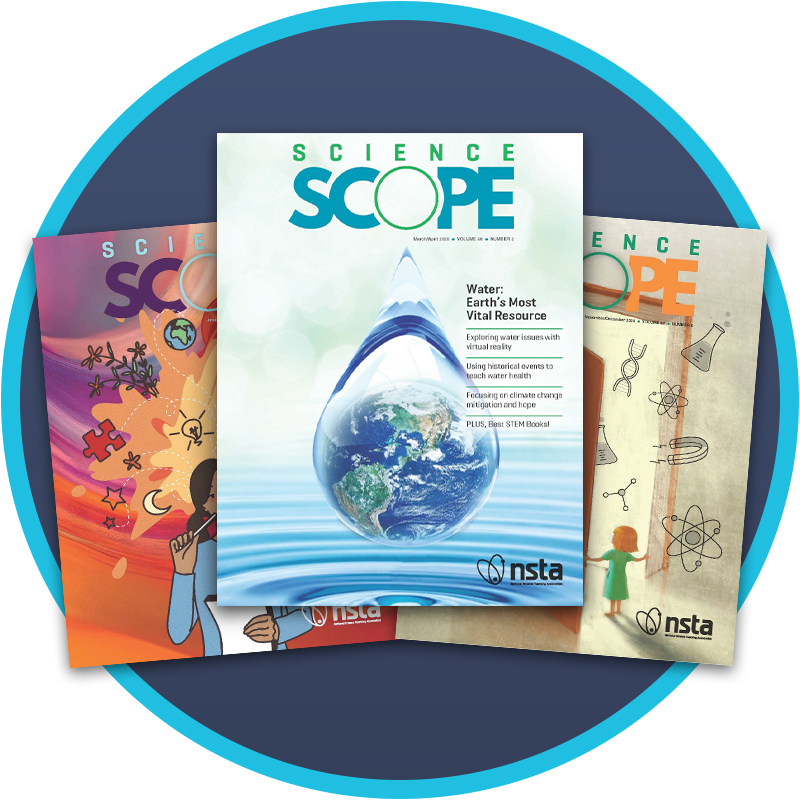
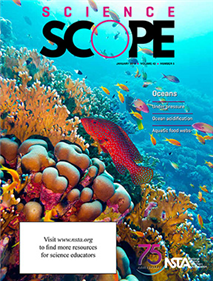
Read Science Scope, NSTA's award-winning, peer-reviewed practitioner journal for middle level and junior high school science teachers, sign up for new article alerts, and more!
Get Full Access With an NSTA Membership
Read Science Scope, NSTA's award-winning, peer-reviewed practitioner journal for middle level and junior high school science teachers, sign up for new article alerts, and more!
Ask anyone about the use of AI in the classroom and you’ll get a plethora of opinions. Whether you are an AI convert or not, it is imperative for us to become familiar with it in order to make well-informed decisions regarding its use. One can easily see how its utilization can be a time-saver for teachers, as it can allow us to do our job more efficiently while benefitting students at the same time. One of the biggest advantages is the ability to customize learning for our students. AI can adjust the difficulty of lessons, offer up differentiated readings based on student ability, and can craft test questions and worksheets for classroom use. Modifications of this magnitude are difficult for teachers due to the labor intensity of creating personalized lessons. In fact, some experts feel that AI may lead to fewer teaching jobs in the future (Pew Research Center, 2025). It is important to note, however, that AI should be viewed as a tool to support teaching. The crucial work of supporting our students socially and emotionally cannot be replicated by AI. Quite simply, students need connection with their teachers and peers; something AI cannot provide.
Open Access Articles: