


 Join
JoinAll Resources

Journal Article
From the Editor’s Desk: Critical Thinking and the Adolescent Brain
Science Scope’s editor shares thoughts regarding the current issue....
Journal Article
Disequilibrium: Egg in a Bottle
This column shows how to use discrepant events to confront misconceptions. This month’s Disequilibrium column carries out the traditional version of the egg-in-a-bottle activity with the addition of a few other steps to further students’ conceptu...
Journal Article
Science For All: Demystifying Reading in the Science Classroom
This column shares strategies for increasing student engagement. Using content-area literacy skills to deepen students’ content knowledge....
Journal Article
Citizen Science: I See Change: Do You?
This column highlights formal and informal science research projects that students can join and contribute to by gathering and sharing data. This article describes the I See Change project, which integrates citizen science, journalism, and weather an...
Journal Article
Interdisciplinary Ideas: Project GUTS
This column shares ways to bring other subjects into the science classroom. Using, modifying, and creating computer models for simulating phenomena....
Journal Article
Scope on the Skies: Milestones in Space Exploration
This column focuses on astronomy throughout the year. To mark its 60th anniversary, this month we will be reviewing some of the highlights achieved by NASA over the past 60 years, as well as those of Russia’s Space Program (Roscosmos) and China’...
Book Chapter
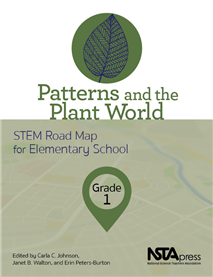
Patterns and the Plant World, Grade 1: STEM Road Map for Elementary School (Book Sample)
What if you could challenge your first graders to relate changes in seasonal weather patterns to changes in the plant world using a container garden? With this volume in the STEM Road Map Curriculum Series, you can! Patterns and the Plant World ou...
Book Chapter
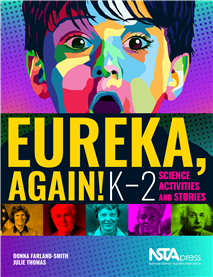
Scientists and Engineers Are OBSERVANT
In this lesson, students learn that scientists and engineers are observant. They read about Jane Goodall in the book Me … Jane, by Patrick McDonnell. After reading, students observe ghost shrimp and discover patterns of what plants and animals (inc...
Book Chapter
Scientists and Engineers Are IMAGINATIVE
In this lesson, students learn that scientists and engineers are imaginative. They read about Albert Einstein in the book On a Beam of Light: A Story of Albert Einstein, by Jennifer Berne. After reading, students investigate what happens when light s...
Book Chapter
Scientists and Engineers Are EXPLORERS
In this lesson, students learn that scientists and engineers are explorers. They read about Kathy Sullivan in the book To the Stars: The First American Woman to Walk in Space, by Carmella Van Vleet and Kathy Sullivan. After reading, students make obs...
Book Chapter
Scientists and Engineers Are THINKERS
IIn this lesson, students learn that scientists and engineers are thinkers. They read about Alfred Ely Beach in the book The Secret Subway, by Shana Corey. After reading, students will build a model for underground transportation. This book selection...
Book Chapter
Scientists and Engineers Are UNITED
In this lesson, students learn that scientists and engineers are united. They read about the people of the Island of Samsø in the book Energy Island: How One Community Harnessed the Wind and Changed the World, by Allan Drummond. After reading, stude...
Book Chapter
Scientists and Engineers Are ARTISTIC
In this lesson, students learn that scientists and engineers are artistic. They read about Maria Merian in the book Summer Birds: The Butterflies of Maria Merian, by Margarita Engle. After reading, students develop a simple model that mimics the func...
Book Chapter
Scientists and Engineers Are BRAVE
In this lesson, students learn that scientists and engineers are brave. They read about Amelia Earhart in the book I Am Amelia Earhart, by Brad Meltzer. After reading, students will complete a design challenge and build a roller coaster. This book se...
Book Chapter
Scientists and Engineers Are PLAYFUL
In this lesson, students learn that scientists and engineers are playful. They read about Isaac Newton in the book Newton and Me, by Lynne Mayer. After reading, students learn motion words and record the meaning with motions using the Seesaw app. Thi...
Book Chapter
Scientists and Engineers Are EXAMINERS
In this lesson, students learn that scientists and engineers are examiners. They read about Temple Grandin in the book The Girl Who Thought in Pictures: The Story of Dr. Temple Grandin, by Julie Finley Mosca. After reading, students learn to compare ...
Book Chapter
Scientists and Engineers Are DILIGENT
In this lesson, students learn that scientists and engineers are diligent. They read about George Washington Carver in the book A Picture Book of George Washington Carver, by David A. Adler. After reading, students use observations to describe patter...
Book Chapter
Scientists and Engineers Are CURIOUS
In this lesson, students learn that scientists and engineers are curious. They read about Mary Anning in the book The Fossil Girl: Mary Anning’s Dinosaur Discovery, by Catherine Brighton. After reading, students will learn about the history of Eart...
Book Chapter
Scientists and Engineers Are PERSUASIVE
In this lesson, students learn that scientists and engineers are persuasive. They read about Rachel Carson in the book Rachel Carson: Preserving a Sense of Wonder, by Thomas Locker and Joseph Bruchac. After reading, students will collect observations...
Book Chapter
Scientists and Engineers Are FEARLESS
In this lesson, students learn that scientists and engineers are fearless. They read about Eugenie Clark in the book Shark Lady: The True Story of How Eugenie Clark Became the Ocean’s Most Fearless Scientist, by Jess Keating. After reading, student...
Book Chapter
Scientists and Engineers Are PROBLEM SOLVERS
In this lesson, students learn that scientists and engineers are problem solvers. They read about Margaret Hamilton in the book Margaret and the Moon: How Margaret Hamilton Saved the First Lunar Landing, by Dean Robbins. After reading, students will ...
Book Chapter
Scientists and Engineers Are RESILIENT
In this lesson, students learn that scientists and engineers are resilient. They read about Marie Curie in the book Little People, Big Dreams: Marie Curie, by Isabel Sánchez Vegara. After reading, students will plan and conduct an investigation to d...
Book Chapter
Scientists and Engineers Are INSPIRING
In this lesson, students learn that scientists and engineers are inspiring. They read about Thomas Edison in the book Timeless Thomas: How Thomas Edison Changed Our Lives, by Gene Barretta. After reading, students will observe vibrations and provide ...
Book Chapter
Scientists and Engineers Are CATALYSTS
In this lesson, students learn that scientists and engineers are catalysts. They read about Isatou Cessay in the book One Plastic Bag: Isatou Ceesay and the Recycling Women of the Gambia, by Miranda Paul. After reading, students test different types ...
Book Chapter
Scientists and Engineers Are PASSIONATE
In this lesson, students learn that scientists and engineers are passionate. They read about Cynthia Moss in the book A Passion for Elephants: The Real Life Adventure of Field Scientist Cynthia Moss, by Toni Buzzeo. After reading, students observe th...
Book Chapter
Scientists and Engineers Are DEDICATED
In this lesson, students learn that scientists and engineers are dedicated. They read about John Muir in the book John Muir: America’s Naturalist, by Thomas Locker. After reading, students use their seasonal observations about trees to develop a so...
Book Chapter
Scientists and Engineers Are CARING
In this lesson, students learn that scientists and engineers are caring. They read about Helen Martini in the book Mother to Tigers, by George Ella Lyon. After reading, students observe two types of worms and debate whether they are living or nonlivi...
Book Chapter
Scientists and Engineers Are EXPERIMENTERS
In this lesson, students learn that scientists and engineers are experimenters. They read about Michael Faraday in the book Burn: Michael Faraday’s Candle, by Darcy Pattison. After reading, students will use the modified CER framework to discuss ch...
Book Chapter
Scientists and Engineers Are INVENTIVE
In this lesson, students learn that scientists and engineers are inventive. They read about Leonardo da Vinci in the book Neo Leo: The Ageless Ideas of Leonardo da Vinci, by Gene Barretta. After reading, students will plan and conduct an investigatio...
Book Chapter
Scientists and Engineers Are GENEROUS
In this lesson, students learn that scientists and engineers are generous. They read about Katherine Sessions in the book The Tree Lady: The True Story of How One Tree-Loving Woman Changed a City Forever, by H. Joseph Hopkins. After reading, students...
Book Chapter
Scientists and Engineers Are DETERMINED
In this lesson, students learn that scientists and engineers are determined. They read about Elizabeth Blackwell in the book Who Says Women Can’t Be Doctors? The Story of Elizabeth Blackwell, by Tanya Lee Stone. After reading, students learn about ...
Book Chapter
Scientists and Engineers MAKE OBSERVATIONS OVER TIME
In this lesson, students learn that scientists and engineers make observations over time. They read about Ada Twist in the book Ada Twist, Scientist, by Andrea Beaty. After reading, students will recognize that scientists and engineers make observati...
Book Chapter
Scientists and Engineers USE “OUT OF THE BOX” THINKING
In this lesson, students learn that scientists and engineers use “out of the box” thinking. They read the book Not a Box, by Antoinette Portis. After reading, students brainstorm ideas of what to turn boxes into. This book selection highlights th...
Book Chapter
Scientists and Engineers DO EXPERIMENTS TO ANSWER THEIR QUESTIONS
In this lesson, students learn that scientists and engineers do experiments to answer their questions. They read the book Noa the Little Scientist, by Shenell L. T. Bolden. After reading, students perform a simple experiment that is developmentally a...
Book Chapter
Lesson Plan 1: Earth’s Sensational Seasons
In this lesson, students explore the concept of the four seasons and how the changing seasons affect plant development. They will begin to understand that seasonal changes are caused by Earth’s tilt as it rotates around the Sun. Students focus on s...
Book Chapter
Lesson Plan 2: Our Container Garden–Design Time
This lesson introduces students to the engineering design process (EDP), the process they will use to design and create their container garden. In this lesson, students work through the first steps of the EDP to develop a plan for their garden. A mat...
Book Chapter
Lesson Plan 3: Our Container Garden–Planting Time
In this lesson, students continue to use the engineering design process (EDP) to create the class container garden. Students move into the Try phase as they construct the garden. Through the construction and planting of their container garden and sub...
Interactive E-book Kids
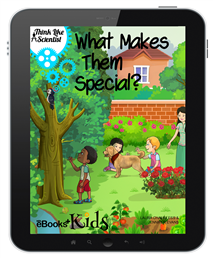
No matter where you live, you see plants and animals everywhere. But why are they all different? The What Makes Them Special? e-book provides the opportunity for students to be both scientists and engineers while learning about structures and functio...

Interactive E-book Kids
It is the year 2095, and Great Uncle Dar has just taken up the post of chief engineer on the solar system’s first inflatable space apartment building. Even better, his nephew, Peter, is spending the summer with him! Excited to catch up with Great U...
eBook
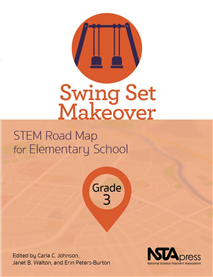
Swing Set Makeover, Grade 3: STEM Road Map for Elementary School (e-book)
What if you could challenge your third graders to design a swing set that’s safe but still lots of fun? With this volume in the STEM Road Map Curriculum Series, you can!Swing Set Makeover outlines a journey that will steer your students toward auth...