


 Join
JoinAll Middle School resources
NSTA Press Book
Everyday Science Mysteries: Stories for Inquiry-Based Science Teaching
What causes condensation? Does temperature affect how well a balloon will fly? How do tiny bugs get into oatmeal? Through 15 mystery stories, this book memorably illustrates science concepts for students and reinforces the value of learning science t...
By Richard Konicek-Moran
NSTA Press Book
Animal Coloration: Activities on the Evolution of Concealment
A classic resource for teachers is now back in an updated edition! Using an inductive and experimental approach, Animal Coloration aims to increase students’ awareness of the ways wild organisms are adapted to their environments. Even though the ac...
By Robert Stebbins, David Ipsen, Gretchen L. Gillfillan, Judy Diamond (Revised New Edition), Judy Scotchmoor (Revised New Edition)
NSTA Press Book
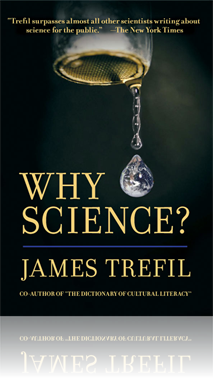
Prize-winning scientist and bestselling author James Trefil contends that in order to participate fully in the democratic process, people must understand fundamental scientific concepts. In Why Science? Trefil details the concepts needed in order to ...
By James Trefil
NSTA Press Book
Exemplary Science in Informal Education Settings: Standards-Based Success Stories
Just as science education doesn’t stop at the schoolhouse door, neither should effective application of the National Science Education Standards. Exemplary Science in Informal Education Settings shows real-world examples of how science education re...
NSTA Press Book
NSTA Guide to Planning School Science Facilities, Second Edition
Science-learning spaces are different from general-purpose classrooms. So if your school is planning to build or renovate, you need the fully updated NSTA Guide to Planning School Science Facilities. It’s the definitive resource for every K-12 scho...
By LaMoine L. Motz , James T. Biehle, Sandra S. West
NSTA Press Book
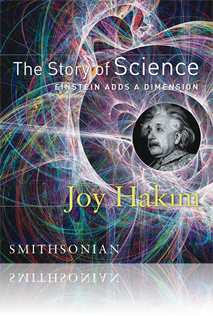
The Story of Science: Einstein Adds a New Dimension
Now, it’s time for your students to look over Albert Einstein’s shoulder as he develops a new kind of physics that points the way to more recent theories of particle physics and quantum mechanics. Joy Hakim will demonstrate how scientific thought...
By Joy Hakim
Book Chapter
A Boy with Something on His Mind
Fifteen-year-old Albert Einstein is miserable. He is trying to finish high school in Germany, but he hates the school; it’s a strict, rigid place. To make things worse, his parents have moved to Italy. They think he should stay behind until his sch...
NSTA Press Book
Teacher Research: Stories of Learning and Growing
Think you don’t have time to do research? How about professional growth—think that’s out of reach? Let your peers take you on their journeys and inspire you through their stories in Teacher Research. You will gain insight into teacher research�...

Book Chapter
As stated in “About This Book,” the author isn’t going to take the usual approach to the subject of chemistry. Because virtually all explanations of chemical reactions are based on our current model of atoms and molecules, the first thing to do...
Book Chapter
In thinking about a title for this chapter, the word periodicity came to mind. I was sure this had some kind of pop culture reference. After discussing this with my wife, we figured I was thinking of synchronicity, which is a reference to music b...