


 Join
JoinAll Inquiry resources
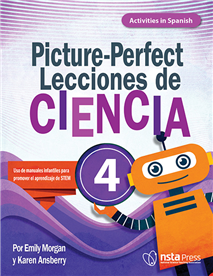
NSTA Press Book
A supplemental book of just the student activity pages in the Picture-Perfect Science series are available for each of the five Picture-Perfect teacher books. All of these activity pages are classroom-ready and written in Spanish. ...
By Emily Morgan, Karen Ansberry
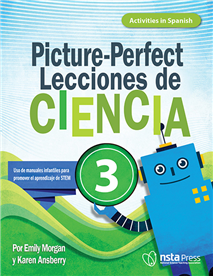
NSTA Press Book
A supplemental book of just the student activity pages in the Picture-Perfect Science series are available for each of the five Picture-Perfect teacher books. All of these activity pages are classroom-ready and written in Spanish. ...
By Emily Morgan, Karen Ansberry
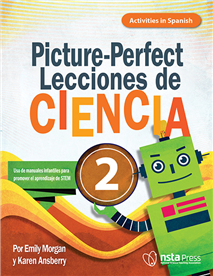
NSTA Press Book
A supplemental book of just the student activity pages in the Picture-Perfect Science series are available for each of the five Picture-Perfect teacher books. All of these activity pages are classroom-ready and written in Spanish....
By Emily Morgan, Karen Ansberry
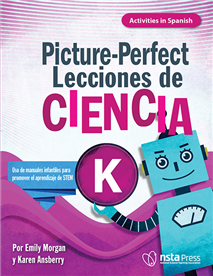
NSTA Press Book
A supplemental book of just the student activity pages in the Picture-Perfect Science series are available for each of the five Picture-Perfect teacher books. All of these activity pages are classroom-ready and written in Spanish....
By Emily Morgan, Karen Ansberry
NSTA Press Book
Novel Engineering, K–8: An Integrated Approach to Engineering and Literacy
Download and read a sample chapter from this book to learn more.With the Novel Engineering approach, “students become excited about what they are reading, writing, designing, and building! This excitement in turn helps them make strides in enginee...
By Elissa Milto, Merredith Portsmore, Mary McCormick, Jessica Watkins, Morgan Hynes
Journal Article
Course-Based Research in the First Semester of College
Undergraduate students are increasingly aware of complex global challenges and have a strong desire to take action and create change. Course-based undergraduate research experiences can offer a wide range of students the opportunity to gain skills ...
By Christina Cianfrani and Sarah Hews
Journal Article
How STEM Teachers Can Immerse Themselves in the Three Rs Over the Summer
By TRACY VASSILIEV, DOUGLAS J. GARDNER, AND DAVID NEIVANDT

Blog Post
Journal Article
By Amee Jeanette Hennig, Brooke A. Whitworth, and Allison Huff Macpherson
Blog Post
What Does It Really Take to Get High School Students to Make Their Ideas Visible?
Asking high school students to reveal what they really think about what causes a natural or designed phenomenon is risky business. Risky in that it requires students to take the intellectual and social risk of sharing their thinking, which may or may...
By Angie Berk, Jen MacColl and Kristen Moorhead
Blog Post
Going Public: Revealing Student Thinking in Science by Missy Holzer
Our classrooms are dynamic places where young learners gather to figure out the natural world. How can we be sure they are all making sense of the phenomena during this process? How do we know what they are thinking?...
By Kate Falk
Blog Post
Making Students’ Thinking Visible Through Discussion by Dana McCusker and Marisa Miller
As the assistant director of science for Mastery Charter Schools I have had the pleasure of working with Dana McCusker and seeing her excellent teaching in action. As a science teacher leader, she has been at the forefront of utilizing discussion res...
By Kate Falk
Blog Post
How PLCs Helped Move Us Toward Equitable High School Assessment Practices
My colleagues and I began using units intentionally designed for the NGSS for biology in early 2017. We started with a high-quality unit evaluated by my colleagues on the Science Peer Review Panel, and eventually used a full program from the unit’s...
By Holly Hereau