


 Join
JoinAll Phenomena resources
NSTA Press Book
This guidebook uses an Explore-before-Explain instructional sequence to help you facilitate the design of active meaning-making lessons in science....
By Patrick Brown
NSTA Press Book
Model-Based Inquiry in Chemistry: Three-Dimensional Instructional Units for Grades 9-12
Transform your chemistry lessons from abstract concepts into engrossing learning experiences that help high school students understand what happens in the world. You can do it with Model-Based Inquiry in Chemistry: Three-Dimensional Instructional Uni...
By Todd Campbell, Ron Gray

Journal Article
Puddles to Floods: Field-based Investigations on Flooding in New Orleans
All students deserve access to field-based learning experiences where they can conduct investigations and collect data to answer their questions about the world. These opportunities are particularly important in the context of complex climate-related...
By Brooke Sprague, Claire Anderson, Karen Marshall, Jazmine Henderson, Shermaine Johnson
NSTA Press Book
Wild Wonderings: Scientists and Their Questions
Click here to view video of Wild Wonderings Let your curiosity run wild! This lively book will inspire you to ask questions like scientists do. Why? Because questions can lead you to amazing discoveries. Like what? Like when theoretical physicist ...
By Jessica Fries-Gaither
NSTA Kids
Wild Wonderings: Scientists and Their Questions
Click here to view video of Wild Wonderings Let your curiosity run wild! This lively book will inspire you to ask questions like scientists do. Why? Because questions can lead you to amazing discoveries. Like what? Like when theoretical physicist ...
Journal Article
Scaffolding an Inquiry-Based Spring Constant Activity for Differentiated Physics Instruction
This activity gives students the opportunity to design an experiment, collect data, and solve for the spring constant of different springs. The use of low-cost materials and the inquiry-based structure makes it more accessible for teachers and more e...
By Eric Lindley
Journal Article
Engaging Middle School Students with the Nature of Particles, Waves, and Light
This three-day unit engages students in the exploration of light behavior and makes connections to the advanced idea of the wave-particle duality of light. Students begin by exploring the behaviors of marbles (particles) as they interact with differe...
By Isaiah Kent-Schneider, Jerrid Kruse, Dan Chibnall, Paige Anderson, Emma Richards, Brooke Christenson
Journal Article
This phenomenon-driven unit focuses on students making sense of the mutually beneficial species interactions between legumes and rhizobia. Many science classes spend less time studying the nitrogen cycle due to time constraints and more focus on othe...
By Kerrie Rovito, Lara Smetana, Michael Grillo, Alyssa Hoffman, Sydney DelGhingaro
NSTA Kids
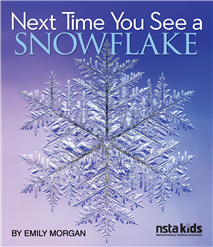
Click here to view video of Next Time You See a Snowflake This book will have you seeing snowflakes in a whole new way. You’ll learn about the science of snowflakes – how they form, why they are six-sided, what conditions are necessary for the...
Journal Article
This paper discusses two teachers’ experiences implementing a phenomenon and problem-driven curriculum for the first time in two kindergarten classes. It describes how teachers shifted their teaching to support students’ collaborative sensemaking...
By Mary Short, Nancy Costanzo, Allison Fleming
Journal Article
Making Space for Local Science: Strategies for teachers to find and adapt phenomena in science units
This article discusses strategies for teachers to find and use local phenomena in designed science units. The Next Generation Science Standards promote grounding learning in observable phenomena that students investigate using science practices. Howe...
By Katahdin A Whitt, Becky Hallowell
Journal Article
The emperor penguin is one of the most identifiable animals on earth. Its survival depends on a variety of factors, such as temperature and other environmental elements. In order to engage fifth-grade students in exploring the captivating phenomenon ...
By Robyn Yewell, Ron Gray
Journal Article
Q: How can I address science misconceptions using phenomena-driven instruction?
Q: How can I address science misconceptions using phenomena-driven instruction?...
By Matthew Bobrowsky