


 Join
JoinAll Equity resources
NSTA Press Book
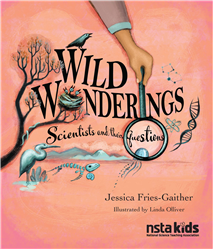
Wild Wonderings: Scientists and Their Questions
Click here to view video of Wild Wonderings Let your curiosity run wild! This lively book will inspire you to ask questions like scientists do. Why? Because questions can lead you to amazing discoveries. Like what? Like when theoretical physicist ...
By Jessica Fries-Gaither
NSTA Kids
Wild Wonderings: Scientists and Their Questions
Click here to view video of Wild Wonderings Let your curiosity run wild! This lively book will inspire you to ask questions like scientists do. Why? Because questions can lead you to amazing discoveries. Like what? Like when theoretical physicist ...
NSTA Press Book
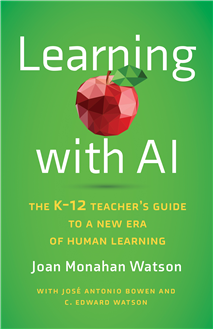
Learning with AI: The K-12 Teacher’s Guide to a New Era of Human Learning
Unlock the Future of Education with "Learning with AI" Discover how artificial intelligence is transforming education with "Learning with AI," a pivotal co-publication from Johns Hopkins University Press and the National Science Teaching Assoc...
By Joan Monahan Watson

Journal Article
Using Group Roles to Promote Collaboration
Collaborating effectively in small groups is an important skill for students, especially in classrooms adopting science education reforms like the NGSS, but it is also an extremely challenging skill. In this article, I share how I use group roles as ...
By Marta Stoeckel
Journal Article
Powerful Practices for the Differentiated Science Classroom
At its core, differentiation stems from the recognition that individual learners arrive in classrooms, each day, with a wide range of knowledge, lived experiences, abilities, ways of thinking, curiosities, and dispositions. Differentiation challenges...
By Brooke Whitworth, Amy Snead
Journal Article
Equitable Science for a Socially Just Classroom
Editor's Corner September/October 2024...
By Brooke Whitworth
Journal Article
“Black is Beautiful”: A Culturally Relevant/Responsive High School Biology Lesson
This biology lesson uses the science of central dogma to “critique and question the politics of representation that systematically devalue[s] Blackness” (hooks, 1995, p.131). Students’ understanding of protein synthesis is extended in discussin...
By Eddie Taylor
Journal Article
Students with Visual Impairments can be Successful in Science
One of the goals of the Next Generation Science Standards is to make science accessible to all students, which includes students with disabilities such as blindness and visual impairments (BVI). However, educators of students with BVI have limited ex...
By Rhea Miles
Journal Article
Science 101...
By Matthew Bobrowsky
Journal Article
Going Beneath the Surface: Using Socioscientific Issues to Explore Human Impacts on Soil
Socioscientific issues (SSIs) can help students think about the moral and ethical issues related to science. When SSI issues are based on local phenomena and issues within students’ communities, they can also resonate more with students....
By Jesse Wilcox, William Lange, Shane Breheny
Journal Article
Local landscapes examined via Google Earth provide a natural arena on which students can analyze how humans modify and interact with their environment. These lessons guide students through an exploration of the natural and built environments both nea...
By Carol Colaninno, Adriana Martinez, Charlie Blake, Candice Johnson
Journal Article
Collaborative Learning and Andy Weir’s Project Hail Mary
Editor's Corner...
By Ann Haley Mackenzie
Journal Article
Fostering Inclusive Collaboration: Strategies to Disrupt Inequities in Student Groupwork
This paper examines challenges in student groupwork, emphasizing the impact of collaborative learning dynamics on outcomes. Addressing uneven participation and unintentional exclusion, it explores nuanced aspects of perceived student status, revealin...
By Anna Karina Monteiro, Michele Cheyne, and Lauren Kline
Journal Article
Group Learning Routines as a tool to build equitable learning experiences in a Biology classroom
The vision behind the Next Generation Science Standards (NGSS) is that all students engage in explaining phenomena and designing solutions with three-dimensional learning. Authentic sensemaking involves opportunities for learners to share, analyze, a...
By Elizabeth Chatham, Joy Otibu, and Andrea Sau